 Sarasota Window
 Board & Batten Siding in Bee Ridge: A Style That Has to Earn Its Keep
Board and batten has become one of the most requested siding looks in Sarasota County, and Bee Ridge is no exception. The vertical lines, the shadow reveal between boards, the way it reads as more custom than standard lap siding — homeowners like it for good reason. But in this part of Florida, board and batten is not just a style choice. It's a system that has to hold up to sun, salt air, and sideways rain year-round, and the way it's built matters as much as how it looks.
We install board and batten siding using James Hardie fiber cement products exclusively, engineered for the specific demands of a Gulf Coast climate zone. This page walks through what that means in practice for a home in Bee Ridge — what the climate does to this style of siding, what a correct installation actually involves, and how our process works from first estimate to final walk-through.
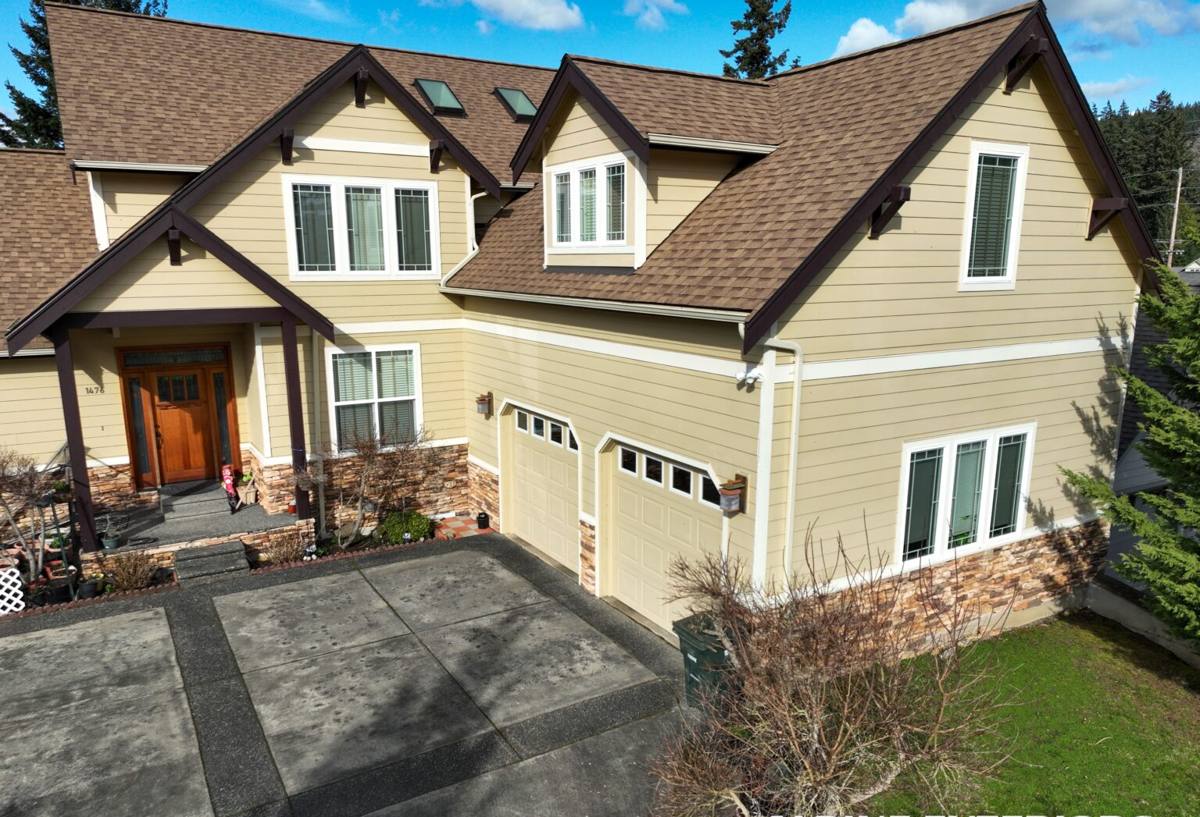
What Bee Ridge's Climate Does to Vertical Siding
Sarasota County sits in a subtropical climate with a long, intense sun season, high humidity, hurricane-season winds, and salt-laden air carried inland from the coast. Board and batten siding has more vertical seams and more exposed edges than a standard horizontal lap profile, which means the material and the installation details around those seams carry extra weight here.
Three climate stresses specific to this profile
- UV exposure: Vertical boards catch direct, unbroken sun for more of the day than overlapping lap boards. A finish that chalks, fades, or checks under UV will show it fastest on flat, vertical faces.
- Wind-driven rain: Storms here rarely come straight down. Wind pushes rain sideways into every seam and batten joint. If those joints aren't flashed and fastened correctly, water finds a way behind the siding.
- Salt air: Homes closer to the coast see accelerated corrosion on fasteners and trim hardware. Inland neighborhoods like Bee Ridge get a lighter dose of this than beachfront properties, but it's still present, especially after storm events that push salt spray farther inland than usual.
None of this means board and batten is a bad choice for Bee Ridge. It means the product and the installation both need to be built for this environment rather than borrowed from a milder climate.
Why We Only Install James Hardie for This Application
Board and batten can be built out of several materials — vinyl, engineered wood, various fiber cement brands, or primed wood boards. We standardized on James Hardie fiber cement for every siding job we do, including board and batten, because of how the product is engineered and backed, not because of marketing.
What matters for a vertical profile specifically
- HZ5 climate engineering: James Hardie's HZ5 formulation is engineered for the moisture and humidity profile of Florida and the Gulf Coast, which matters more on a system with more seams and joints exposed to weather.
- ColorPlus factory finish: A factory-applied, baked-on finish holds color and resists UV fade and chalking far more consistently than field-applied paint, which matters most on flat vertical surfaces that take direct sun all day.
- Non-combustible core: Fiber cement doesn't feed a fire the way some engineered wood products can, which is a real consideration for insurance and long-term home value, independent of climate.
- Dimensional stability: Fiber cement doesn't swell, cup, or rot the way wood-based boards can when they take on moisture at a seam. Board and batten depends on straight lines and tight joints staying straight and tight for years, not just at installation.
We build the board and batten look using Hardie panel products paired with Hardie trim battens, installed as an engineered system rather than boards nailed up ad hoc. The reveal spacing, fastener pattern, and flashing details are all part of what makes the system perform, not just what makes it look right on day one.
What a Correct Board & Batten Installation Involves
A board and batten job that looks right at handoff and a board and batten job that still looks right in ten years are not always the same job. The difference is almost entirely in details that aren't visible once the siding is up.
What we check and build into every installation
- Housewrap or weather-resistive barrier inspected and repaired before any panel goes up — this is the layer doing the real waterproofing work, not the siding itself
- Proper drainage plane and rain screen gap so any moisture that does get behind the siding can drain and dry rather than sit against the sheathing
- Correct fastener type, spacing, and penetration depth into structural framing, not just sheathing
- Batten placement and fastening that accounts for expansion and contraction rather than fighting it
- Flashing at every horizontal transition — window heads, doors, roof lines, and any place a batten meets a different plane
- Caulking only where Hardie's specifications call for it, and with a product rated for the movement and UV exposure it will see
- Manufacturer-specified clearance from grade, roof lines, and other siding to keep the bottom edge of the system out of standing water and debris
Skipping or shortcutting any one of these doesn't usually show up as a problem in year one. It shows up in year five or six, as staining, soft spots, or paint failure at seams — and by then it's a repair job, not a maintenance item.
Board & Batten Compared to Other Ways to Get This Look
Homeowners sometimes ask whether board and batten in fiber cement is worth it compared to cheaper ways of getting a similar appearance. Here's an honest comparison of the main options we're asked about.
| Material | Appearance Longevity | Climate Fit for Bee Ridge | Our Position |
|---|---|---|---|
| James Hardie fiber cement | Holds color and shape for decades with proper install | Purpose-engineered for FL humidity, UV, wind-driven rain | What we install |
| Vinyl board and batten | Can warp, fade, or crack under sustained heat and UV | Poor match for intense sun exposure and storm wind loads | We do not install |
| Engineered wood (LP-type) | Vulnerable to moisture intrusion at seams over time | Higher risk in humid, storm-prone climate | We do not install |
| Primed spruce or cedar boards | Requires ongoing repainting and moisture vigilance | Wood movement and rot risk in year-round humidity | We do not install |
This isn't a claim that every alternative fails on every home — it's why we chose to specialize in one system we can stand behind rather than offer several and let price be the deciding factor.
Our Process, Start to Finish
Every board and batten project follows the same sequence, whether it's a full re-side or an addition matched to existing siding.
- On-site assessment: We look at the existing wall assembly, current siding condition, moisture history, and any problem areas around windows, doors, or roof transitions.
- Design and layout: Board width, batten spacing, and reveal are planned around the home's proportions and any architectural details, not applied as a generic template.
- Written estimate: A clear scope covering material, labor, trim, flashing, and any substrate repair identified during assessment — no vague allowances.
- Substrate prep: Any damaged sheathing, rot, or compromised weather barrier is addressed before a single board goes up.
- Installation: Panels and battens installed to Hardie's fastening and flashing specifications, with attention to every seam and transition.
- Final inspection and walk-through: We review the finished work with the homeowner before calling the job complete.
Cost Factors for Board & Batten in Bee Ridge
Board and batten typically runs somewhat higher in labor than standard lap siding because of the additional trim pieces and layout precision involved, but the exact cost on any given home depends on several factors.
| Factor | Why It Moves the Price |
|---|---|
| Amount of tear-off required | Removing and disposing of existing siding adds labor before new material goes on |
| Substrate condition | Rot, moisture damage, or an outdated weather barrier means repair work before installation |
| Wall height and complexity | Dormers, gables, and multiple roof lines increase cutting, flashing, and layout time |
| Trim and batten density | Wider spacing between battens uses less trim material than a tighter, more detailed pattern |
| Color and finish selection | Factory ColorPlus finishes vary in price by color family and sheen |
We don't quote broad numbers on a page like this because every home is different — the estimate visit is where the real numbers come from, based on your specific house.
Why Local Experience in Bee Ridge Matters
Siding crews who mainly work outside Sarasota County can miss the specifics that matter here — how much sun a west-facing wall really takes through a Florida summer, how quickly salt-laden storm winds can find a weak seam, or what wind-load fastening actually needs to look like this close to the Gulf. A crew that regularly works Bee Ridge and the surrounding Sarasota area brings that experience to your project by default, not as an afterthought.
It also means faster response if something needs a look after a storm, and a crew that already understands the permitting and inspection expectations for exterior work in Sarasota County. None of that shows up in a brochure photo, but it shows up in how the job goes and how the siding performs five and ten years out.
Board & Batten Done Right, Built for Bee Ridge
Board and batten is a striking look, but in a climate like this one, it only pays off long-term when the system underneath the boards is built correctly and matched to the conditions it has to survive — heat, UV, wind-driven rain, and the occasional storm. That's the standard we hold every board and batten installation to.
If you're considering board and batten siding for a home in Bee Ridge, we're happy to take a look and walk you through what it would involve for your specific house. Request a free, no-pressure estimate using the form below — there's no obligation, just a straight answer on scope and cost.