 Sarasota Window
 Bee Ridge Homes Face a Tough Combination of Weather
Bee Ridge sits inland from the coast, but "inland" in Sarasota County still means salt-laden air on onshore breezes, brutal summer UV, wind-driven rain that comes in sideways during storms, and the real possibility of hurricane-force gusts loading up your exterior walls. Siding here doesn't get an easy life. It has to survive the same conditions whether the house is a block off the water or several miles inland, because Florida weather doesn't respect neighborhood boundaries. When we look at a Bee Ridge home for a siding project, we're evaluating it against all four of those stressors at once — not just picking a color and a plank width.
This page is specifically about installing fiber cement siding on homes in Bee Ridge. If you're comparing products or trying to understand why we only install James Hardie and not the cheaper alternatives, this page explains what correct installation looks like in this particular climate and why the crew doing the work matters as much as the material itself.
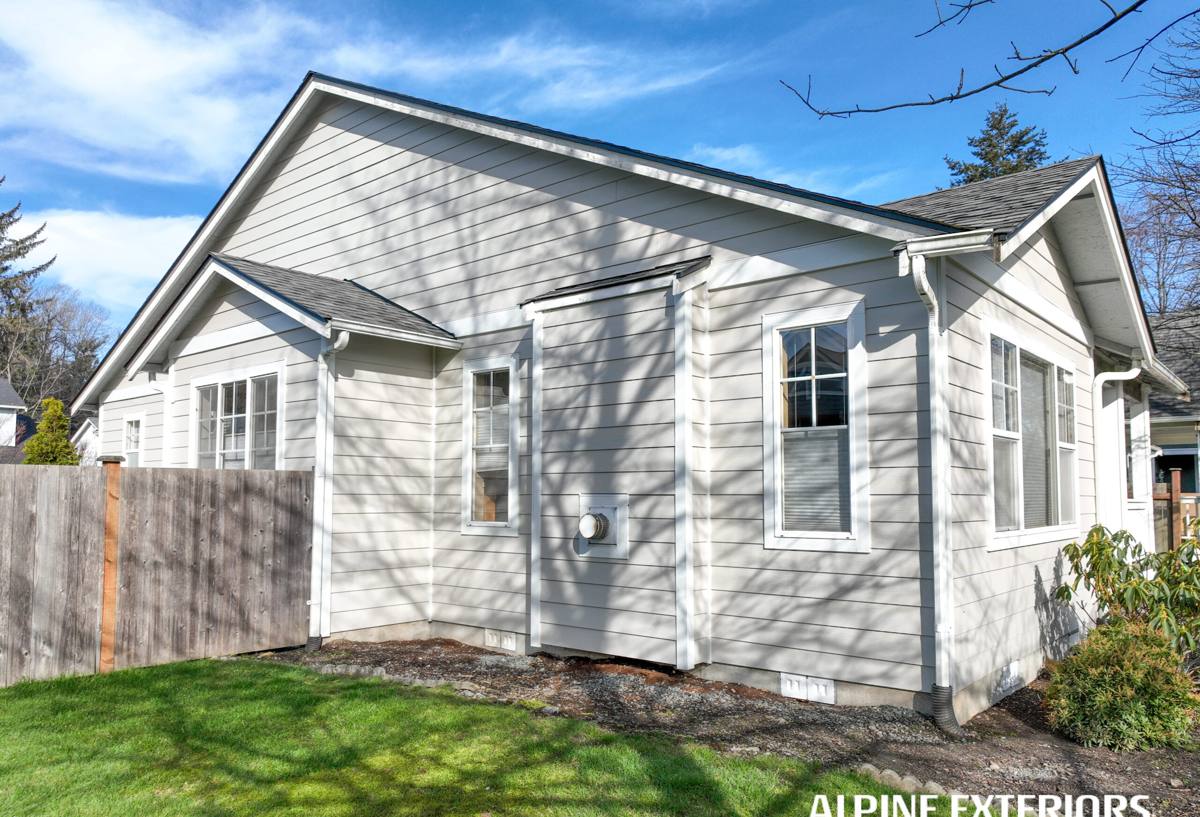
What Sarasota's Climate Actually Does to Siding
UV and Heat
Central Florida sun is intense and consistent, nearly year-round. Cheap paint finishes chalk, fade, and crack under that kind of exposure. Siding that isn't engineered for UV resistance will show color loss and surface degradation well before a homeowner expects to be repainting.
Wind-Driven Rain
Sarasota's storms don't just drop rain straight down — they push it horizontally into wall assemblies, seams, and trim joints. Any siding system with poor water management, weak flashing details, or joints that aren't properly sealed will let moisture behind the cladding. Once water gets behind siding, it doesn't matter how good the material looks on the surface — the wall assembly underneath starts to suffer.
Salt Air
Salt in the air accelerates corrosion of fasteners, trim accessories, and any metal components in a siding system. It also contributes to the breakdown of lower-grade composite and wood-based products over time.
Wind Load
Sarasota County enforces wind-load and fastening requirements tied to Florida's building code, and homes in Bee Ridge need siding installed to withstand those loads — not just the manufacturer's minimum specs, but the specific requirements that apply in this wind zone.
Why We Install Only James Hardie Fiber Cement
We don't install LP SmartSide, vinyl siding, Cemplank, Allura, or primed wood siding like spruce or cedar. That's a deliberate standard, not a lack of options. James Hardie fiber cement is non-combustible, which matters in a state where wildfire and electrical exposure risks exist alongside hurricane risk. It's manufactured with an HZ5 product line specifically engineered for Florida's climate — high moisture, high humidity, and high UV — rather than a generic siding formulated for a different part of the country.
The ColorPlus factory-applied finish is baked on under controlled conditions, which gives it far better UV and fade resistance than field-applied paint. And Hardie backs its products with a strong, transferable limited warranty when installed to their specifications — something that matters a lot if you sell the home before the warranty period ends. We've made James Hardie our standard because, installed correctly, it holds up to exactly the conditions Bee Ridge deals with every year.
What a Correct Fiber Cement Siding Job Actually Involves
Fiber cement siding is only as good as the installation behind it. A rushed or spec-cutting crew can turn a premium product into a problem in a few years. Here's what has to happen for the job to hold up in this climate:
Moisture Barrier and Wall Prep
A proper weather-resistive barrier goes down first, with correct overlaps and sealed penetrations. This is the layer that protects your home if any wind-driven rain does get past the siding surface — and in Sarasota, it will be tested.
Fastening Pattern
Fasteners need to be the right type, spaced correctly, and driven to the manufacturer's specified depth — not overdriven, not underdriven. Overdriven fasteners crack the board over time; underdriven ones let the siding move and eventually fail. In a high-wind zone, fastening schedule isn't optional detail — it's structural.
Flashing and Trim Details
Every window, door, corner, and roof-to-wall intersection needs flashing that directs water out and away from the wall assembly. This is where most siding failures actually originate — not on the flat wall sections, but at the transitions.
Joints and Caulking
Butt joints and trim seams need the correct sealant, applied correctly, at the intervals Hardie specifies. Skipping or rushing this step is one of the most common corner-cutting moves we see from installers who don't specialize in fiber cement.
Clearances
Bottom clearance from grade, roof lines, and decks needs to meet Hardie's minimums so the siding isn't sitting in standing water or trapped moisture — a common mistake when siding is installed by a crew used to a different product.
Our Process for a Bee Ridge Siding Project
- Assessment: We inspect the existing siding, sheathing, and any signs of prior moisture intrusion before quoting anything.
- Product and profile selection: We help you choose the right Hardie product line, plank exposure, and ColorPlus color for your home and neighborhood.
- Removal: Old siding comes off and the wall assembly gets inspected — this is often where hidden rot or prior water damage shows up, and we flag it before covering anything back up.
- Barrier and flashing install: Weather-resistive barrier and all flashing details go in to Hardie's specification, not a generic shortcut version.
- Siding installation: Panels or planks go up with the correct fastening schedule, joint treatment, and clearances.
- Final inspection: We walk the finished job checking joints, corners, penetrations, and fastening before calling it complete.
James Hardie Product Lines for Bee Ridge Homes
Not every Hardie product fits every home. Here's a general comparison of the lines we most commonly install locally:
| Product | Best For | Look |
|---|---|---|
| HardiePlank Lap Siding | Most single-family homes, traditional and coastal styles | Classic horizontal lap |
| HardiePanel Vertical Siding | Modern facades, accent walls, gable ends | Clean vertical lines |
| HardieShingle Siding | Cottage or craftsman-style homes, accent sections | Staggered or straight-edge shingle |
| Board & Batten (HardiePanel system) | Farmhouse and transitional styles | Vertical panel with battens |
Cost Factors for a Bee Ridge Siding Project
Every home is different, but the same handful of factors drive the price on most jobs. We give exact numbers only after seeing the home in person, but here's what typically moves the estimate:
| Factor | Why It Matters |
|---|---|
| Home size and wall complexity | More square footage and more corners, gables, and cutouts mean more labor and material |
| Condition of existing sheathing | Rot or moisture damage found during tear-off adds repair scope before new siding can go on |
| Product line and profile | Lap width, panel style, and shingle detailing carry different material and labor costs |
| Trim and accessory package | Corner boards, window trim, and frieze boards add both cost and a more finished look |
| Color | Standard ColorPlus colors vs. custom field-painted options affect price and warranty coverage |
| Access and site conditions | Two-story sections, tight lot lines, and landscaping can affect labor time |
Maintaining James Hardie Siding in This Climate
Fiber cement is low-maintenance compared to wood or many composite products, but "low-maintenance" isn't "no-maintenance" — especially with Sarasota's salt air and storm exposure. A simple annual routine keeps the siding performing the way it's supposed to:
- Rinse the siding once or twice a year to clear salt residue, pollen, and grime buildup
- Walk the exterior after major storms and check for any cracked boards, loose trim, or damaged caulk joints
- Keep sprinklers and irrigation heads from spraying directly on the siding long-term
- Trim back landscaping so plants aren't holding moisture against the wall
- Re-caulk joints and trim seams as needed rather than waiting until they visibly fail
- Check that gutters and downspouts are directing water away from the base of the walls
Why the Crew Matters as Much as the Material
James Hardie siding installed to spec, by a crew that treats flashing and fastening schedules as non-negotiable, is a genuinely durable product for a Bee Ridge home. James Hardie siding installed by a crew rushing through it, cutting joint sealant, or skipping proper clearances is a product that will show problems within a few years regardless of the brand name on the board. A crew that regularly works in Bee Ridge and the surrounding Sarasota County neighborhoods already understands the local wind-load requirements, the permitting process, and the moisture behavior specific to this region — that familiarity shows up in the quality of the finished job, not just the speed of getting it done.
If you're planning a siding project in Bee Ridge, we're happy to take a look at your home and walk you through what it would take to do it right. Reach out for a free, no-pressure estimate — there's a form below to get started.