 Sarasota Window
 Why Fruitville Homes Need Siding Built for This Climate
Fruitville sits inland from the coast but still takes the full brunt of Sarasota County's weather: long stretches of intense UV exposure, humidity that never really lets up, wind-driven rain during summer storms, and salt-laden air that drifts in off the Gulf even a good distance from the water. Siding here isn't cosmetic — it's the barrier standing between your framing and a climate that works against it every single day of the year.
UV and Heat
Florida sun breaks down cheap paint and low-grade siding materials faster than almost anywhere else in the country. Faded, chalky, or peeling siding on a Fruitville home is usually a UV problem, not an age problem — the material simply wasn't engineered to hold color under that kind of exposure.
Wind-Driven Rain
Sarasota's storms don't just rain down, they rain sideways. Water gets pushed up under laps, into seams, and behind trim that isn't sealed or flashed correctly. Once moisture gets behind siding, it doesn't dry out quickly in this humidity — it sits there and starts rotting sheathing and framing from the inside.
Salt Air
Even away from the immediate coastline, salt in the air corrodes fasteners, trim, and lower-grade siding materials over time. Fiber cement handles this far better than wood or many composite products, but only when the fasteners, flashing, and caulking used with it are also rated for the exposure.
Hurricane-Force Wind
Fruitville homes need siding rated to stay put under real wind load, not just a product that looks good in a showroom. Fastener spacing, panel engagement, and proper substrate attachment all matter more here than in most parts of the country — an installation shortcut that would be a minor issue in a mild climate can become a torn-off panel in a Sarasota County storm.
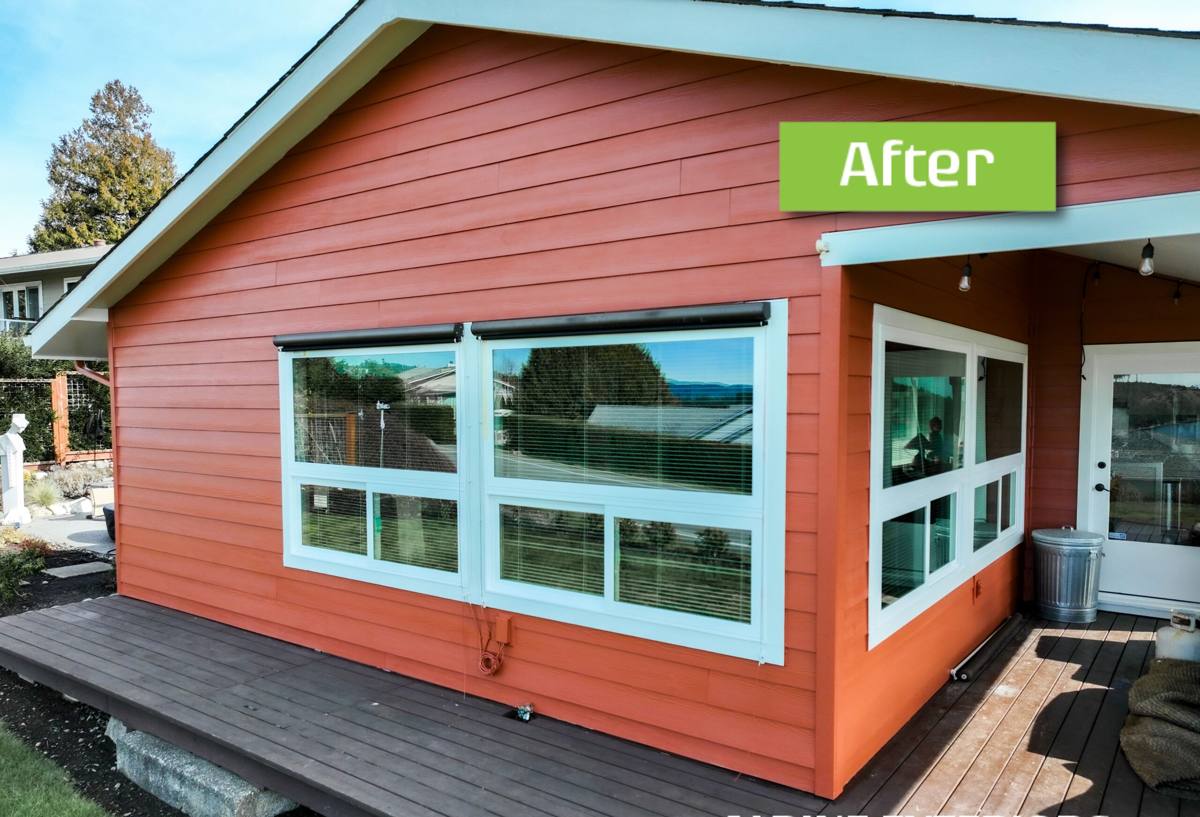
What a Correct Fiber Cement Installation Actually Involves
Fiber cement siding is a forgiving material when it's installed correctly and an unforgiving one when it isn't. Most siding failures we get called out to inspect in this area aren't product failures — they're installation shortcuts. A correct install includes:
- A weather-resistive barrier installed and lapped correctly behind the siding, not just stapled up as an afterthought
- Proper flashing at every window, door, and roof-to-wall intersection — the single most common failure point we find on older homes
- Correct fastener type, length, and spacing driven into structural framing, not just into sheathing
- Manufacturer-specified clearances from grade, roof lines, and decks so the bottom edge of the siding never sits in standing water or trapped moisture
- Field-cut edges sealed and painted before installation, not left raw
- Caulking used only where the manufacturer calls for it — over-caulking joints that are supposed to allow for expansion is its own kind of mistake
Get any one of these wrong and you can end up with moisture intrusion, cracked panels, or siding that fails a wind event years before it should — regardless of how good the underlying product is.
Why We Install Only James Hardie
We install James Hardie fiber cement siding exclusively — not vinyl, not LP SmartSide, not Cemplank or Allura, not primed wood or cedar. That's a deliberate standard, not a sales preference.
Vinyl is inexpensive and low-maintenance, but it softens and warps under sustained heat and direct sun exposure, and it isn't rated for the wind speeds this region regularly sees. Wood and cedar look great initially but demand a maintenance schedule most homeowners can't keep up with in Florida humidity, and they're combustible. LP SmartSide is an engineered wood product — solid where it's used correctly, but wood-based siding still carries moisture-related risk in a climate this wet, and its warranty terms reflect that. Other fiber cement brands like Cemplank and Allura are legitimate competitors to Hardie, but we've standardized on one manufacturer so we can guarantee our crews know the product cold — its cutting requirements, its fastening specs, its factory finish system — rather than switching specs from job to job.
James Hardie's HardieZone HZ5 product line is engineered specifically for climates like ours: humidity, UV, and storm exposure. It's non-combustible, it doesn't rot, and the ColorPlus factory finish is baked on and warrantied against fading and peeling far beyond what a field-applied paint job can promise. That combination is why it's the only product we put our name behind.
Our Process on a Fruitville Project
Every home is different, but the sequence stays consistent because it's what produces a siding job that holds up:
- Inspection and estimate — we walk the exterior, check for existing moisture damage, rot, or flashing problems, and measure for material takeoff.
- Tear-off and substrate check — old siding comes off and we inspect the sheathing underneath before anything new goes up. Rotted sheathing gets replaced, not covered over.
- Weather barrier and flashing — a correctly lapped house wrap and new flashing at every penetration, window, and roofline.
- Hardie installation — panels or lap siding installed to manufacturer spec, with fastener pattern and clearances matched to our wind zone.
- Trim and detail work — corners, window trim, and transitions finished so water has nowhere to collect.
- Final walkthrough and cleanup — we review the finished exterior with the homeowner before we consider the job done.
What's Different About Fruitville Specifically
Fruitville is a mix of established neighborhoods with mature tree canopy alongside newer construction, and that mix changes what a siding job actually needs. Older homes in shaded, tree-covered lots hold humidity against exterior walls longer after a rain, which means moisture barrier and clearance details matter even more than on an open, sun-exposed lot. Homes with less canopy get the opposite problem — more direct UV load, which is where a factory-baked finish like ColorPlus earns its keep over field-painted alternatives.
A crew that works this area regularly recognizes these patterns on sight instead of treating every job as a generic install. That local familiarity — knowing which streets tend to have older, harder-to-match trim profiles, which lots hold moisture longer, which HOAs have specific exterior requirements — is worth more than it sounds like on paper.
What Affects the Cost of a Fiber Cement Siding Job
| Factor | Why It Matters |
|---|---|
| Home size and wall area | More square footage means more material and labor hours |
| Existing siding removal | Tear-off of old wood, vinyl, or damaged siding adds labor and disposal cost |
| Sheathing or framing repair | Rot found during tear-off has to be fixed before new siding goes on — this is the most common surprise cost |
| Product line | HardiePlank lap siding, HardiePanel vertical siding, and HardieShingle carry different material and install costs |
| Trim complexity | Homes with lots of windows, gables, or architectural detail take more labor per square foot |
| Home accessibility | Two-story sections, tight side yards, or landscaping obstacles slow down staging and installation |
We don't quote broad numbers over the phone because these factors genuinely swing the total — a straightforward one-story ranch and a two-story home with heavy trim detail are different jobs, even at the same square footage.
Maintenance and What to Expect Long-Term
One of the real advantages of James Hardie fiber cement is how little it asks of you afterward. It doesn't need repainting on the schedule wood siding does, it won't warp in the heat the way vinyl can, and it holds up to salt air and humidity far better than untreated wood. That said, "low-maintenance" isn't "no-maintenance":
- Rinse the exterior periodically to keep salt residue and organic growth from building up
- Keep an eye on caulk lines at trim and penetrations — caulk is the one component that does wear out over time and needs occasional touch-up
- Keep irrigation heads and sprinklers from spraying directly on the siding long-term, which can leave mineral deposits and keep the surface damp
- Trim back vegetation that holds moisture against the wall
Installed correctly and looked after with that light level of care, Hardie siding is built to hold its finish and structural integrity for decades in a climate that's hard on almost every other material.
Choosing a Contractor Who Actually Works Fruitville
Siding is a trade where the installer matters as much as the product. Before hiring anyone for a siding job in this area, it's worth asking:
- Are you licensed and insured to do exterior work in Sarasota County?
- Do you pull the required permit, or expect the homeowner to?
- Can you walk me through your flashing and moisture-barrier approach specifically, not just the finished look?
- What fastening pattern and clearances do you use, and are they matched to our wind zone?
- Do you have manufacturer training or certification on the specific siding line you're installing?
- Will the same crew be on site from tear-off through final trim, or is work subcontracted piecemeal?
A contractor who already works Fruitville regularly should have straightforward answers to all of this without hesitation — it's not a trick question, it's the baseline for a siding job that's actually going to perform.
If you're weighing a siding project in Fruitville or anywhere else in Sarasota County, we're happy to take a look and give you a straight, no-pressure estimate — just fill out the form below.