 Sarasota Window
 Siding That Can Actually Handle Fruitville's Weather
Fruitville sits in the heart of Sarasota County, close enough to the Gulf that every home here deals with the same weather pattern year after year: long stretches of intense UV exposure, sudden summer downpours that come in sideways on the wind, and the periodic threat of a tropical system pushing sustained high winds through the area. Siding in this part of Florida isn't just a cosmetic layer over the framing — it's the first real barrier between the structure of a home and a climate that rarely gives it a break. That's the reason we install James Hardie fiber cement siding, and only James Hardie, on homes throughout Fruitville and the rest of Sarasota County.
We don't install vinyl, LP SmartSide, or other fiber cement brands. That's not a marketing position — it's a standard we set after years of seeing how different siding materials actually hold up once they're on a wall exposed to hurricane-force wind, salt-laden air, and a sun that doesn't quit. This page walks through what Fruitville homes need from their siding, what a correct James Hardie installation actually involves, and why the crew doing the work matters as much as the product itself.
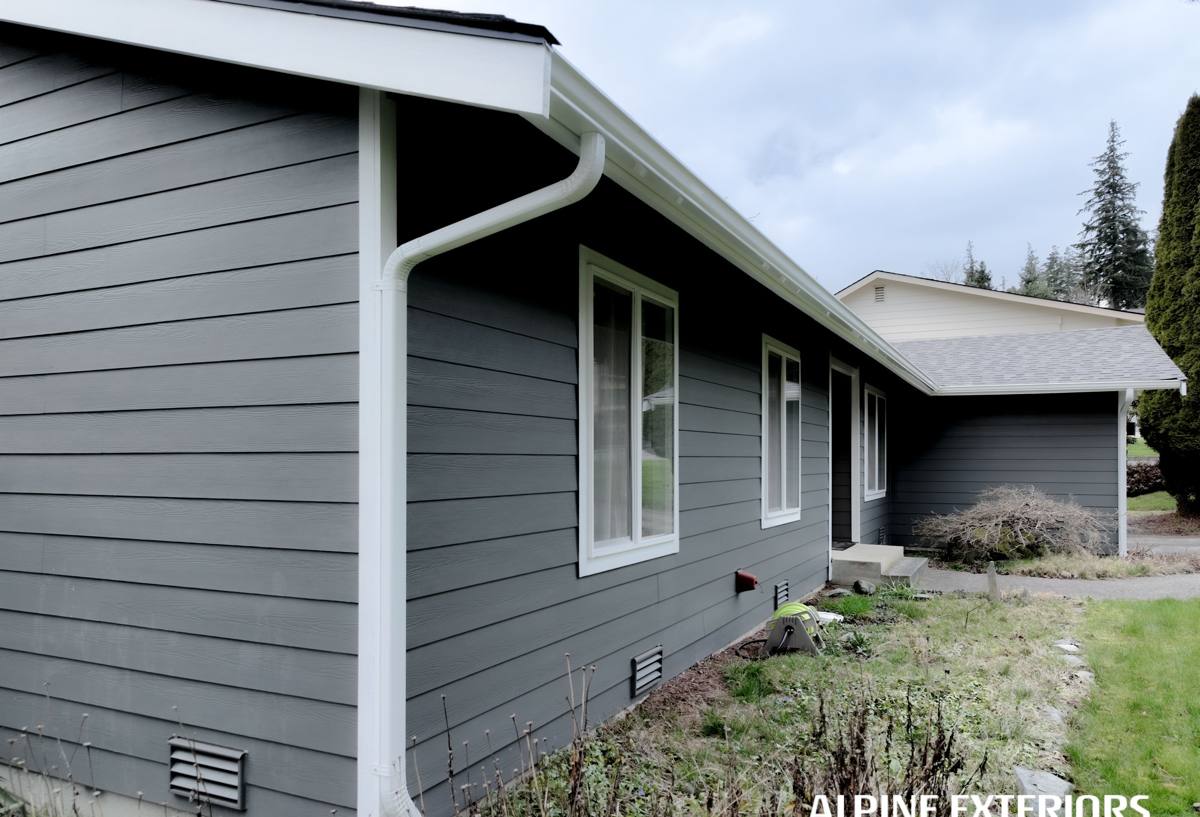
What This Climate Actually Does to Exterior Walls
Wind and Storm Pressure
Sarasota County homes are built to withstand significant wind loads, and siding is part of that system whether homeowners think about it that way or not. During a tropical storm or hurricane, wind doesn't just push against a wall — it creates pressure differences that can pull siding panels outward. Lightweight materials with weak fastening systems are the first thing to fail in these conditions, and once a panel lets go, wind-driven rain has a direct path into the wall assembly.
Year-Round UV
Florida sun is intense for most of the year, not just in summer. Constant UV exposure breaks down pigments and surface coatings over time, which is why so many homes in this area show chalking, fading, or uneven color on their siding well before the material itself has worn out. The finish fails before the substrate does.
Wind-Driven Rain
Rain that falls straight down is manageable. Rain that's being driven horizontally into a wall by 40, 60, or 100 mile-per-hour wind is a different problem entirely. It finds gaps in flashing, poorly caulked joints, and butt seams that weren't installed to spec, and it will keep finding them for as long as the siding is on the house.
Salt in the Air
Fruitville is inland from the immediate coastline, but Sarasota County as a whole sits close enough to the Gulf that salt-laden air moves through the region regularly, especially with onshore winds. Salt exposure accelerates corrosion on fasteners, trim accessories, and any metal components tied into the siding system. Materials and hardware that aren't rated for this kind of exposure age faster here than they would inland in a drier climate.
Why James Hardie Is the Product We Install Here
James Hardie fiber cement is engineered specifically for climates like this one. A few things matter most for Fruitville homes:
- Non-combustible material — fiber cement doesn't burn, which matters during dry stretches and for peace of mind generally.
- HZ5 product engineering — Hardie makes climate-specific formulations, and the HZ5 line is built for regions that see high humidity, heavy rain, and wind exposure — exactly the profile of Sarasota County.
- ColorPlus factory finish — a baked-on finish applied under controlled conditions, which holds color and resists fading far better than field-applied paint exposed to Florida UV from day one.
- Dimensional stability — fiber cement doesn't expand and contract with heat and humidity the way vinyl or wood-based products do, which keeps seams and joints tighter over time.
- A strong, transferable warranty — backed by the manufacturer when the product is installed to Hardie's published specifications.
None of that matters, though, if the installation itself cuts corners. The product is only as good as the crew putting it on the wall.
What a Correct James Hardie Installation Involves
James Hardie publishes detailed installation specifications for a reason — fiber cement performs the way it's supposed to only when those specs are followed exactly. In a climate like Fruitville's, small shortcuts turn into real problems within a few storm seasons. Here's where correct installation practice diverges from the kind of shortcuts we see on homes that were sided by crews without proper Hardie training:
| Installation Element | Done Correctly | Common Shortcut |
|---|---|---|
| Fastener placement | Hardie-specified nail or screw pattern, driven flush, into framing at correct spacing | Overdriven or underdriven fasteners, inconsistent spacing, missed studs |
| Clearance from grade and roofline | Minimum clearances maintained per Hardie spec to prevent moisture wicking | Panels installed too close to grade, decks, or roof surfaces |
| Joint treatment | Properly flashed and caulked butt joints, or engineered joint trim | Caulk-only joints with no flashing behind them |
| House wrap and water management | Continuous weather-resistive barrier integrated with flashing at penetrations | Gaps or overlaps done out of sequence, allowing water paths behind the siding |
| Fastener and trim hardware | Corrosion-resistant fasteners rated for the exposure | Standard fasteners that corrode faster in salt-influenced air |
Every one of those "common shortcut" outcomes shows up eventually — as streaking, soft spots, cracked caulk lines, or rust stains bleeding through the finish. In a climate that runs hard rain and high wind through a home's exterior every year, there's very little margin for installation error.
Our Process for Fruitville Siding Projects
Every Hardie installation we do in Fruitville follows the same sequence, because skipping steps is where problems start:
- On-site assessment. We look at the existing siding or sheathing, check for moisture damage, and evaluate how the home's current water management is performing before we plan anything.
- Substrate preparation. Any damaged sheathing or framing gets addressed before new siding goes on — covering up a problem never fixes it.
- Weather barrier and flashing. House wrap, window and door flashing, and penetration details are installed or corrected to create a continuous drainage plane behind the siding.
- Hardie panel or lap installation. Panels are installed to manufacturer spec — correct fastener type, spacing, and clearances — with joint and corner details handled per the product line being used.
- Trim and accessory installation. Corrosion-resistant trim, corner boards, and accessories are installed to match the ColorPlus finish and protect the vulnerable transition points.
- Final inspection and cleanup. We walk the finished job checking fastener lines, caulk joints, and clearances before we consider it done.
Why Hiring a Crew That Already Works in Sarasota County Matters
Siding installation isn't uniform across the country, and it shouldn't be treated that way. A crew that regularly works in Sarasota County already understands the local wind load requirements that inform how siding needs to be fastened, what inspectors here are looking for, and how the mix of intense sun, humidity, and storm exposure affects sequencing decisions — like how long to wait between steps in humid conditions, or how to detail flashing around openings so it holds up to wind-driven rain rather than just vertical rainfall.
That local familiarity also shows up in smaller, practical ways: knowing which side of a Fruitville home takes the harshest afternoon sun, recognizing early signs of moisture intrusion that are common in this area's older homes, and understanding what permitting and inspection processes look like for Sarasota County specifically. None of that comes from a general contractor doing siding as a side service — it comes from doing this work, in this county, repeatedly.
What to Expect After Installation
A correctly installed James Hardie system is low-maintenance, but "low-maintenance" doesn't mean "no attention required." Homeowners in Fruitville should keep an eye on the following:
- Rinse siding periodically to remove salt residue, pollen, and organic buildup — a garden hose is usually enough.
- Check caulked joints annually, especially after hurricane season, for cracking or separation.
- Watch for any staining near fastener heads, which can indicate a corrosion issue with hardware.
- Keep gutters and downspouts clear so water isn't sheeting down the siding face during heavy rain.
- Trim vegetation back from the siding to maintain airflow and reduce moisture retention against the wall.
- Repaint only if needed — ColorPlus finishes are designed to hold color far longer than field-applied paint, so most homes won't need this for many years.
If something does look off — a cracked joint, a soft spot, discoloration around a fastener — it's worth having it looked at early. Small issues caught after one storm season are a lot easier to correct than issues that have had a few years to work their way into the wall assembly.
Get a Straight Answer About Your Fruitville Home
If you're weighing your siding options in Fruitville, we're happy to take a look at your home, talk through what condition your current siding or sheathing is really in, and give you an honest assessment of what a James Hardie installation would involve — no pressure, no inflated estimate to scare you into a decision. Fill out the form below and we'll set up a time to come take a look.