 Sarasota Window
 Lakewood Ranch is one of the fastest-growing planned communities in the country, and that growth means a wide range of siding situations in one area — brand-new construction going up on former ranchland, homes from the community's earlier build-out phases now old enough to need their first exterior refresh, and everything in between. It also sits across the Sarasota–Manatee county line, which means homes here fall under the same demanding Florida coastal wind and building code framework as the rest of the region, even though the community itself is inland from the immediate coast. Whatever stage a Lakewood Ranch home is at, the siding on it has to hold up to the same hurricane-force wind events, relentless UV, wind-driven rain, and salt-laden air that affect the whole Sarasota area. This page covers what that actually means for a siding project here, and why we install this work exclusively in James Hardie fiber cement.
A Fast-Growing Community With a Wide Range of Siding Needs
Lakewood Ranch's neighborhoods weren't all built in the same decade, which is easy to forget in a community that still reads as "new" from the highway. Some villages have been standing for twenty-plus years and are on their first or second exterior update. Others are still under active construction, with builders making material decisions right now that will determine how those homes perform in twenty years. That range matters for siding work: a replacement project on an older home is a different job than specifying siding for a new build or an addition, even though both end up needing the same climate performance from the finished product.
Architecturally, Lakewood Ranch leans heavily on Florida vernacular styles — Mediterranean and Craftsman influences, hip roofs, covered porches, and a lot of stucco alongside horizontal lap siding and vertical accents on gables and porch surrounds. Siding here is as often an architectural detail as it is full-wall cladding, which changes how we approach color matching, trim profiles, and transitions between stucco and siding sections on the same elevation.
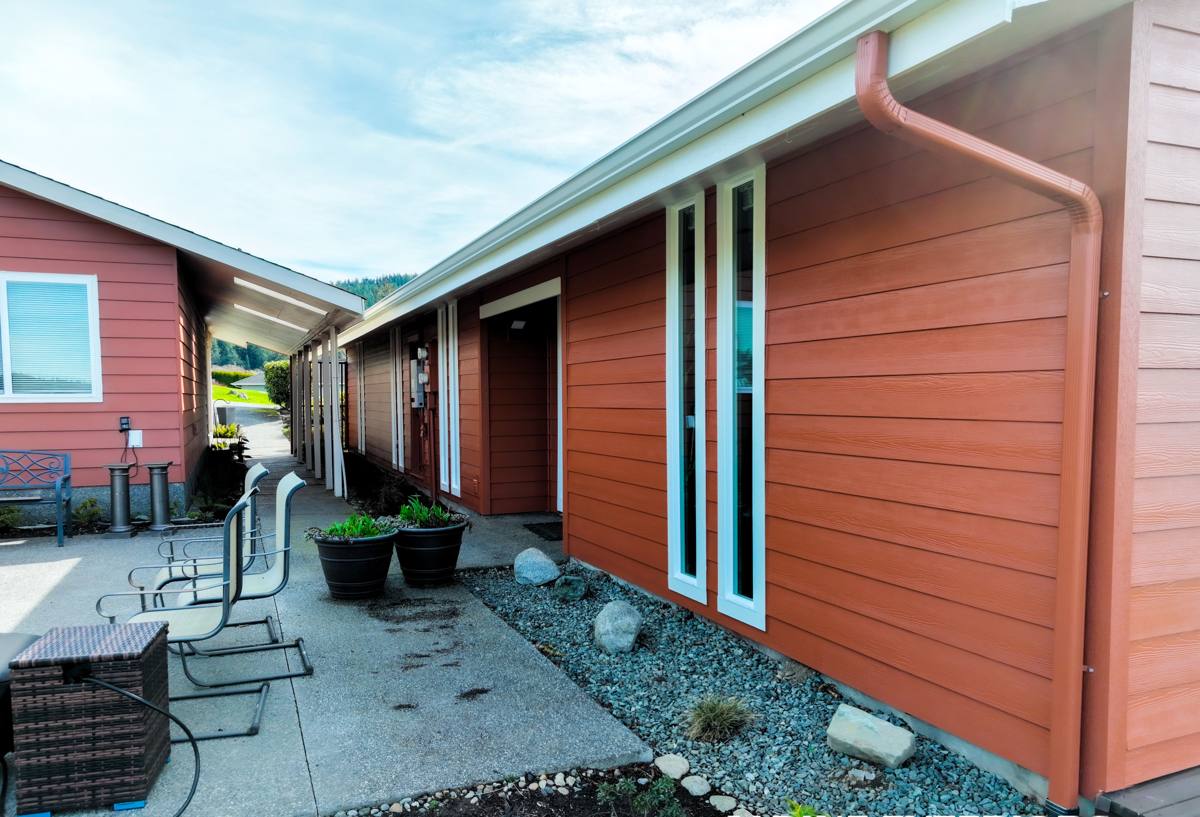
What Hurricane Winds, UV, Rain, and Salt Air Do to Siding Here
Being inland of the barrier islands doesn't put Lakewood Ranch outside the reach of the region's toughest weather. The same named storms and wind events that hit the coast keep moving inland with enough force to matter, and the sun and humidity don't care how far a house is from the water.
Wind Load
Sarasota-area homes fall under Florida's high-velocity wind provisions, which set minimum structural and attachment standards for exterior building materials. On siding, that means fastening pattern, panel gauge, and installation method all have to be rated for sustained hurricane-force wind loads, not just look right once installed. A siding product that isn't engineered and tested for those loads is a liability the first time a real wind event pushes through the area.
Year-Round UV
Florida sun is intense in every season, not just summer, and it works on exterior finishes continuously. Paint films, coatings, and lower-grade composite materials break down under that kind of sustained UV exposure faster than they would in a more moderate climate — fading, chalking, and eventually cracking well ahead of schedule.
Wind-Driven Rain
Florida storms rarely drop rain straight down. Wind pushes it sideways into seams, laps, and any gap in the weather barrier behind the siding, which is why flashing details and correct panel gapping matter more here than in drier regions where rain simply runs off a wall.
Salt Air
Lakewood Ranch is farther from open water than the barrier islands, but the broader Gulf Coast air pattern still carries salt inland, and it's a slow, constant process rather than a storm-driven one. It works on exposed fasteners and lower-quality finishes every day, not just during named storms.
HOA and Architectural Review Considerations
Most Lakewood Ranch neighborhoods operate under a homeowners' association or community development district with an architectural review process, and exterior changes — including siding replacement, color changes, and new accent materials — typically need approval before work starts. That's a real, practical factor in planning a project here, not paperwork for its own sake: it affects the timeline, and it means color and material selection has to happen early enough to get sign-off before crews show up.
This is one of the areas where working with a crew that's done projects in the community already pays off. Knowing that an HOA submission needs to happen, roughly how long approval tends to take, and what kind of documentation a review committee typically wants to see means a homeowner isn't caught off guard partway through planning.
Why James Hardie Fits This Job
We install James Hardie fiber cement exclusively, and in a market with this exact combination of wind, sun, rain, and salt exposure, the reasons come down to engineering, not brand preference.
HZ5 Climate Engineering
James Hardie manufactures regionally engineered products rather than one universal formulation. Homes in our part of Florida receive the HZ5 line, built specifically for high-humidity, high-moisture-exposure climates. That means the cement formulation itself is tuned for the conditions a Lakewood Ranch home actually experiences, not a generic product sold everywhere in the country.
ColorPlus Factory Finish
Instead of relying on field-applied paint, James Hardie bakes its ColorPlus finish on in a controlled factory process through multiple coats. That finish holds color and resists chalking and chipping far better than site-applied paint under Florida's year-round UV load, which matters on a siding job that's expected to look right for a long time between any repainting.
Non-Combustible Material
Fiber cement doesn't burn the way wood-based siding products can, which is a straightforward safety advantage that has nothing to do with climate but is worth noting on any home where fire risk is a factor in insurance or peace of mind.
What a Correct Installation Involves
James Hardie's performance is only as good as the installation behind it. A correct job on a Lakewood Ranch home includes:
- A continuous, properly lapped weather-resistant barrier installed behind the siding, with no gaps or shortcuts at penetrations
- Fastening at the spacing, type, and depth James Hardie specifies for high-wind installation — not a generic fastening pattern borrowed from a milder climate
- Correct gapping at all butt joints, corners, and terminations to allow for thermal movement without opening a path for water
- Flashing at every horizontal transition — window and door heads, roof-to-wall intersections, and any point where siding meets stucco or trim
- Proper clearance at the base of the wall so siding isn't sitting against grade, mulch beds, or hardscaping that holds moisture against it
- Caulking only where James Hardie's specifications call for it, never as a substitute for flashing or correct gapping elsewhere
None of these steps are optional extras — skipping any one of them is how a well-engineered product still ends up with a moisture problem within a few years.
Our Process for a Lakewood Ranch Siding Project
A siding project in this community usually moves through the same sequence, whether it's a full re-side, a partial replacement after storm damage, or new siding on an addition:
- Assessment — a walk of the exterior to evaluate existing substrate condition, identify problem areas around windows, roof lines, and grade, and confirm the scope of work
- Material and color selection — choosing the Hardie product line and ColorPlus color, with attention to matching or complementing existing stucco and trim
- HOA or architectural review submission — preparing whatever documentation the neighborhood's review process requires and building the timeline around approval, not around ignoring it
- Installation — removal of failing material where applicable, correct barrier and flashing installation, and siding installed to James Hardie's fastening and gapping specifications throughout
- Final walkthrough — checking fastening, seams, and flashing details before the job is called finished, not just confirming the finished appearance
James Hardie vs. Other Siding Options for This Climate
| Material | Moisture Behavior | UV/Finish Durability | Hurricane Wind Fit |
|---|---|---|---|
| James Hardie fiber cement | Dimensionally stable, engineered HZ5 formulation for humid climates | Factory-baked ColorPlus finish resists fade and chalk | Engineered and tested for high-wind installation |
| Vinyl siding | Doesn't absorb water but flexes and can gap at seams under heat cycling | Color is through-body but fades and chalks under sustained UV | Wind rating depends heavily on panel gauge and fastening pattern |
| Engineered wood (LP-type) siding | More moisture-sensitive at cut edges and exposed seams | Relies on factory or field coatings with shorter realistic service life | Varies by manufacturer and product specification |
| Primed spruce or cedar | Absorbs and releases moisture readily; prone to swelling and cupping | Fully dependent on a repainting maintenance cycle | Not engineered specifically for hurricane wind zones |
This isn't a claim that every alternative fails on every home — it's why, for the specific combination of wind, sun, rain, and salt air a Lakewood Ranch home deals with, we've standardized on Hardie rather than installing several different products and hoping each one holds up.
Cost Factors to Expect
Siding costs in Lakewood Ranch vary with square footage, the Hardie product line chosen, how much of the existing substrate needs repair or replacement before new siding goes on, and how much trim and detail work the elevation involves. A simple lap-siding re-side on a straightforward elevation costs less than a project involving extensive trim, multiple accent materials, or substrate repair behind failing siding. The only way to get an accurate number is a walk of the specific home — broad national averages don't account for local labor, material availability, or the condition of what's already there.
Why a Crew That Already Works in Lakewood Ranch Matters
Hiring a contractor who's already done projects in this community means fewer surprises. They know the general rhythm of HOA and architectural review timelines here, they've seen how stucco-to-siding transitions get handled on the area's common architectural styles, and they're familiar with the wind code requirements that apply across Sarasota and Manatee counties. That local familiarity doesn't replace a proper assessment of any individual home, but it does mean the project starts with realistic expectations instead of guesswork.
If you're considering James Hardie siding for a Lakewood Ranch home — new construction, a full re-side, or a repair after storm damage — we're happy to walk the property and put together a free, no-pressure estimate.