 Sarasota Window
 Why Laurel Park Decks Wear Out Faster Than People Expect
If you own a home in Laurel Park, you already know your deck doesn't age the way a deck would in a drier, cooler climate. Sarasota's combination of intense year-round UV, wind-driven rain off the Gulf, salt-laden air, and the occasional direct hit from tropical storm-force or hurricane-force wind puts real, cumulative stress on any outdoor structure. A deck that looks fine from a distance can be quietly failing underneath — soft framing, corroded fasteners, or connections that were never rated for the loads Sarasota County now requires. Deck replacement isn't just a cosmetic upgrade in this neighborhood; it's a structural reset that accounts for how this specific climate attacks wood, metal, and even some composite products over time.
Laurel Park is one of Sarasota's older, established, tree-canopied neighborhoods close to the downtown core, which means a lot of the decks here were built years ago under different codes, with different materials, and often without the ventilation or fastener choices that today's building standards call for. When we replace a deck in this area, we're not just swapping old boards for new ones — we're correcting the parts of the original build that were never suited to this environment in the first place.
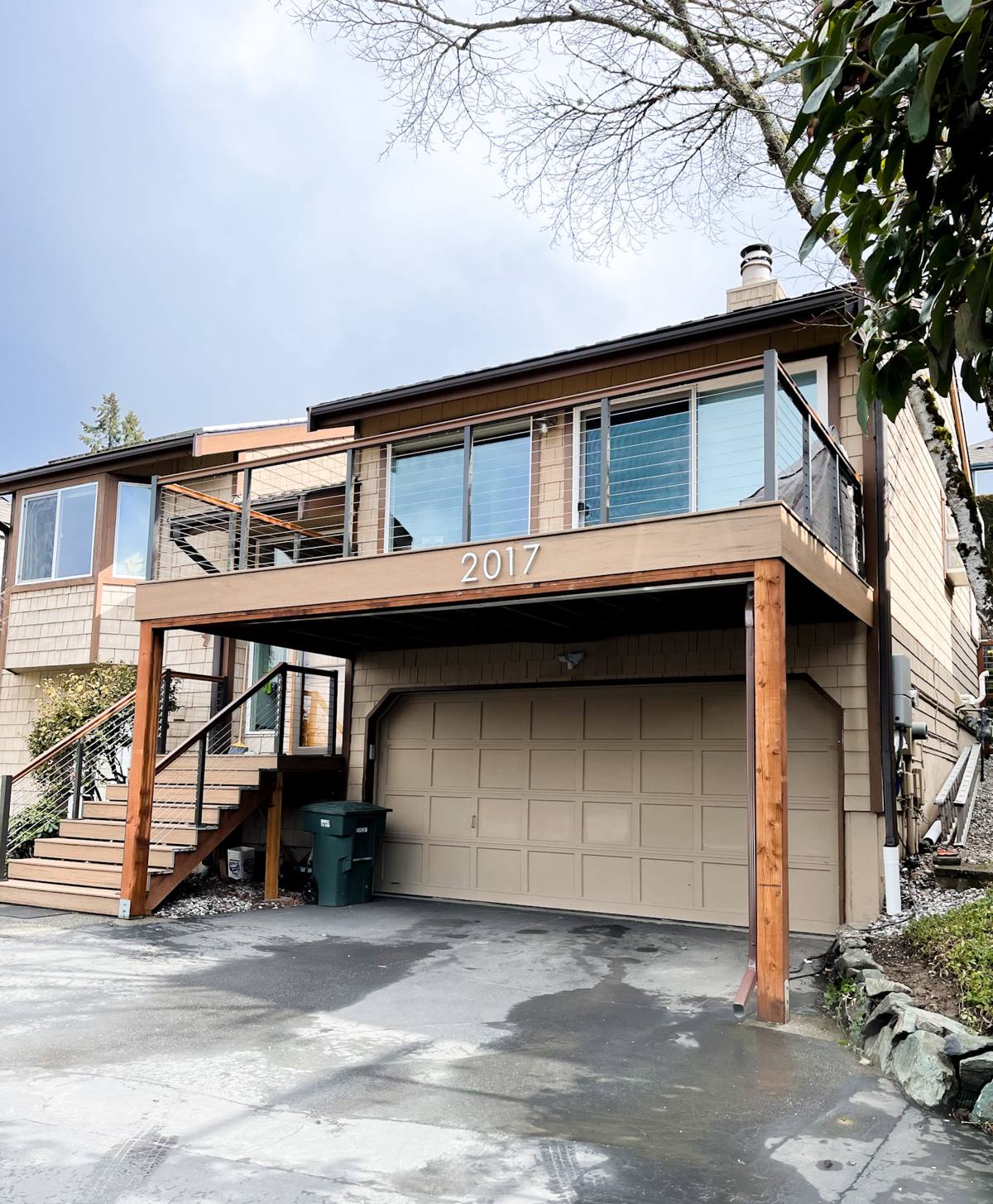
What Sarasota's Climate Actually Does to a Deck
Intense, Year-Round UV
Florida sun is relentless on exposed wood and even on many composite products. UV breaks down the lignin in wood fibers, causing graying, splintering, and surface checking. On composite decking, prolonged UV exposure can fade color and, on lower-grade products, cause the outer shell to become brittle over time. A deck in full Sarasota sun ages faster than the same deck would in a shadier or cooler climate, which is why material selection and finish matter more here than in most parts of the country.
Wind-Driven Rain and Standing Moisture
Afternoon storms in this region don't just fall straight down — wind pushes rain sideways and up under railings, into ledger connections, and between deck boards. That moisture needs somewhere to go. Decks with poor spacing, inadequate slope, or blocked airflow underneath trap water against framing members, which is where rot and fastener corrosion actually start. It's rarely the top of the board that fails first; it's what's happening underneath that you can't see from the porch.
Salt Air and Fastener Corrosion
Even well inland from the immediate coastline, Sarasota's salt-laden air accelerates corrosion on standard fasteners, joist hangers, and structural screws. Once a fastener starts corroding, it loses holding strength long before it looks obviously bad, which is why we treat hardware grade as a structural decision, not an afterthought.
Hurricane-Force Wind Loads
Deck structures need to resist uplift and lateral loads during tropical storms and hurricanes, not just support foot traffic on a calm day. Ledger attachment, post-to-beam connections, and railing anchoring all need to be built to current wind-load requirements for this part of Florida — not just "strong enough" by feel, but engineered and fastened to hold under real storm conditions.
Signs Your Deck Needs Replacement — Not Just Repair
Not every aging deck needs a full replacement, but in a climate this demanding, patch repairs often just delay a bigger problem. Here's what tells us a Laurel Park deck has moved past the point of spot repair:
- Soft, spongy, or springy spots when you walk across the deck surface
- Visible rot, splitting, or delamination at board ends and around fasteners
- Rust streaks bleeding from screw heads or structural hardware
- Wobble or movement at the railing posts when pushed
- Gaps or separation where the deck's ledger board meets the house
- Boards that have cupped, crowned, or twisted noticeably out of plane
- Persistent mildew or algae growth that returns quickly after cleaning
- A structure that predates current Florida wind-load and fastening standards
If more than one or two of these apply, repair usually ends up costing more over a few years than a proper replacement would have cost up front — and it doesn't address the underlying structural issues.
What a Correct Deck Replacement Actually Involves
A deck replacement done right is a structural project, not a materials swap. For Laurel Park homes, that means:
Framing and Structure First
We inspect and, where needed, rebuild the ledger connection, posts, beams, and joists before a single new board goes down. Framing is the part of the deck doing the actual work of holding it up in wind and storm conditions, and it's the part most often shortchanged in older builds.
Corrosion-Resistant Hardware
Given the salt air common to this region, we use fasteners and structural connectors rated for coastal or high-corrosion environments rather than standard-grade hardware that wasn't built for Gulf Coast exposure.
Proper Drainage and Airflow
Board spacing, deck slope, and under-deck ventilation are set up to shed wind-driven rain instead of trapping it, which directly slows the moisture damage that shortens a deck's life here.
Code-Correct Attachment
Ledger attachment, railing anchoring, and post connections are built to current Florida and Sarasota County requirements for wind resistance — not just "how it was done before."
Choosing the Right Decking Material for This Climate
There's no single "best" decking material for every home — it depends on budget, maintenance tolerance, and how much sun and moisture exposure the specific deck will see. Here's an honest comparison of the main options we install and maintain in Sarasota conditions:
| Material | UV / Sun Performance | Moisture Behavior | Maintenance | Typical Lifespan Here |
|---|---|---|---|---|
| Pressure-treated wood | Fades and grays without regular sealing | Prone to swelling/checking if not sealed and ventilated well | Annual cleaning and resealing recommended | 10–15 years with upkeep |
| Capped composite | Strong color retention, resists fading | Won't rot; handles wind-driven rain well | Occasional washing, no sealing/staining | 25+ years |
| PVC decking | Excellent, purpose-built for full sun | Fully moisture-resistant, no organic material to rot | Very low — washing only | 25–30+ years |
| Tropical hardwoods | Naturally UV-tolerant but will silver over time | Naturally moisture-resistant if properly finished | Periodic oiling to maintain color | 20–25 years |
We generally steer homeowners away from lower-grade, uncapped composite boards in this climate — not because the category is bad, but because our professional standard is to use products with a full cap or shell that actually stands up to sustained Florida UV and moisture cycling. It's a maintenance and longevity trade-off we'd rather explain up front than have a homeowner discover in year three.
Our Deck Replacement Process
- On-site evaluation. We inspect the existing deck's framing, ledger connection, footings, and hardware to determine what's failing and why.
- Honest scope and estimate. You get a clear breakdown of what needs full replacement versus what's structurally sound, along with material options and pricing.
- Permitting. We handle the permit application and inspection scheduling required for deck work in Sarasota County.
- Demolition and disposal. The old deck is removed and hauled away, with the site protected from damage.
- Structural rebuild. Ledger, posts, beams, and joists are installed or reinforced to current code and wind-load requirements, with corrosion-resistant hardware throughout.
- Decking, railing, and finish work. Your chosen material is installed with proper spacing and fastening for drainage and long-term stability.
- Final walkthrough and inspection. We review the finished deck with you and coordinate any required final inspection sign-off.
Permits and Codes for Sarasota County Deck Work
Deck replacement in Sarasota County typically requires a building permit, and inspections are done at key stages of construction, not just at the end. This isn't red tape for its own sake — it's how the county confirms that ledger attachment, footing depth, and railing construction can actually hold up to the wind loads this region gets tested with. Skipping or shortcutting permitting on a deck rebuild is one of the more common ways homeowners end up with a structure that looks finished but won't pass inspection when it's time to sell the home. We pull the appropriate permits and schedule inspections as a standard part of every replacement — it's built into the process, not an upsell.
Why Local Experience in Laurel Park Matters
A crew that regularly works in and around this neighborhood already understands the age and construction style of homes here, has a feel for how the tree canopy and lot layout affect drainage and sun exposure, and knows what Sarasota County inspectors are actually looking for at each stage. That local familiarity shortens the back-and-forth on permitting, reduces surprises once demolition starts, and means the material and structural decisions we recommend are based on how decks in this specific area actually perform — not generic advice that ignores the realities of coastal Southwest Florida.
If your deck is showing its age, or you just want an honest read on whether it's a repair or a replacement, we're glad to take a look. Reach out for a free, no-pressure estimate using the form below.