 Sarasota Window
 Laurel Park is one of Sarasota's older, established neighborhoods — close to downtown, shaded by a mature tree canopy, and built out with a mix of home ages and styles that ranges from historic bungalows to newer infill construction. That combination makes siding repair here a different job than it is in a newer subdivision. The housing stock is older, which means more homes with siding that's been patched, painted, or replaced piecemeal over the years. The tree cover that gives the neighborhood its character also keeps moisture around longer after rain. And like every home in Sarasota County, siding here has to survive hurricane-force wind, intense year-round UV, wind-driven rain, and salt air moving in off the coast. Getting a repair right means accounting for all of it, not just patching what's visible.
Why Siding Repair Looks Different in Laurel Park
A repair estimate on an older Laurel Park home usually starts with more questions than a newer house would need. What's actually behind the siding — is it the original sheathing, has it been re-sided before, is there a history of moisture issues that were covered rather than fixed? What's the siding material, and is it still available to match, or has it been discontinued? And because many homes here sit close together on established lots with mature landscaping, access, drainage, and root systems near the foundation can all factor into how a repair is scoped. None of this makes repair work in Laurel Park harder to do correctly — it just means a correct estimate takes a closer look before any work starts.
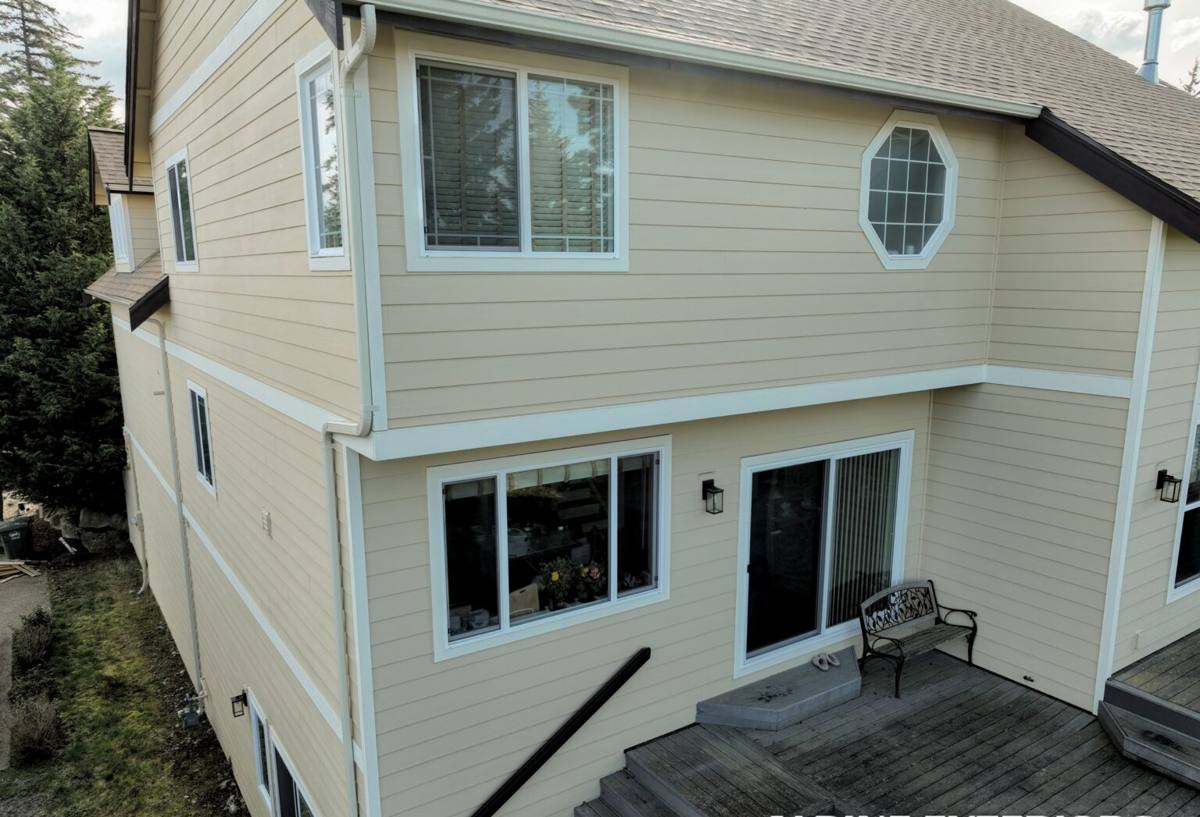
What Actually Damages Siding in This Neighborhood
Hurricane-Force Wind
Wind events strong enough to test a home's exterior are a real design condition for every property in this part of Florida, not an occasional risk. Wind doesn't just tear siding off outright — more often it loosens fasteners, lifts panel edges, or opens small gaps at seams and corners that let water in during the next storm. A panel that looks intact after a windy season can still have compromised attachment points underneath.
Intense, Year-Round UV
Florida's UV exposure runs high almost every month of the year, and it breaks down lower-grade siding finishes, caulking, and paint well before their expected service life. On painted or lower-quality siding, this shows up as chalking, fading, and eventually cracking that lets moisture behind the material. Sun exposure varies house to house in Laurel Park depending on tree cover, but no home here is fully shielded from it.
Wind-Driven Rain
Ordinary rainfall mostly runs down a wall. Wind-driven rain during storms gets pushed sideways and upward into seams, trim joints, and any gap in flashing that wouldn't otherwise see water. This is one of the most common ways moisture gets behind siding without an obvious point of entry, and it's why a repair that only addresses the visible surface damage often doesn't hold.
Salt Air
Sarasota's proximity to the Gulf and the bay means salt-laden air is a factor across the county, working on exposed fasteners, trim hardware, and any metal component of a siding system even well away from the immediate waterfront. Corrosion at fastener heads or flashing is often the real cause behind a section of siding that's started to lift or stain.
Shade and Moisture from Mature Tree Canopy
The oak canopy that gives Laurel Park its character cuts both ways. It reduces direct UV exposure on some walls, but it also keeps humidity and dampness against the siding longer after rain, since less sun and airflow reach shaded elevations. Leaf litter and organic debris that collects at the base of walls or in corners can hold moisture against the bottom courses of siding, which is a common spot for hidden damage on tree-lined lots.
Cosmetic Wear vs. Real Damage
Not every flaw in a wall of siding needs the same response, and telling the difference is the actual value of a proper inspection.
| Symptom | Usually Cosmetic | Often a Real Problem |
|---|---|---|
| Faded or chalking paint finish | Yes — sun and age | Only if paired with soft or swollen material underneath |
| Hairline cracking at a seam or corner | Sometimes — surface only | Often — a moisture entry point forming |
| Slightly lifted or bowed panel edge | Rarely | Usually — loosened fasteners or wind damage |
| Soft, spongy, or crumbling siding | No | Yes — moisture damage requiring section replacement |
| Rust streaking near fasteners or trim | Cosmetic if isolated | Can signal corroding hardware underneath |
| Staining or dark patches at the base of a wall | Sometimes — surface mildew | Often — trapped moisture from poor drainage or debris |
Cosmetic wear affects how a wall looks and can usually wait for a scheduled repair. Anything involving soft material, active water entry, or hardware failure shouldn't be deferred, since those problems compound the longer they're left alone.
How We Diagnose Siding Before Recommending Repair
A repair scope worth trusting starts with a real inspection, not a guess from the driveway. That typically includes:
- Probing suspect areas — especially near the base of walls, around window and door trim, and at seams — for soft or crumbling material rather than relying on a visual check alone
- Checking flashing and caulking at every penetration and trim joint, since these are the most common places moisture actually gets behind the siding
- Inspecting fasteners and any exposed hardware for corrosion, particularly on walls that catch salt-laden air with little obstruction
- Identifying the existing siding material and confirming whether it's still available to match, or whether patch repair will create a visible mismatch
- Looking at drainage around the foundation and any debris buildup at the base of shaded or tree-covered walls
- Checking for consistent damage patterns across an elevation versus an isolated problem, which changes whether a spot repair or a larger scope makes sense
We walk through what we find honestly — what needs attention now, what's cosmetic, and what a realistic repair will and won't accomplish — before recommending a scope.
Repair vs. Replace: How That Decision Actually Gets Made
Homeowners often assume a siding problem means a full re-side, or the opposite — that any repair will be cheap and simple. Neither holds up consistently, especially on an older Laurel Park home. The honest factors that drive this call:
- How localized the damage is. A section of siding damaged by an isolated event — a storm, a leak, an impact — is usually a solid repair candidate. Damage showing up across multiple walls or elevations usually points to a systemic issue that a spot repair won't resolve.
- Whether the existing material can still be matched. Older siding, especially products that have been discontinued or repainted multiple times over the years, can be difficult or impossible to match exactly. When a visible mismatch is the only option, that changes the honest recommendation.
- What's underneath the visible surface. If moisture has reached the sheathing or framing in more than one spot, chasing it board by board usually costs more over time than addressing the wall as a whole.
- The age and condition of the rest of the siding. Siding near the end of its practical life may only have limited repair cycles left before full replacement is the more cost-effective path, even if the current damage is small.
We'll give a straight answer on which category a given repair falls into, including when full replacement is genuinely the better option — not the more profitable one.
What a Correct Repair Involves
Fixing the Cause, Not Just the Symptom
A soft or damaged section of siding is a symptom. Failed flashing, a gap at a trim joint, or debris trapping moisture against a wall is usually the cause. Replacing the visible damage without correcting what let water in behind it means the same spot tends to fail again, often faster the second time.
Matching Without Compromising the Wall System
Patch repairs need to tie into the existing material correctly — proper overlap, correct fastening, and flashing detail that matches how the rest of the wall sheds water. A repair that looks fine from the ground but doesn't integrate properly with the surrounding siding just creates the next entry point for moisture.
Why We Repair With James Hardie Fiber Cement
When a repair calls for replacing damaged sections, we do that work with James Hardie fiber cement, factory-finished with ColorPlus coating where a color match is available. That's a deliberate standard, not a default. Fiber cement doesn't absorb water the way wood-based products can, it doesn't require the same repaint cycle that painted or lower-grade siding does in this UV load, and it's non-combustible. On a home where the existing siding is a different material — an older painted product, vinyl, or something no longer manufactured — an exact patch match sometimes isn't realistic, and we'll say so plainly. In those cases the honest options are usually a full elevation replacement in Hardie or a repair that accepts a visible transition, and we'll walk through both rather than pushing whichever is bigger.
Maintenance That Extends a Repair's Lifespan
- Keep leaf litter and organic debris cleared from the base of walls, especially on shaded, tree-covered elevations where moisture lingers longer
- Rinse siding periodically to remove salt residue, pollen, and mildew before it works into seams and caulk lines
- Recaulk trim joints and penetrations on a regular schedule, since caulk fails well before the siding itself typically does
- Trim vegetation back from exterior walls to keep airflow moving and reduce standing moisture against the siding
- Check for soft spots or new staining after storm season, when wind-driven rain is most likely to have found a new entry point
- Address small issues — a lifted corner, a cracked seam — promptly, since they're far cheaper to fix before they become a moisture problem underneath
Why It Matters That We Already Work in Laurel Park
A crew that mostly repairs newer siding elsewhere can still do competent work here, but Laurel Park's older housing stock, established tree canopy, and closer-set lots come with variables that show up more often on this kind of property than on a typical newer Sarasota County build. Knowing what siding materials and eras are common in this neighborhood, how the tree cover affects moisture and drainage around a given lot, and how to work carefully around mature landscaping and tight side yards means less guesswork at the estimate stage and fewer surprises once work is underway. We're not learning this neighborhood on your project.
Whether you're dealing with a specific problem — a soft spot near a window, a section that took storm damage, siding that's simply reached the end of its life — we're glad to take an honest look and explain what we find plainly, including if the answer is that a small repair is all it needs. Reach out below for a free, no-pressure estimate.