 Sarasota Window
 Deck Building on Longboat Key: A Different Kind of Job
Longboat Key sits out on a barrier island between Sarasota Bay and the Gulf of Mexico, and that location changes what a deck actually has to survive. This isn't a shaded backyard deck in an inland subdivision. It's an outdoor structure exposed to direct salt air on almost every side, sitting under some of the most intense year-round UV in Florida, and built in a spot where hurricane-force wind is a real design load, not a hypothetical. A deck that would hold up fine twenty miles inland can fail here in a fraction of the time if it wasn't built with this specific environment in mind.
Sarasota Window Company builds decks across Sarasota County, and Longboat Key is one of the more demanding parts of that territory. We're not going to sell you a deck package that was designed for a generic Florida yard. We build for what this island actually throws at a structure: wind, salt, UV, and wind-driven rain, all working on the deck at once, year after year.
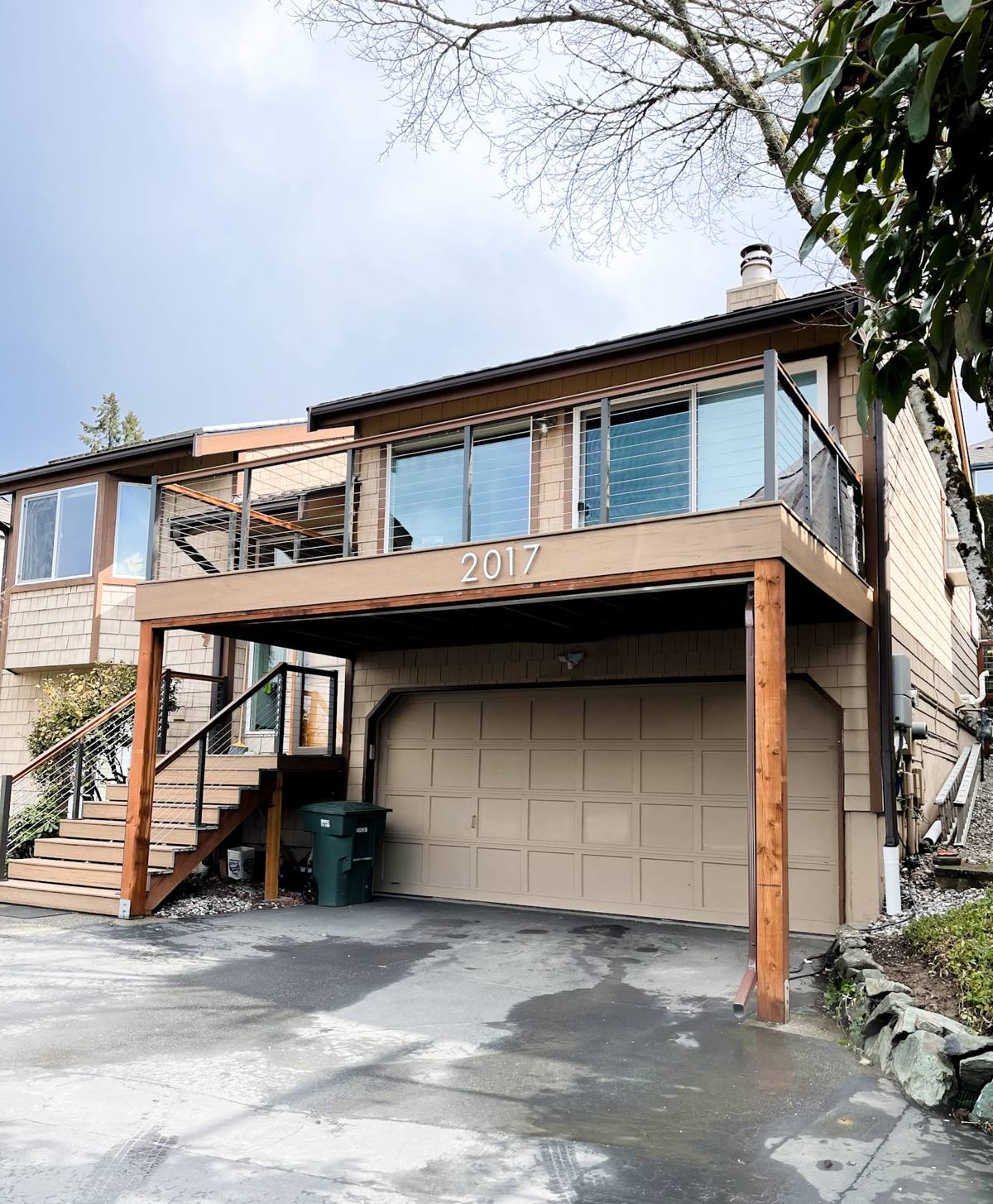
What This Climate Does to a Longboat Key Deck
Hurricane-Force Wind Loads
A deck attached to a house isn't just a platform to walk on — it's a structure that has to resist uplift and lateral load in a storm. On a barrier island like Longboat Key, wind speeds during a hurricane or strong tropical system are higher than what a deck built to a minimum, inland-oriented spec would handle. That means post spacing, joist hangers, and the connection between the deck and the house all need to be sized for real wind exposure, not the bare minimum a code inspector might let slide inland.
Salt Air and Fastener Corrosion
Salt-laden air moves across the entire island, not just the waterfront lots. It gets into every exposed metal fastener, hanger, and bolt on a deck, and it works fast. Standard coated deck screws and hangers that might last a decade in a drier, inland climate can start showing rust and pitting in a fraction of that time here. Once corrosion starts on a structural fastener, the deck's actual strength — not just its appearance — is compromised.
UV and Board Degradation
Longboat Key gets sun exposure most of the year, with little seasonal relief. UV breaks down the surface fibers of wood decking and, over time, can fade and chalk lower-grade composite boards. Dark-colored decking absorbs more heat and UV energy and tends to show fading and surface wear faster than lighter colors, which is a real consideration when picking a board, not just a cosmetic preference.
Wind-Driven Rain and Ledger Failures
Rain on this island rarely falls straight down — wind pushes it sideways into ledger boards, post bases, and any spot where the deck meets the house. The ledger connection, where the deck attaches to the home's structure, is one of the most common failure points we find on older decks, because water gets behind improperly flashed ledgers and rots the framing from the inside where it's not visible until the damage is advanced.
Decking Material Options for This Environment
There's no single correct material for every home on Longboat Key — budget, maintenance tolerance, and how the deck will be used all factor in. What matters is understanding how each option actually performs under sustained salt air and UV, not just how it looks on day one.
| Material | Salt Air & Moisture Behavior | UV/Fade Resistance | Typical Maintenance | Realistic Lifespan Here |
|---|---|---|---|---|
| Pressure-treated wood | Prone to splintering, warping, and fastener corrosion staining without diligent upkeep | Fades and grays quickly without regular sealing | High; annual sealing/staining recommended | 10-15 years |
| Composite decking | Resists rot and salt-driven decay well; quality varies significantly by product line | Moderate to good; lighter colors hold up better than dark | Low; periodic washing | 20-25 years |
| Capped PVC decking | Excellent moisture and salt resistance; fully sealed surface | Good, especially with UV-stabilized capping | Low | 25-30+ years |
| Tropical hardwood | Naturally dense and rot-resistant, but still needs oiling to prevent surface checking in this UV load | Grays without regular oiling | Moderate to high; periodic oiling | 20-25 years with upkeep |
We'll walk through these trade-offs against your budget and how much upkeep you actually want to take on, rather than steering you toward whatever's easiest to install. A rear-facing deck with heavy afternoon sun and a shaded, more protected deck on the same house don't always call for the same board choice.
Framing and Structure: Where Longevity Actually Comes From
Post and Footing Depth
On a barrier island with sandy, shifting soil and the potential for storm surge, footing depth and post anchoring need to account for conditions this specific site presents, not a generic assumption. We size and place footings based on what the ground and the local code actually call for on your lot, not a one-size-fits-all template.
Ledger Attachment and Flashing
The ledger board is the single most important connection on an attached deck, and it's also the one most often done wrong. Correct flashing — a proper drip cap, membrane behind the ledger, and the right lag bolts or through-bolts spaced to code — is what keeps wind-driven rain from working its way into the house framing over the years. This is a detail that's invisible once the deck is finished, which is exactly why it matters that it's done right the first time.
Fasteners and Hardware
Given how aggressively salt air attacks metal here, we use stainless steel or otherwise marine-rated fasteners and structural hardware on Longboat Key decks rather than standard coated deck screws and hangers. It costs more up front than the minimum-grade hardware, but a deck's structural integrity depends on connections that hold up for decades, not the handful of years a lower-grade fastener will last in this air.
Permitting on Longboat Key
Deck construction on Longboat Key requires a permit, and the plans need to reflect the wind load and, depending on the property, flood zone requirements that apply to a barrier island location. This isn't paperwork we treat as an afterthought — an unpermitted or under-engineered deck can create real problems at resale, with insurance, or if the structure is ever inspected after a storm. We handle the permitting process as part of the project, including preparing plans that meet the wind load standards this location actually requires.
Our Deck Building Process
- On-site assessment. We look at your lot, sun exposure, existing structure (if replacing a deck), and how you actually plan to use the space.
- Material and design conversation. We go over decking material, railing options, and layout, with honest trade-offs for each based on your budget and maintenance tolerance.
- Engineering and permitting. We prepare or coordinate the plans needed to meet Longboat Key's wind load and building code requirements, and we pull the permit.
- Construction. Footings, framing, ledger flashing, decking, and railing, built with fasteners and hardware sized for this specific environment.
- Final inspection and walkthrough. We pass the required inspections and walk the finished deck with you before calling the job done.
Maintaining a Deck on Longboat Key
Even a well-built deck needs some ongoing attention in this climate. A little regular care goes a long way toward getting the full lifespan out of the materials and catching small problems before they become structural ones.
- Rinse salt residue off decking and railings periodically, especially after storms or high-wind days
- Check fastener heads and visible hardware for early signs of rust or corrosion
- Inspect the ledger board area and any spot where the deck meets the house for staining or soft wood
- Reseal or oil wood or hardwood decking on the schedule the manufacturer recommends for this climate
- Clear debris from between boards and around post bases so water and moisture don't sit and collect
- After a significant storm, have the structure checked for loosened hardware or shifted footings before heavy use resumes
Why a Crew That Already Works Longboat Key Matters
A contractor who builds decks across barrier island conditions understands things a general residential crew might not think to ask about: how much wind load a specific lot orientation actually needs to be designed for, which fastener grade is worth the extra cost given the salt exposure at this address, and how flashing details need to be adjusted for a home that takes wind-driven rain from multiple directions. That experience shows up in decisions made before construction even starts, not just in the finished product. It also means working with a crew that already understands Longboat Key's permitting process and code requirements, rather than learning them for the first time on your project.
Get a Free, No-Pressure Estimate
If you're planning a new deck or replacing one that's showing its age on Longboat Key, we're glad to take a look at your property and give you an honest read on materials, structure, and what the job actually involves. Reach out using the form below to schedule a free estimate — no pressure, no upsell script.