 Sarasota Window
 Why Downtown Sarasota Homes Are Turning to Metal Roofing
Downtown Sarasota sits close enough to the bay and the Gulf that every roof on every block deals with the same three enemies: wind, sun, and salt. A roof here isn't just shedding rain — it's holding up against hurricane-force gusts several months a year, absorbing near-constant UV that breaks down lesser materials from the top down, and fending off salt-laden air that speeds up corrosion on anything not built or coated to handle it. Metal roofing, installed correctly, answers all three of those problems better than most alternatives, which is why we see more of it going up on Downtown Sarasota homes every season.
That said, "metal roof" isn't one product — it's a category with real differences in panel type, fastening method, coating quality, and installation detail. Get those details wrong and you can end up with a roof that looks fine for a year or two and then starts leaking at the seams or streaking with rust at every screw head. Get them right and you're looking at one of the longest-lived, lowest-maintenance roofing systems available in this climate.
What Downtown Sarasota's Climate Actually Demands From a Roof
Wind Load
Sarasota County sits in a high-wind zone, and Downtown's mix of older bungalows, mid-century homes, and newer infill construction all face the same building code wind-speed requirements. A metal roof's wind resistance comes down to the fastening system and panel profile — not just the metal itself. A standing seam panel with concealed, properly spaced clips performs very differently in a gust than a lower-grade exposed-fastener panel installed with the wrong screw pattern.
UV Exposure
Florida sun is relentless on roofing materials. Asphalt shingles lose their granules and oils over years of UV exposure, which is part of why they age out faster here than in cooler climates. Quality metal roofing with a baked-on finish (Kynar 500 or comparable PVDF coatings) resists chalking and fading far longer, holding its color and reflectivity instead of breaking down.
Wind-Driven Rain
It's rarely rain falling straight down that causes leaks here — it's rain being pushed sideways and upward under roof edges and around penetrations during a squall or tropical system. This is a detailing issue as much as a material issue. Underlayment selection, flashing at every wall and roof transition, and how the panels terminate at eaves and rakes all matter more than the panel spec sheet.
Salt Air
Even a few miles inland from the bay, salt air accelerates corrosion on unprotected metal, exposed fasteners, and lower-grade coatings. This is where a lot of cut-rate metal roofing jobs fail early — bare or poorly coated fasteners rust first, staining the panel and eventually loosening the seal at each hole.
Panel Types We Install and How They Compare
Not every metal roofing system is a fit for every Downtown Sarasota home. Here's how the common options stack up on the factors that matter most in this climate:
| Panel Type | Fastening | Wind/Storm Performance | Best Fit |
|---|---|---|---|
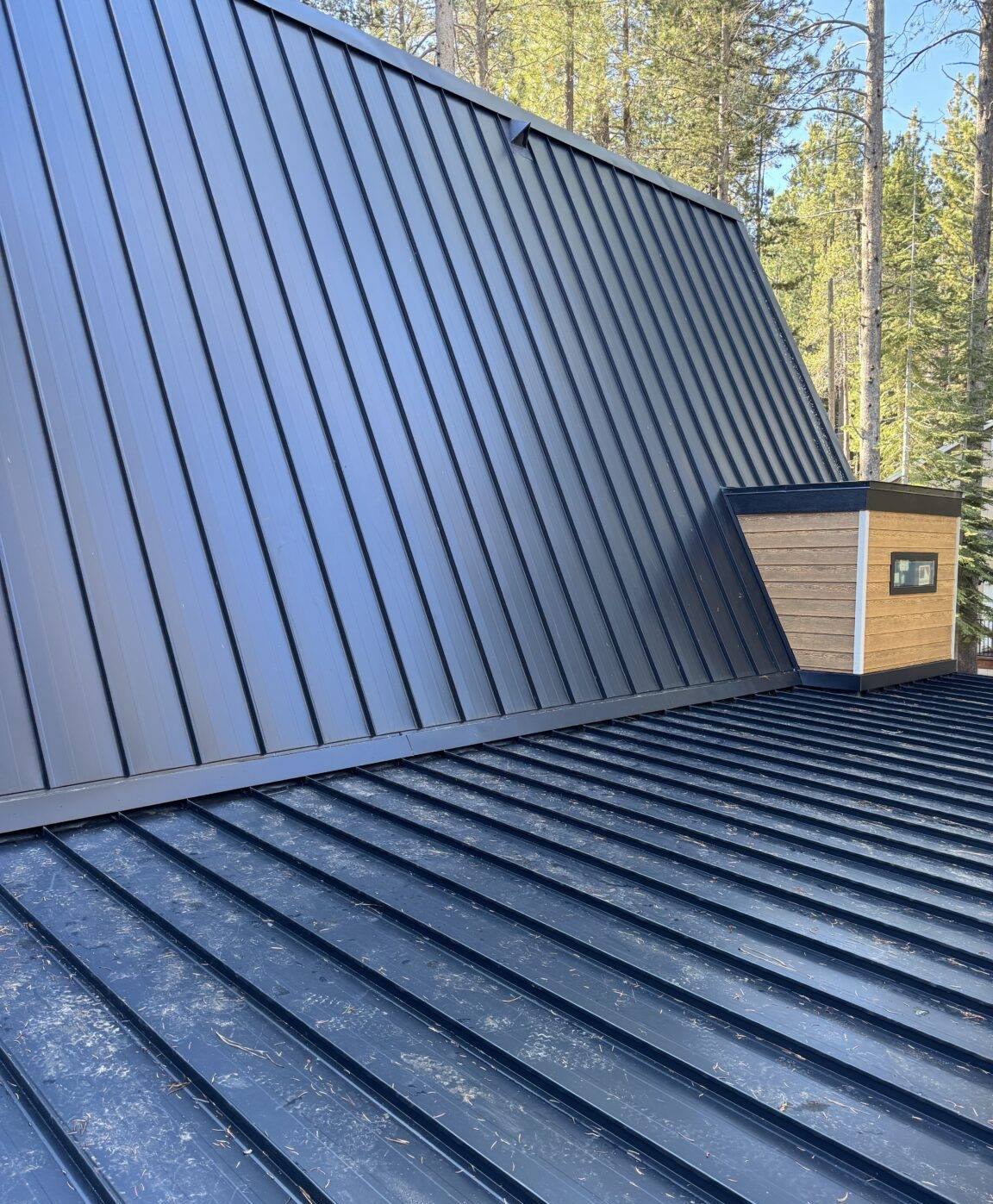
| Standing seam (concealed fastener) | Hidden clips, no exposed screws | Strongest — panels interlock, no fastener heads to loosen or leak | Most Downtown Sarasota homes, especially near the water |
| Exposed-fastener metal panel | Screws through the panel face | Good if installed and re-torqued correctly, but fasteners are the weak point over time | Budget-conscious projects, outbuildings, secondary structures |
| Metal shingle / shake profile | Interlocking with concealed clips | Strong, mimics traditional roof lines | Historic-style or architecturally detailed homes |
| Stone-coated steel | Interlocking panels | Very strong, adds impact resistance | Homes wanting a tile or shake look with metal durability |
For most Downtown Sarasota properties, we lean toward standing seam because it removes exposed fasteners entirely — the single biggest source of long-term leaks and rust streaking on metal roofs in coastal climates. We'll walk you through the honest trade-offs (upfront cost vs. long-term maintenance) for your specific home rather than pushing one option across the board.
Coatings and Fasteners: Where Salt-Air Roofs Actually Fail
If you talk to enough roofers, you'll hear a lot of opinions about "which metal is best." In practice, the metal itself is rarely the point of failure — the coating system and the fasteners are. We specify marine-grade or coastal-rated fasteners with matching color-coated heads and factory-applied sealing washers, and we avoid mixing dissimilar metals (like the wrong screw alloy against aluminum or Galvalume panels) that can trigger galvanic corrosion. It's a small detail that determines whether your roof still looks clean in ten years or shows rust bleed at every seam within three.
What a Correct Metal Roof Installation Involves
A metal roof is only as good as what's underneath it and how it's detailed at every edge, valley, and penetration. On a proper installation we handle:
- Full tear-off and deck inspection — soft, rotted, or under-fastened decking gets addressed before a single panel goes down
- High-temp, self-adhering underlayment suited to Florida's heat and humidity, not a generic felt that degrades under a metal roof's higher deck temperatures
- Proper panel layout and seaming to match your roof's actual pitch and run lengths
- Storm-rated fastening or clip spacing matched to Sarasota County wind requirements
- Flashing detail at every wall intersection, chimney, skylight, and vent penetration
- Closure strips and trim at ridges and eaves to block wind-driven rain and pests
- Final walk-through checking fastener torque, panel alignment, and seam integrity
Skipping or rushing any one of these is how a metal roof ends up with problems that show up two or three years down the road instead of twenty.
Our Process for Downtown Sarasota Projects
We keep the process straightforward because we've done enough of these locally to know what actually needs explaining and what doesn't:
- On-site assessment — we inspect your current roof, deck condition, and any problem areas (existing leaks, past patch jobs, ventilation issues)
- Honest scope and options — we explain which panel types and finishes make sense for your home and budget, without upselling a system you don't need
- Permitting — Sarasota County and City of Sarasota permitting requirements are handled as part of the job, not left for you to sort out
- Installation — a dedicated crew, not a rotating mix of subcontractors, working your roof from tear-off through final trim
- Final inspection and walkthrough — we go over the finished roof with you before we consider the job done
Working Downtown vs. a General Service Call
Downtown Sarasota brings its own logistics: tighter lots, closer neighbors, mature tree canopy over some streets, and in some pockets, historic district or HOA guidelines that affect what a roof can look like from the street. A crew that regularly works this specific area already knows how to stage material deliveries and crane work without turning your street into an obstacle course, and knows which finishes and profiles read as appropriate for the neighborhood rather than out of place. That local familiarity saves time and avoids surprises mid-project.
Maintenance: What Actually Keeps a Metal Roof Performing Here
Metal roofing is low-maintenance, not no-maintenance, especially this close to salt air. A simple annual habit keeps most problems from ever starting:
- Rinse accumulated salt film and debris off the roof surface, especially after dry spells followed by storms
- Keep gutters and valleys clear so water isn't sitting against seams or trim
- Have fastener heads and sealant at penetrations checked every year or two, particularly on exposed-fastener systems
- Trim back tree limbs that drop debris or rub against panels in wind
- After any major storm, have the roof looked at even if nothing looks obviously wrong from the ground
Cost Factors to Expect
Metal roofing costs more upfront than asphalt shingles, and the range varies with panel type, roof complexity, and finish quality. What actually moves the number on a Downtown Sarasota project:
| Factor | Why It Matters |
|---|---|
| Panel type | Standing seam runs higher than exposed-fastener panels due to material and labor |
| Roof pitch and complexity | Multiple valleys, dormers, and penetrations add labor and flashing detail |
| Deck condition | Rotted or undersized decking found during tear-off adds repair cost before installation |
| Coating grade | Premium PVDF finishes cost more than basic painted finishes but hold color and resist corrosion far longer |
| Removal of existing roofing | Full tear-off vs. overlay (where code allows) affects labor cost |
We'll give you a written, itemized quote after seeing your roof in person — not a phone estimate — so you know exactly what you're paying for and why.
Get a Straight Answer for Your Roof
If you're weighing metal roofing for your Downtown Sarasota home, we're glad to come take a look, answer your questions honestly, and give you a clear, no-pressure estimate. Fill out the form below and we'll get in touch to schedule a time that works.