 Sarasota Window
 Nokomis Homes Face a Tough Combination of Weather
Nokomis sits close enough to the Gulf of Mexico that its homes deal with a weather combination that inland Florida doesn't see nearly as often: salt-laden air moving in off the water, intense sun exposure nearly every day of the year, wind-driven rain that gets pushed sideways into wall assemblies during storms, and the periodic threat of hurricane-force wind loads. Any one of those on its own is manageable. Together, over years, they're what separates siding that lasts from siding that fails early.
Siding installation in a coastal Sarasota County community like Nokomis isn't just about attaching panels to a wall. It's about choosing a material that's built for this exposure and installing it in a way that actually holds up to it — correct flashing, correct fastening, correct drainage. Skip any of those steps and you're looking at moisture intrusion, paint failure, or wind damage well before the material should have worn out.
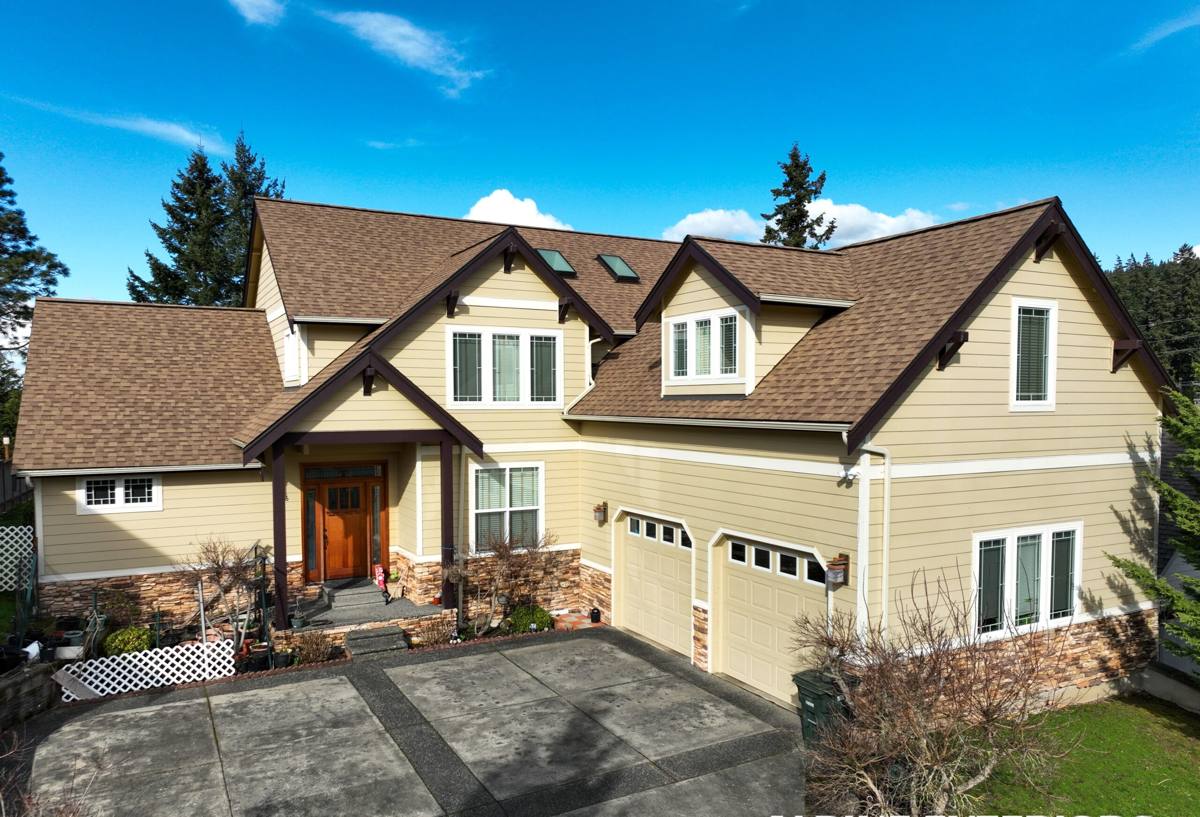
What "Correct" Siding Installation Actually Means Here
A siding job can look finished and still be wrong underneath. In a wind- and moisture-exposed area like Nokomis, the details that don't show up in a quick visual inspection are usually the details that determine whether the siding lasts fifteen years or forty.
Weather-Resistive Barrier and Flashing
Behind every siding panel there needs to be a continuous weather-resistive barrier, properly lapped so water sheds downward and out, not into the wall cavity. Every window, door, and penetration needs flashing that integrates with that barrier — not caulk used as a substitute for flashing. In a climate where wind-driven rain gets forced sideways and even upward under eaves, gaps in this system are where long-term rot and interior moisture problems start.
Fastening for Wind Uplift
Coastal Sarasota County falls under Florida Building Code wind-load requirements that are meaningfully stricter than what's used in much of the country. That means fastener type, fastener spacing, and panel engagement all matter — a siding job fastened to a generic national standard rather than to local wind requirements is a job that's more likely to lose panels in a storm.
Clearances and Drainage
Siding needs proper clearance from the roofline, from grade, and from other trim details so water has somewhere to go and the bottom edge of the material isn't sitting in standing moisture. This is a simple detail that gets skipped constantly on rushed jobs, and it's one of the most common reasons siding fails early at the bottom courses.
Why We Install Only James Hardie Fiber Cement
We don't install vinyl siding, LP SmartSide, or other engineered wood products, and we don't install primed spruce or cedar. That's a deliberate standard, not a sales pitch. Vinyl softens, warps, and can crack under sustained UV and heat, and it's a poor match for high-wind coastal exposure since it relies on locking into the course below it rather than being independently fastened with the same holding strength as fiber cement. Engineered wood and untreated wood siding carry ongoing moisture and edge-swelling risks that get worse, not better, in a humid coastal climate — they can perform well for a while, but they demand a level of maintenance vigilance that most homeowners don't sign up for.
James Hardie fiber cement is a cement, sand, and cellulose fiber composite. It doesn't burn, it doesn't attract termites, and it doesn't expand and contract with humidity the way wood-based products do. Hardie also builds region-specific formulations — its HZ10 product line is engineered for hot, humid, moisture-heavy climates like the Gulf Coast, as opposed to a one-size-fits-all national product. The factory-applied ColorPlus finish is baked on under controlled conditions and backed by its own finish warranty, which means the color coat isn't dependent on field application quality the way a job-site paint job is.
None of this means fiber cement is maintenance-free or immune to bad installation. It still has to be installed to Hardie's published specifications — correct clearances, correct fastening, correct joint treatment — to get the lifespan the material is capable of. That's the installation half of the equation, and it matters as much as the product choice itself.
How Our Nokomis Siding Installation Process Works
- On-site assessment. We look at the existing wall assembly, current siding condition, moisture history, and any problem areas around windows, doors, and roof transitions before recommending a scope of work.
- Product and profile selection. We walk through Hardie's plank, shingle, and panel profiles and ColorPlus color options so the finished look fits the home and the neighborhood.
- Tear-off and substrate check. Old siding comes off and we inspect the sheathing underneath for rot or moisture damage before anything new goes up — covering a compromised substrate just hides a problem.
- Weather barrier and flashing installation. A continuous, correctly lapped barrier goes on first, with flashing detailed at every window, door, and penetration.
- Siding installation to spec. Panels are fastened per Hardie's requirements and Florida Building Code wind provisions for this area, with correct clearances at the roofline, grade, and trim.
- Final inspection and cleanup. We walk the job with the homeowner, check joints and caulking, and clear the site.
Comparing Siding Options for a Nokomis Home
| Factor | James Hardie Fiber Cement | Vinyl Siding | Engineered Wood / LP-Type |
|---|---|---|---|
| Coastal wind performance | Independently fastened per code; not reliant on interlocking panels | Relies on panel-to-panel locking; more prone to wind damage in gusts | Fastened similarly to fiber cement but panel itself is less rigid |
| Moisture and humidity behavior | Does not swell or rot; HZ10 formulation for humid climates | Doesn't rot but can trap moisture behind it if installed poorly | Vulnerable to edge swelling and moisture intrusion if seams fail |
| UV and heat exposure | Factory-baked ColorPlus finish resists fading | Can soften, warp, or fade under sustained heat and sun | Field-applied or factory finishes vary; more upkeep to protect surface |
| Fire resistance | Non-combustible | Combustible, can melt or deform near heat sources | Combustible |
| Long-term maintenance | Periodic caulk/paint touch-up; no rot risk | Low maintenance but limited repair options once faded or cracked | Requires diligent moisture monitoring and sealing |
What Siding Installation Costs Depend On
There's no single price that applies to every Nokomis home — the honest answer is that cost depends on a handful of factors we walk through during an on-site estimate.
| Cost Factor | Why It Matters |
|---|---|
| Home size and wall complexity | More square footage, more corners, gables, and dormers all add labor time |
| Substrate condition | Rotted or damaged sheathing found during tear-off needs repair before new siding goes on |
| Product profile and finish | Lap plank, shingle-style, and panel profiles carry different material and labor costs |
| Tear-off scope | Full removal of old siding costs more than installing over a prepared surface, but is usually the more honest approach |
| Trim and detail work | Window and door trim, fascia, and soffit work add to the scope beyond flat wall siding |
We give straightforward, itemized estimates so a homeowner understands exactly what's driving the number, rather than a flat quote that hides where the money's going.
Signs Your Nokomis Home's Siding Needs Attention
- Visible warping, buckling, or panels that have pulled away from the wall
- Soft spots or discoloration near the bottom edge of the siding or around window trim
- Paint or finish that's peeling, chalking, or has faded unevenly
- Cracked or missing caulk joints at windows, doors, or corner trim
- Higher-than-expected humidity or musty odor inside exterior walls
- Visible gaps where siding meets the roofline, trim, or foundation
Any one of these on its own might just need a repair. Several together, especially on a home that's had the original siding for a couple of decades, usually mean it's time to talk about full replacement.
Why Hiring a Crew That Already Works in Nokomis and Sarasota County Matters
Wind load requirements, moisture exposure, and even the way sun angles hit a wall over a full Florida day all vary by region — a crew that mostly works inland or in a different climate isn't necessarily thinking about the same failure points a Gulf Coast coastal community forces you to think about. A crew that regularly works Sarasota County knows the wind provisions that apply here, has seen how salt air and humidity actually affect siding over time in this specific area, and installs to that reality rather than a generic national standard.
That local familiarity also shows up in smaller ways — knowing which details tend to fail first on homes in this area, and building the installation to address those failure points from the start rather than waiting for a callback.
Ready for a Straightforward Look at Your Home's Siding?
If you're weighing a siding replacement on a Nokomis home, we're happy to take a look, walk through what we see, and put together a clear, no-pressure estimate. There's no obligation — just an honest assessment from a crew that installs one product because we believe it's the right one for this climate.