 Sarasota Window
 Siding Repair for Osprey Homes: What the Climate Demands
Osprey sits close enough to the water that its homes take a different kind of beating than siding farther inland. Between Little Sarasota Bay and the Gulf, the air here carries salt year-round, humidity stays high most months, and the exterior of a house is working against moisture almost constantly. Add in Sarasota County's hurricane exposure, intense UV that doesn't let up even in winter, and the wind-driven rain that comes sideways during summer storms, and it's easy to see why siding in this part of Florida ages faster and fails differently than siding in a drier, cooler climate. A repair that ignores those realities doesn't hold. A repair that accounts for them does.
When we get a call for siding repair in Osprey, we're not just patching what's visible. We're looking at why that section failed in the first place, because in this climate there's almost always an underlying cause — trapped moisture, a flashing gap, a coating breakdown from UV, or storm impact that cracked a seal somewhere. Fix the symptom without addressing the cause and you'll be back out here in a year or two.
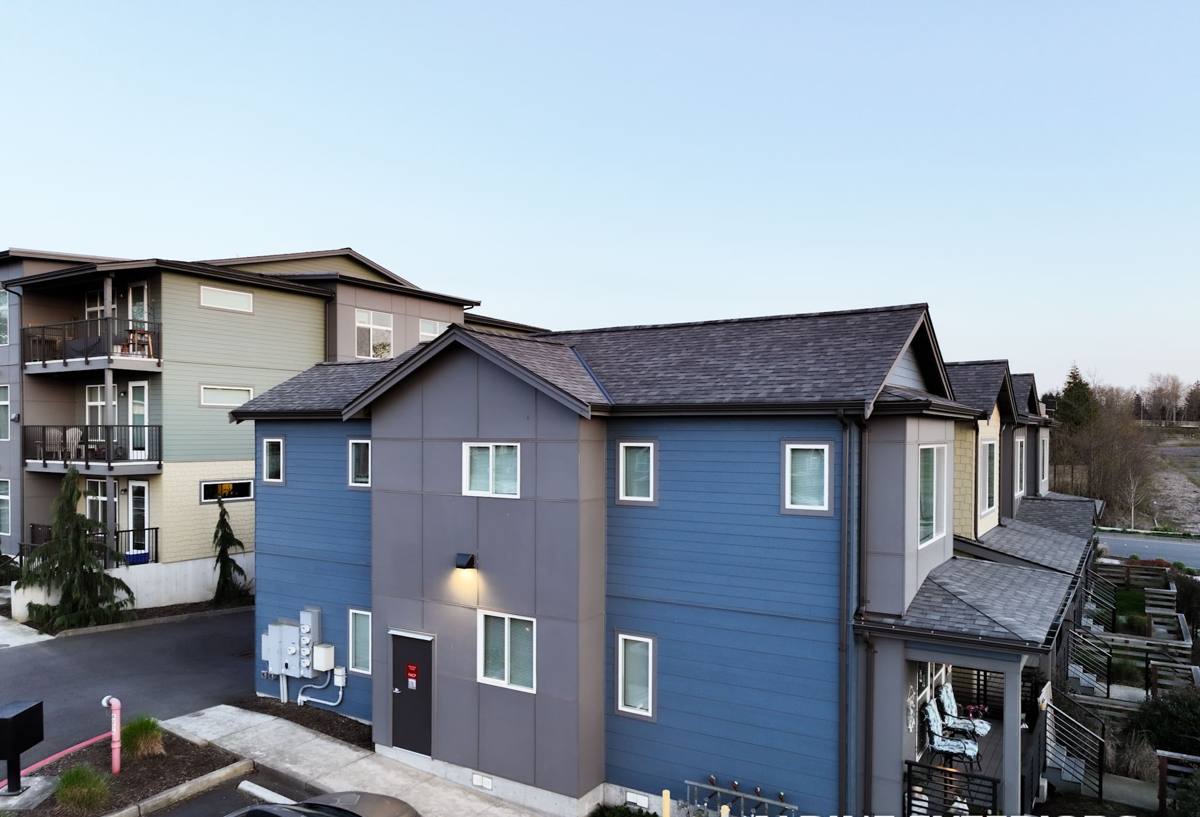
What Actually Damages Siding in Osprey
Wind and Storm Impact
Sarasota County sits in a hurricane-prone stretch of the Gulf Coast, and even storms that don't make landfall directly here can push sustained winds and gusts strong enough to crack panels, pop fasteners loose, or peel siding away from a wall where the original installation wasn't tight. Debris carried on high winds — branches, loose yard items, roofing grit from a neighbor's roof — adds impact damage on top of that.
Wind-Driven Rain and Moisture Intrusion
Rain that comes straight down is manageable. Rain that comes sideways, which is common during Gulf Coast thunderstorms, finds every gap in flashing, trim, and seams that a house was never meant to have exposed to standing water. Once moisture gets behind siding, it doesn't just sit there — it works on the wall sheathing, the fasteners, and in the case of wood-based products, the siding itself.
UV Exposure
Osprey gets strong, direct sun essentially all year. UV breaks down paint films, dries out caulking and sealants, and — on lower-quality or improperly finished siding — causes fading, chalking, and surface cracking well before the product's expected lifespan. This is a slow, cumulative kind of damage; it's rarely the reason for an emergency repair call, but it's very often the reason a home needs several smaller repairs scattered across different elevations.
Salt Air Corrosion
Being close to the bay and the Gulf means airborne salt settles on exterior surfaces continuously. Salt accelerates corrosion of exposed fasteners and metal flashing, and it can degrade certain coatings faster than they'd wear in an inland climate. Homes on the western side of Osprey, closer to the water, tend to show this wear sooner than homes further east.
Signs Your Osprey Home Needs Siding Repair
- Panels that are cracked, chipped, or visibly buckled, especially after a storm
- Soft or spongy spots when you press on the siding — usually a sign of trapped moisture behind it
- Gaps opening up at seams, corners, or where siding meets trim, windows, or doors
- Peeling, bubbling, or chalking paint/finish, particularly on south- and west-facing walls
- Visible staining or streaking that suggests water is running behind rather than off the surface
- Fasteners backing out or rust stains bleeding through the siding face
- A musty smell in an interior room along an exterior wall, which can point to moisture intrusion behind the siding
- Warping, splitting, or delamination on any wood-based or composite siding
What a Correct Siding Repair Actually Involves
A repair that just swaps a damaged panel for a new one, without checking what's underneath, is a temporary fix at best. On homes near the water, that shortcut tends to show up again within a season or two. Our process is built around finding and fixing the cause, not just covering the symptom.
1. Diagnose Before Touching Anything
We start by identifying why the damage occurred — storm impact, a flashing failure, a chronic moisture path, or coating breakdown from UV and salt exposure. This determines whether the fix is a simple panel swap or something that requires opening up the wall assembly to address what's happening behind the siding.
2. Check What's Behind the Siding
Whenever there's evidence of moisture intrusion, we check the house wrap, flashing, and sheathing behind the affected area before closing anything back up. Repairing siding over a wall assembly that's already compromised just delays a bigger, more expensive problem.
3. Match Materials Correctly
Repairs need to match the existing siding in profile, thickness, and reveal — mismatched replacement panels are one of the most common reasons a repair looks patched rather than blended. On James Hardie fiber cement, this also means matching the correct HZ5 climate-engineered product line and ColorPlus finish where the home was originally installed with it.
4. Seal and Flash Properly
Every seam, corner, and penetration point gets sealed and flashed to shed wind-driven rain, not just block vertical rainfall. This is where a lot of lower-quality repairs fail in this climate — the patch looks fine until the next storm pushes rain sideways into a gap that was never properly closed.
5. Finish for the Climate, Not Just the Look
Fasteners, caulking, and any touch-up coating need to be rated for coastal, high-UV conditions. Standard interior-grade materials degrade quickly out here; we use products suited to sustained sun, salt air, and humidity.
Repair or Replace? A Practical Comparison
| Situation | Repair Usually Makes Sense | Replacement Usually Makes Sense |
|---|---|---|
| Damage extent | Isolated to one or two panels/sections | Spread across multiple elevations |
| Underlying moisture | Localized, caught early | Widespread rot or long-term water intrusion |
| Age of existing siding | Siding is well within its expected service life | Siding is near or past its expected lifespan |
| Material availability | Matching panels/profile still available | Discontinued profile or color, poor match likely |
| Storm damage pattern | Isolated impact points from a single event | Recurring failures at seams, corners, fastening |
| Cause identified | Root cause is fixable without full removal | Root cause requires access only full removal provides |
Every home is different, and the honest answer sometimes only becomes clear once we've opened up a damaged section and can see what's actually going on behind it. We'll always tell you straight whether a repair is the right call or whether you're better off putting that money toward a longer-term fix.
Why a Crew That Works Osprey Regularly Matters
Siding repair isn't one-size-fits-all across Florida, let alone across the country. A crew that mostly works inland or in a different climate zone doesn't have the day-to-day exposure to how Gulf Coast humidity, salt air, and storm patterns actually behave against a wall assembly. Working in and around Sarasota County, including Osprey and the surrounding barrier island and mainland neighborhoods, means we see the same failure patterns repeatedly — where moisture tends to collect, which elevations take the worst UV and wind-driven rain, and which older installations (regardless of brand) tend to develop problems first.
That local pattern recognition matters when you're trying to fix a problem correctly instead of just making it look fixed for a season. It also means we can usually diagnose a repair call faster, because we've likely seen a similar failure on another Osprey-area home.
Why We Only Install and Repair With James Hardie Fiber Cement
When a repair calls for replacing damaged sections, or when a homeowner decides enough of the siding has failed that a broader replacement makes more sense, we install James Hardie fiber cement exclusively. We don't install vinyl, LP SmartSide, Cemplank, Allura, or primed wood siding, and we're upfront about why: in a climate like Sarasota County's — hurricane wind exposure, constant UV, wind-driven rain, and salt air — those products carry trade-offs we're not willing to put our name behind.
Vinyl can warp and become brittle under sustained heat and UV, and it offers little resistance to wind-driven debris. Wood-based and wood-composite siding products are more sensitive to moisture intrusion, and once water gets behind them, deterioration can move quickly in a humid coastal environment. James Hardie fiber cement is non-combustible, engineered specifically for high-humidity, storm-prone climates in its HZ5 product line, and finished with a factory-applied ColorPlus coating that resists fading and chalking far better than field-applied paint. It also carries a strong, transferable manufacturer warranty — but only when installed to spec, which is exactly why correct repair technique matters as much as the material itself.
If your existing siding is a different product and needs repair, we'll still take an honest look and tell you what your realistic options are. But when replacement is the right call, Hardie is what we put on the wall, because it's what we're confident will still be doing its job in Osprey's climate a decade or two from now.
What to Expect From Our Repair Process
- An on-site inspection where we identify the visible damage and look for underlying causes
- A clear explanation of what we find, including whether it's a straightforward repair or something more involved
- A written estimate before any work begins — no surprise scope changes without a conversation first
- Repair work matched to your existing siding's profile and finish wherever possible
- Proper flashing, sealing, and fastening suited to coastal Florida conditions
- A final walkthrough so you can see and approve the completed work
If you're seeing cracked panels, soft spots, gaps, or storm damage on your Osprey home's siding, it's worth getting a professional opinion before it turns into a bigger repair. We offer free, no-pressure estimates — reach out using the form below and we'll take a look.