 Sarasota Window
 Siding in Osprey Works Harder Than Siding Almost Anywhere Else
Osprey sits on a stretch of the Gulf coast where a home's exterior is never really at rest. Between the Intracoastal Waterway and the open Gulf, salt-laden air moves through the neighborhood daily, sun exposure runs close to year-round, and the same wind corridors that make the area beautiful also make it one of the tougher places in Sarasota County to keep siding looking and performing the way it should. Replacing siding here is not a cosmetic project. It's a decision about how well the house holds up through the next hurricane season, the next decade of UV exposure, and the everyday humidity that never fully lets up.
A lot of siding problems we see on Osprey homes didn't start as siding problems. They started as water intrusion, trapped moisture behind panels, or fasteners that backed out after years of wind-driven rain working at seams and laps. By the time it shows up as visible damage — bubbling paint, soft spots, warping, or staining — the underlying issue has usually been developing for a while. That's the case for treating a siding replacement as a full system upgrade, not a surface swap.
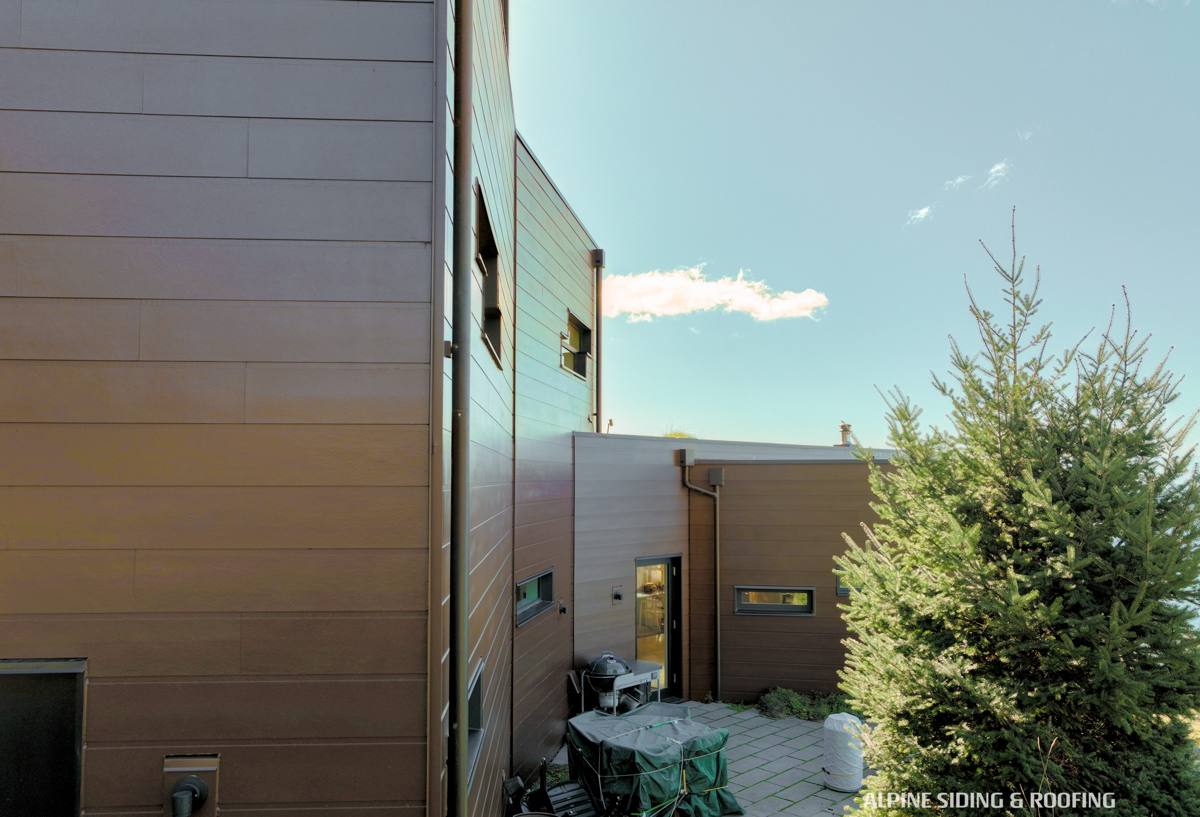
What Osprey's Climate Actually Does to Siding
It helps to be specific about what's working against a home's exterior here, because the failure modes are predictable if you've seen enough of them.
Salt Air and Corrosion
Even homes that aren't directly on the water pick up airborne salt carried in on Gulf breezes. Salt is hygroscopic — it pulls moisture out of the air and holds it against whatever surface it lands on. Over time that accelerates corrosion of fasteners, trim, and any siding material with metal components or a finish that isn't built to shed salt residue.
UV Exposure
Central Florida sun is intense for most of the year, and it's relentless on south- and west-facing walls in particular. UV breaks down pigments and resins in lower-grade coatings, which is why so many homes in this area show chalking, fading, or uneven color on one side of the house well before the other.
Wind-Driven Rain
Sarasota County sits squarely in a hurricane-exposed region, and even outside of named storms, summer thunderstorms here regularly push rain sideways into wall assemblies. Siding that isn't installed with the right laps, flashing, and gaps will let water behind it — and once water gets behind siding, the sheathing and framing underneath are what actually pay the price.
Humidity and Moisture Cycling
Florida's humidity means siding materials are almost never fully dry. Products that absorb moisture swell, and products that swell and dry repeatedly are prone to warping, delaminating, or losing paint adhesion faster than they would in a drier climate.
Why We Only Install James Hardie Fiber Cement
Given everything above, we made a standing decision as a company: we install James Hardie fiber cement siding and nothing else. Not vinyl, not LP SmartSide, not primed spruce or cedar, not other fiber cement brands. That's not a marketing position — it's a practical one, based on how these products actually perform under Gulf coast conditions over the long run.
Fiber cement is made from cement, sand, and cellulose fibers, which means it doesn't absorb and release moisture the way wood-based products do, and it isn't a fuel source or a heat-sensitive plastic the way vinyl is. James Hardie's HZ5 product line is specifically engineered for high-humidity, high-moisture climates like Florida's, which matters a great deal in Osprey given how much moisture this house exterior deals with in a normal year. The ColorPlus factory-applied finish is baked on under controlled conditions and holds color and integrity against UV far longer than field-applied paint typically does, which addresses the fading and chalking problem directly.
We're not going to tell you every other product is worthless — vinyl has its place for budget-driven projects, and engineered wood has genuine strengths in the right climate. But we've made the call that for homes in this specific environment, the trade-offs of those materials (moisture sensitivity, heat distortion, more frequent repainting, shorter realistic service life) aren't ones we're willing to install and stand behind. Fiber cement, installed correctly, is what we believe holds up.
What a Correct Siding Replacement Involves
Replacing siding is not just pulling old panels and nailing up new ones. Done right, it's a sequence, and skipping steps is exactly how a new siding job ends up with the same moisture problems as the old one within a few years.
- Full removal and inspection. Old siding comes off entirely so the sheathing underneath can be checked for rot, soft spots, or prior water damage before anything new goes up.
- Sheathing repair. Any compromised sheathing gets replaced — covering over damaged wood with new siding just hides a problem that keeps growing.
- Weather-resistive barrier. A proper water-resistive barrier goes on correctly lapped, shingle-style, so any moisture that does get past the siding drains down and out rather than pooling.
- Flashing at every penetration. Windows, doors, hose bibs, vents, and any other wall penetration get flashed individually — this is one of the most common places we find shortcuts on older installs.
- Correct fastening and clearances. James Hardie specifies exact nailing patterns, fastener types, and minimum clearances from grade, roof lines, and other surfaces — these aren't optional details, they're what the product's engineering and warranty depend on.
- Proper caulking and sealing at laps and trim. Done according to manufacturer spec, not just "enough to look finished."
Every one of those steps matters more in a coastal, storm-exposed area like Osprey than it would somewhere with a milder climate. A shortcut that might go unnoticed for a decade in a dry inland climate can show up as a real problem here within a season or two.
Our Process for Osprey Homes
We keep the process straightforward because homeowners deserve to know what's happening at each stage, not just when it's finished.
- On-site assessment. We walk the exterior, look at current siding condition, check for existing moisture or structural issues, and talk through what the home actually needs.
- Written scope and estimate. You get a clear breakdown of what's being removed, what's being repaired, and which James Hardie products and profiles fit the home.
- Permitting. Sarasota County requires permits for siding replacement, and given the wind zones in this area, code compliance isn't something to guess at. We handle this as part of the job.
- Removal and prep. Old material comes off, sheathing is inspected and repaired as needed, and the wall is prepped for the new barrier and siding.
- Installation to manufacturer spec. Barrier, flashing, fastening, and finishing all done to James Hardie's published installation requirements — this is also what keeps the manufacturer's warranty valid.
- Final walkthrough. We go over the finished work with you before calling the job done.
Why It Matters That the Crew Already Works This Area
A siding crew that regularly works Osprey and the surrounding parts of Sarasota County isn't learning the local wind zone requirements and county permitting process for the first time on your house. They already know how Sarasota County's building department handles siding permits, what inspectors are looking for on a coastal job, and how local wind-load and fastening requirements apply in practice — not just on paper.
That experience also shows up in judgment calls during the job: recognizing early signs of moisture damage in sheathing that a less experienced crew might miss, knowing which details need extra attention on homes closer to the water versus further inland, and understanding how Osprey's specific mix of sun exposure and salt air affects material choices like trim and fastener selection. None of that replaces a careful, by-the-book installation — it supplements it.
Cost Factors Homeowners Should Understand
Every siding replacement is different, and we don't publish blanket pricing because the real cost drivers vary house to house. Here's what actually moves the number:
| Factor | Why It Matters |
|---|---|
| Home size and wall complexity | More square footage and more corners, gables, and trim details mean more material and labor |
| Sheathing condition | Hidden rot or water damage found during tear-off adds repair scope that can't be priced until the old siding is off |
| Siding profile and product line | James Hardie offers different plank widths, textures, and HZ product lines suited to different budgets and looks |
| Trim and accessory work | Fascia, soffit, and trim replacement alongside siding affects overall scope |
| Access and site conditions | Landscaping, fencing, multi-story walls, or tight lot lines can affect labor time |
| Permitting requirements | Sarasota County's wind-zone and coastal construction requirements factor into scope and inspection scheduling |
Signs Your Osprey Home May Need Siding Replacement Soon
- Visible warping, buckling, or soft spots when you press on the siding
- Paint that's peeling, bubbling, or chalking heavily, especially on south- or west-facing walls
- Gaps opening up at seams, corners, or trim that weren't there before
- Staining or discoloration that keeps returning after cleaning
- Musty smells or visible mold near exterior walls on the interior
- Siding that's original to a home built more than 20-25 years ago, especially wood-based product
None of these on their own means the whole house needs new siding immediately, but any of them is worth having looked at before the next storm season, not after.
Get a Free, No-Pressure Estimate
If your Osprey home is showing wear from the sun, salt air, or storm season, or you're simply planning ahead before the next round of Gulf coast weather, we're glad to come take a look. The estimate is free, there's no pressure, and you'll walk away with a clear, honest picture of what your home actually needs. Fill out the form below to get started.