 Sarasota Window
 Siding Built for Osprey's Coastal Exposure
Osprey sits along Sarasota County's coastline, tucked between the barrier islands and the mainland, and that position means homes here take on a specific mix of punishment: salt-laden air drifting in off the Gulf and Little Sarasota Bay, wind-driven rain that finds every gap and seam, intense year-round UV that breaks down weaker materials from the outside in, and the real possibility of hurricane-force wind loads during storm season. Siding in this neighborhood isn't cosmetic. It's the first line of defense between your home's structure and a climate that doesn't let up.
When we install siding in Osprey, we're not treating it like a generic Florida job. We're accounting for the specific way this stretch of the county behaves: proximity to open water, humidity that rarely drops, and the wind exposure that comes with being close to the coast without the direct barrier-island buffer. That combination shapes every decision, from the product we use to how we detail the flashing.
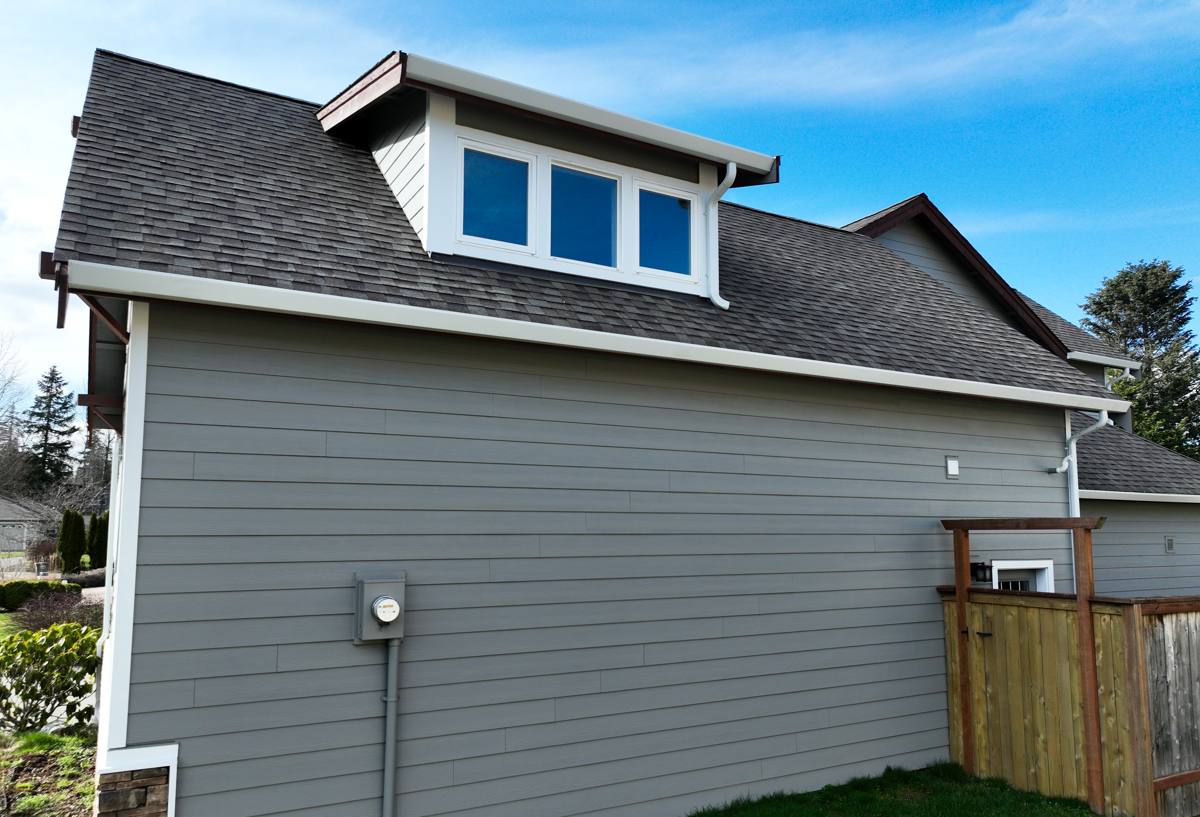
What Osprey Homes Actually Need From Their Siding
Most siding failures we see in this part of Sarasota County aren't failures of the material sitting in a lab — they're failures of the material under sustained coastal stress. A few things matter more here than they would inland:
- Moisture resistance that holds up over decades, not just through the warranty period on paper
- Wind resistance rated for real hurricane exposure, including the fastening pattern and the substrate underneath
- UV stability so color doesn't chalk, fade, or go patchy after a few Florida summers
- Salt air tolerance — a material and finish that don't corrode fasteners or degrade prematurely near brackish water
- Non-combustibility, which matters for insurance underwriting as much as safety
This is exactly why we install James Hardie fiber cement siding exclusively, and why we don't install vinyl, LP SmartSide, or other engineered wood products in this market. Fiber cement is engineered from cement, sand, and cellulose fiber — it doesn't rely on a plastic shell that can soften and warp in high heat, and it doesn't have the moisture-swelling vulnerability that engineered wood products carry when a seam or cut edge gets exposed. In a climate like Osprey's, those differences show up over years, not months.
Why We Standardized on James Hardie Specifically
James Hardie makes fiber cement siding engineered specifically for humid, high-UV, storm-exposed climates through its HZ5 product line, which is built for exactly the conditions Gulf Coast Florida delivers. The factory-applied ColorPlus finish is baked on under controlled conditions, which gives it far better UV and fade resistance than field-applied paint, and it comes with its own finish warranty separate from the product warranty. Combined with Hardie's transferable product warranty, that's a level of long-term backing we can stand behind on a home that's going to face 20-plus years of Sarasota County sun and salt air.
What a Correct Siding Installation Involves
The siding product is only half the equation. A huge share of siding failures we get called out to inspect — regardless of brand — trace back to installation mistakes, not the material itself. On a coastal job like Osprey, the details underneath the siding matter as much as what you see on the wall.
The Water Management Layer
Before a single piece of siding goes up, the wall needs a correctly installed weather-resistive barrier and properly integrated flashing at every penetration — windows, doors, hose bibs, light fixtures, and any place trim meets siding. Wind-driven rain in this area doesn't fall straight down; it gets pushed sideways and upward under wind pressure, which means laps, seams, and flashing details have to be built to shed water even when it's moving against gravity. This is the layer that determines whether your walls stay dry for the next 30 years or start rotting from the inside where nobody can see it.
Fastening for Wind Load
James Hardie publishes specific fastening schedules tied to wind exposure category, and in a hurricane-exposed area like Osprey, that schedule isn't optional trim — it's what keeps siding attached during a real wind event. Fastener type, spacing, and embedment all change based on exposure, and getting this wrong is one of the most common reasons siding fails in a storm even when the product itself is rated for it.
Clearances and Gaps
Fiber cement siding needs proper clearance from grade, roofing, decks, and other trim to avoid trapping moisture against the material. It's a common mistake on repaints and reroofs where trim gets buried or grade gets built up over time — and it's one of the first things we check on any Osprey home, whether we're doing a full install or evaluating an older installation.
Joint and Caulking Details
Butt joints, corner details, and trim intersections all need to be sealed and detailed correctly with the right sealant, applied to a properly primed and painted cut edge. An unsealed or poorly sealed cut edge is one of the few vulnerable points on fiber cement siding, and it's entirely a workmanship issue, not a product issue.
Our Process for Osprey Projects
| Stage | What Happens |
|---|---|
| Assessment | On-site inspection of existing siding, wall condition, and any moisture or rot found during removal |
| Product & Color Selection | Walk through HZ5 panel/plank profiles and ColorPlus finish options suited to the home and HOA guidelines where applicable |
| Prep & Water Management | Remove old siding, inspect and repair sheathing, install weather-resistive barrier and flashing at all penetrations |
| Installation | Install siding to Hardie's fastening schedule for the property's wind exposure, with proper clearances throughout |
| Finish & Seal | Prime and seal all cut edges, complete trim and joint detailing, final walkthrough |
Every stage matters, but the prep and water management stage is where most long-term problems either get solved or get built in. We don't skip it to save a day of labor.
Why Local Experience in Osprey Matters
A crew that's worked this specific stretch of Sarasota County knows things a general contractor coming in from outside the area won't automatically account for — how close a given property sits to brackish water, how wind exposure changes from one side of a lot to the other, what the local permitting office expects for documentation, and which detailing issues tend to show up first on homes in this microclimate. That familiarity shows up in fewer surprises during the job and a longer service life afterward.
It also matters for something more practical: warranty support and follow-up. A crew with an ongoing presence in the Sarasota area is a crew you can actually reach five or ten years from now if a question comes up, not one that did a job and moved on to the next region.
Cost Factors to Expect
We don't publish blanket per-square-foot pricing because it varies too much based on real conditions, but these are the factors that actually move the number on an Osprey project:
| Factor | Why It Matters |
|---|---|
| Substrate condition | Rot or moisture damage found during tear-off adds repair scope before new siding can go on |
| Home size and complexity | Number of corners, penetrations, and trim details affects labor time |
| Siding profile chosen | Lap, shingle, and panel profiles have different material and install costs |
| Wind exposure category | Higher exposure ratings can require tighter fastening schedules and added labor |
| Existing material removal | Vinyl, wood, or old fiber cement removal adds disposal and labor time |
A Practical Checklist Before You Commit to a Siding Contractor
- Ask specifically what water management steps they perform before siding goes up, not just what siding they install
- Confirm they follow the manufacturer's published fastening schedule for your home's wind exposure
- Ask how cut edges are treated and sealed, and how joints are detailed
- Check that they're pulling proper permits for Sarasota County, not treating siding as a cosmetic swap
- Ask how long they've worked in this specific area and what they've learned about it
- Get clarity on what's covered by the product warranty versus the workmanship warranty
Signs Your Osprey Home May Need New Siding Now
A few warning signs are worth acting on before they become bigger repairs: soft or spongy spots when you press on the siding, visible cracking or buckling, paint that's failing faster than it should, gaps opening up at trim and corners, or a musty smell near exterior walls that could point to moisture getting behind the siding. In a climate that doesn't give material any downtime to dry out and recover, small issues tend to compound faster than they would in a drier region.
If you're in Osprey and want an honest read on your current siding, or you're ready to talk through James Hardie options for a full installation, we're happy to walk the property with you. Reach out for a free, no-pressure estimate — there's no obligation, and it's the fastest way to know exactly where your home stands.