 Sarasota Window
 Why Siding Fails Faster in Venice Than It Does Inland
Venice sits on the Gulf Coast in Sarasota County, and that location comes with a specific set of stresses that inland Florida homes simply don't deal with. Salt-laden air moves in off the water and settles on exterior surfaces, accelerating corrosion of fasteners and trim and breaking down lower-grade siding materials faster than the manufacturer's brochure ever accounts for. Add in wind-driven rain that gets forced sideways and up under laps during a squall, near-constant UV exposure that fades and embrittles paint and coatings, and the real possibility of hurricane-force wind loads every storm season, and you have a climate that is genuinely tough on the building envelope.
None of this means siding is doomed — it means siding has to be installed, and repaired, with those specific stresses in mind. A patch job that would hold up fine in a drier, calmer climate can fail within a season or two on a home a few blocks from the Intracoastal or the Gulf. When we get a repair call in Venice, we're not just closing up a hole or replacing a cracked board — we're evaluating why that section failed in the first place and making sure the repair doesn't just recreate the same weak point.
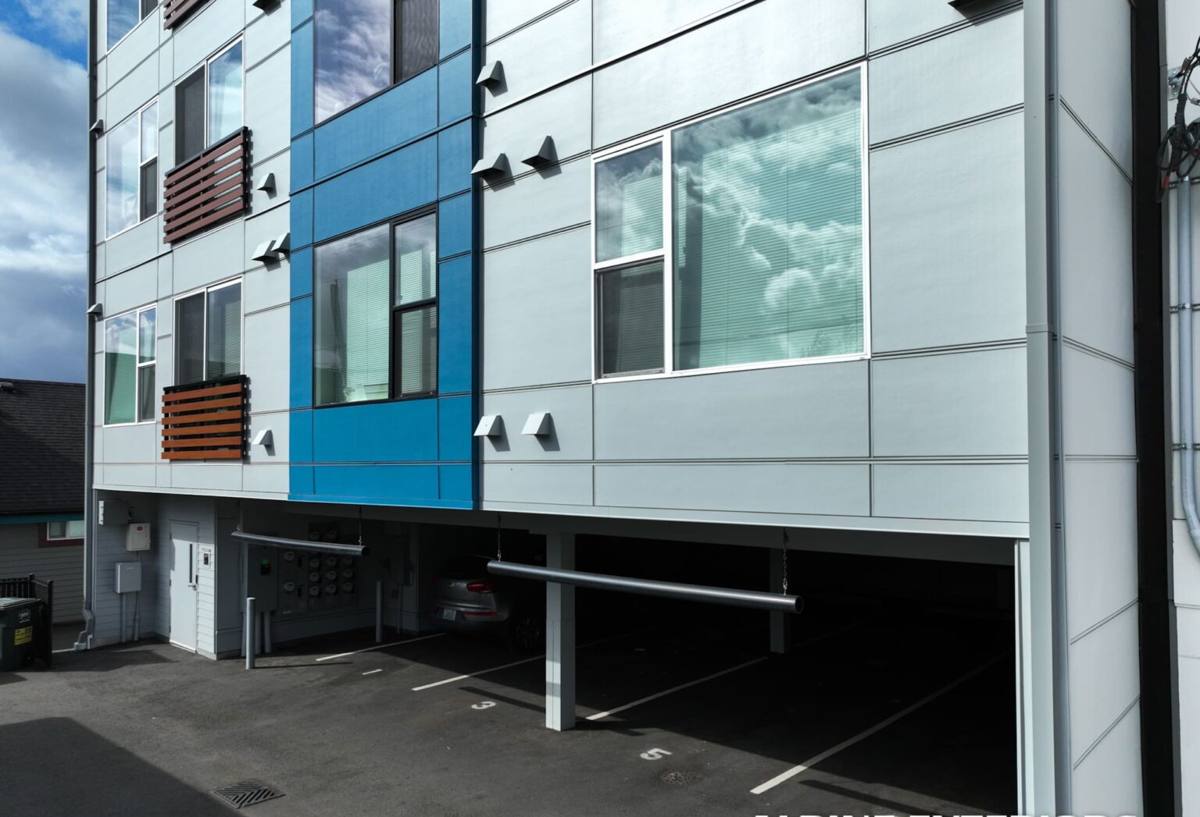
Signs Your Venice Home's Siding Needs Attention
Most siding problems don't show up as a dramatic failure. They start small and get worse every rainy season until they're expensive. Here's what we tell homeowners to keep an eye on:
- Soft or spongy spots when you press on the siding, especially near the bottom courses or around window and door trim
- Visible cracking, splitting, or buckling in individual boards or panels
- Paint that's peeling, bubbling, or chalking heavily in patches rather than evenly across the wall
- Streaking, dark staining, or a musty smell near seams, corners, or penetrations (hose bibs, dryer vents, light fixtures)
- Gaps opening up at butt joints, corner boards, or where siding meets trim, soffit, or the foundation
- Rust streaks running down from fastener heads or trim nails
- Visible daylight or drafts from inside near exterior walls after a windy day
Any one of these on its own might be minor. Several of them clustered in the same area usually means water has been getting behind the siding for a while, and the repair needs to address what's underneath, not just what's visible from the driveway.
What an Honest Siding Repair Actually Involves
Diagnosing the Cause, Not Just the Symptom
Anyone can pull a cracked board off a wall and nail up a new one. That's not a repair, that's a cover-up. Before we touch a fastener, we want to know why that section failed — was it a flashing detail that was never installed correctly, a caulk joint that dried out and let wind-driven rain in, an impact from a storm, or just old material that's reached the end of its service life in this climate. If we don't answer that question, the new piece fails the same way the old one did.
Checking What's Behind the Siding
Once a section is opened up, we look at the water-resistive barrier, the sheathing, and the framing behind it. In a coastal climate, moisture that's been sitting behind siding for months can cause rot or corrosion that isn't visible from outside. A correct repair means confirming that substrate is sound — or fixing it — before any new siding goes back on. Closing up damaged sheathing behind a brand-new board is a mistake that costs far more to undo later.
Matching and Blending the Repair
Sun-faded, salt-exposed siding rarely matches new material straight off the shelf, especially with painted products that have been baking in Florida sun for years. We talk through realistic expectations up front — sometimes a repair blends in almost seamlessly, sometimes the surrounding boards need a fresh coat to bring everything back to one color. We'd rather tell you that before the work starts than let you be surprised afterward.
Flashing and Water Management
Every repair is an opportunity to correct a detail that was never right to begin with. That means proper head flashing over windows and doors, correct lap orientation so water sheds outward instead of wicking in, and sealant used only where it belongs — as a backup to good flashing, not as the primary defense against water intrusion.
Repair or Replace? How We Make the Call
Not every siding problem in Venice needs a full replacement, and not every problem is a simple patch. We walk homeowners through the same factors every time:
| Factor | Leans Toward Repair | Leans Toward Replacement |
|---|---|---|
| Extent of damage | Isolated to one or two sections | Recurring across multiple walls or elevations |
| Substrate condition | Sheathing and framing behind it are sound | Rot or corrosion found behind more than one repair area |
| Age of existing siding | Still well within expected service life | Original material is old, brittle, or discontinued |
| Material type | Durable fiber cement with a solid finish | Materials prone to moisture absorption or fading in coastal sun |
| Storm history | Single, documented impact event | Pattern of wind or water intrusion over several seasons |
We'll always give you the straight answer, even when it's not the more profitable one for us. If a targeted repair will genuinely hold up through Sarasota County's storm seasons, that's what we recommend.
Our Process for Siding Repair Calls in Venice
- Free on-site assessment — we walk the exterior, look at drainage patterns, and identify every affected area, not just the one you called about
- Open and inspect — we pull back the affected siding to check the substrate before quoting anything final
- Clear, itemized proposal — repair or replacement, with the reasoning explained in plain terms
- Correct installation — proper flashing, fastening, and lap details, matched to how the rest of the wall was built
- Cleanup and final walkthrough — so you can see exactly what was done and why
Why We Only Install James Hardie Fiber Cement
When a repair turns into a "this whole section needs to come off" conversation, or when a homeowner asks us to replace a full elevation instead of chasing repairs year after year, we only offer one answer: James Hardie fiber cement. We don't install vinyl, LP SmartSide, Cemplank, Allura, or primed wood siding, and that's a deliberate standard, not an oversight.
Fiber cement is non-combustible and dimensionally stable, so it doesn't expand, contract, and buckle the way vinyl can under intense Florida sun. Hardie's ColorPlus factory finish is baked on under controlled conditions rather than applied on-site, which matters a great deal in a climate where UV and salt air chew through field-applied paint. And Hardie engineers specific product lines — including HZ10 formulations — for high-humidity, high-moisture climate zones, which is exactly the environment a Gulf Coast home in Sarasota County sits in every single day. When we replace siding, we want the homeowner to get a material built for this specific climate, backed by a real transferable warranty, not a product we'd be nervous to sign our name to five years down the road.
What Happens When Repairs Get Put Off
Coastal moisture problems rarely stay small. A gap that lets in a little wind-driven rain during one storm season becomes a soft spot in the sheathing by the next. Left longer, that turns into framing damage, interior wall staining, or mold growth — repairs that cost multiples of what the original siding fix would have. Salt air also accelerates corrosion of any exposed fasteners or metal flashing, so a delayed repair in Venice tends to get worse faster than the same delay would inland. If you're on the fence about whether something is worth a call, it's almost always cheaper to have it looked at now.
Why It Matters That We Already Work in Venice
Siding repair in a coastal Sarasota County community isn't identical to siding repair fifty miles inland. A crew that regularly works Venice already understands the wind load expectations under the Florida Building Code for this area, knows to check for salt-accelerated fastener corrosion as a matter of course, and doesn't need to relearn how wind-driven rain behaves against a Gulf-facing wall. That familiarity shows up in small decisions — which flashing detail to prioritize, how tight to run a caulk joint, when a "minor" crack is actually a sign of something bigger — that a crew unfamiliar with this coastline might miss entirely.
It also means we're not guessing at timing. We know Sarasota County's storm season puts pressure on scheduling, and we plan repair work around it rather than leaving homes exposed heading into the riskiest months of the year.
Keeping Repaired Siding in Good Shape
Once a repair is done right, a little routine attention keeps it that way:
- Rinse siding periodically to clear salt residue, especially on walls facing prevailing coastal winds
- Walk the exterior after any major storm and look for new gaps, cracks, or loosened trim
- Keep sprinklers and irrigation heads from spraying directly on siding — constant wetting shortens the life of any material
- Recaulk control joints and trim seams on the manufacturer's recommended schedule rather than waiting for visible failure
- Trim back landscaping so air can circulate and siding can dry out after rain
If you're seeing early warning signs on your Venice home, or you just want a second opinion on a repair versus replacement decision, we're happy to take a look. The estimate is free, there's no pressure, and you'll get a straight answer about what your home actually needs — just fill out the form below to get started.