 Sarasota Window
 Siesta Key's Barrier Island Climate and What It Does to a Roof
Siesta Key sits out on the Gulf side of Sarasota County, which means every roof out here takes a harder beating than a roof ten miles inland. There's no buffer of tree cover or neighboring development to slow down wind, and the air itself is loaded with salt that settles on every exposed surface. Add in the intense, nearly year-round Florida sun and the wind-driven rain that comes with our seasonal storms, and you have four separate stresses working on a roof at the same time — not just one.
Asphalt shingles can absolutely hold up on a barrier island home, but only when the whole system is built to account for that combination. A shingle roof that would be perfectly fine in a shaded inland neighborhood can fail early on Siesta Key if it was installed with inland assumptions: standard fastening patterns, minimal flashing detail, or underlayment that isn't built for prolonged UV and moisture exposure. The materials aren't the whole story — how they're installed, sealed, and ventilated matters just as much, if not more.
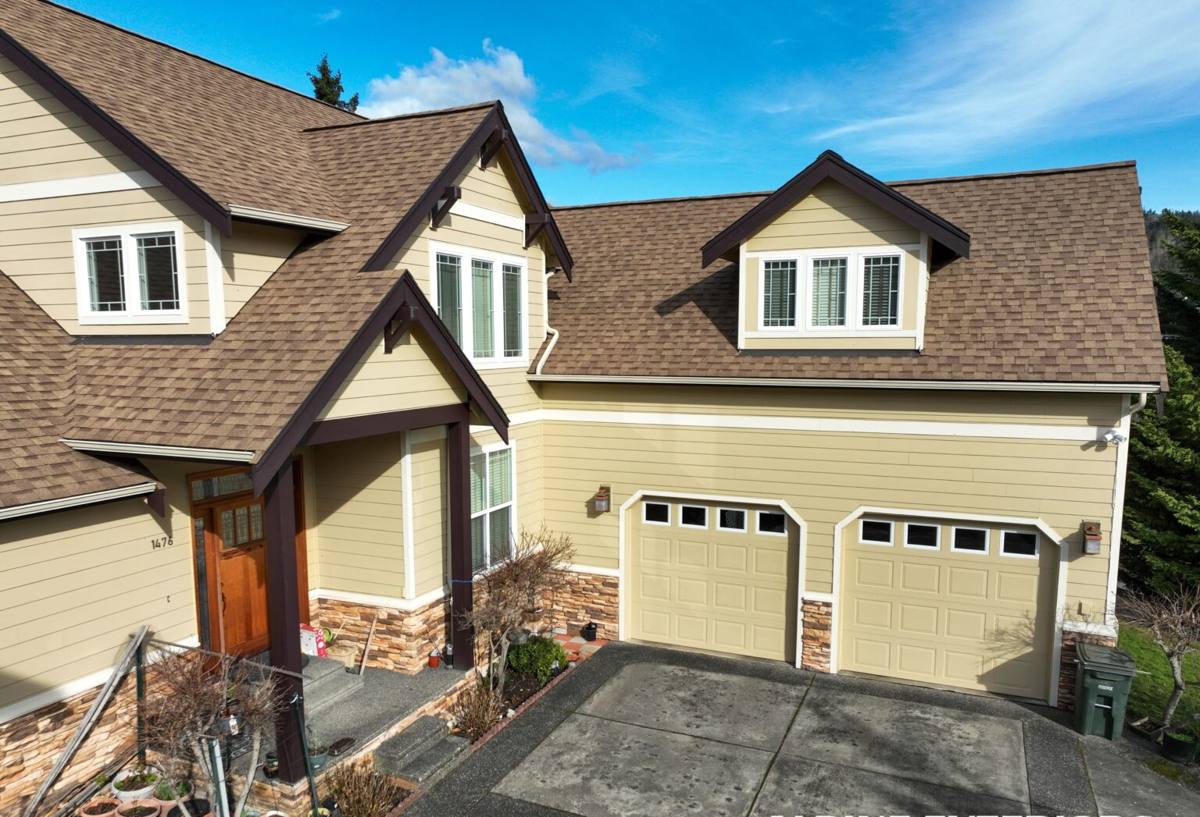
What a Correctly Built Shingle Roof Needs on a Barrier Island
There's a difference between a roof that's technically finished and one that's actually built for this location. Here's what we consider non-negotiable for a Siesta Key home.
A Fully Sealed Deck
Before a single shingle goes down, the deck itself needs a self-adhering, waterproof underlayment at the seams and penetrations, not just a mechanically fastened felt. On a barrier island, wind-driven rain can get pushed sideways and up under shingle tabs during a storm. If the deck underneath isn't sealed, that water finds the plywood. A sealed deck is what keeps a home dry even if some shingles get damaged before a repair crew can get out.
Fastening for Uplift, Not Just Rain
Wind resistance in an asphalt shingle roof comes down to nailing pattern and nail placement as much as the shingle product itself. Six nails per shingle in the manufacturer's specified zone, placed correctly rather than rushed, is the difference between a roof that stays put in sustained coastal wind and one that starts losing tabs at the edges and ridges first — which is exactly where wind uplift concentrates on an exposed lot.
Flashing and Penetration Detail
Every place a roof isn't flat — valleys, chimneys, skylights, pipe boots, wall transitions — is a place water can get in if the flashing isn't done right. Salt air accelerates corrosion on lower-grade metal flashing and fasteners, so material choice at these details matters more here than it would on an inland roof.
Balanced Attic Ventilation
A roof deck that can't breathe traps heat and moisture underneath the shingles, which shortens shingle life regardless of how good the product is. Balanced intake and exhaust ventilation keeps attic temperatures and humidity in a range that lets the roofing system perform the way it's rated to.
Signs a Siesta Key Roof Needs Attention
Coastal exposure tends to show up as specific, recognizable problems rather than a roof that just quietly wears out evenly. Homeowners on the Key should watch for:
- Granule loss showing up as dark streaks in gutters or on the ground after rain — a sign the shingle's protective surface is thinning from UV exposure
- Curling or cupping shingle edges, especially on south- and west-facing slopes that take the most direct sun
- Lifted or missing tabs after any wind event, even one that didn't make headlines
- Rust staining around metal flashing, vent boots, or fasteners
- Soft spots or discoloration on interior ceilings, which usually means water has already been getting through for a while
- Visible algae or dark streaking across the roof field, which affects appearance and, over time, shingle surface integrity
- Nail heads or fastener patterns visible through worn shingles near ridges and edges
Any one of these on its own isn't necessarily an emergency, but on a barrier island property it's worth having a professional look rather than waiting for the next named storm to find the weak spot for you.
Choosing the Right Shingle for a Coastal Sarasota County Home
Not every asphalt shingle product is built the same way, and the differences matter more here than they would inland. The table below compares the general categories homeowners choose between.
| Shingle Type | Wind Performance | Typical Lifespan Here | Best Fit |
|---|---|---|---|
| 3-Tab (Standard) | Lower wind rating, more prone to early tab lift | Shorter, due to sun and coastal exposure | Budget-driven projects, secondary structures |
| Architectural / Laminate | Higher wind rating when properly nailed; thicker, more resistant to curling | Longer than 3-tab under the same conditions | Most Siesta Key primary residences |
| Impact-Rated Laminate | Highest wind and impact resistance in the asphalt category | Comparable to standard architectural, with added storm resilience | Homes seeking insurance credits and maximum storm durability |
We don't push one product on every home. The right call depends on the roof's exposure, the home's insurance situation, and what the homeowner wants to spend versus how long they want the roof to last without attention. What we won't do is install a shingle system without the sealed-deck and fastening details above just because a lower-tier product is cheaper up front — that combination is where early coastal failures come from, and it ends up costing more in the long run through repairs and shortened lifespan.
How Our Siesta Key Roofing Process Works
Working on a barrier island adds a few practical steps that don't come up on a mainland job — bridge access windows, tighter staging areas, HOA or condo association requirements, and seasonal traffic all factor into scheduling. Here's how a typical shingle roof project runs from start to finish.
- On-site inspection. We walk the roof, check the deck condition where accessible, look at ventilation, flashing, and note any storm damage or age-related wear.
- Written proposal. You get a clear scope of work and pricing before anything is scheduled — what's being replaced, what materials are specified, and why.
- Permitting. Roofing work on Siesta Key requires a permit through the appropriate local building department. We handle that process rather than leaving it to the homeowner.
- Material staging. Given limited space on many Key properties, we plan delivery and staging so materials aren't blocking access or sitting exposed longer than necessary.
- Tear-off and deck inspection. Old roofing comes off down to the deck, and we check the plywood underneath for soft spots or rot before anything new goes down.
- Underlayment, flashing, and shingle installation. Sealed deck first, then flashing at every penetration and transition, then shingles installed to the fastening pattern the product requires.
- Cleanup and magnetic sweep. Job site and surrounding yard are cleared of debris and swept for stray fasteners.
- Final walkthrough and paperwork. We review the completed work with you and provide documentation for warranty and, where applicable, insurance purposes.
Repair or Full Replacement? Cost Factors to Weigh
Not every damaged shingle roof needs a full replacement, but on a barrier island, the calculation is a little different than it would be inland because exposure accelerates wear across the whole roof, not just the damaged section. The factors below are what actually drive that decision.
| Factor | Leans Toward Repair | Leans Toward Replacement |
|---|---|---|
| Roof age | Under roughly half its expected service life | Approaching or past the upper end of its expected life |
| Extent of damage | Isolated to one slope or area | Spread across multiple slopes or recurring in different spots |
| Deck condition | Deck is solid, no rot found | Soft spots or rot found in the deck during inspection |
| Granule loss / UV wear | Minimal, localized | Widespread across sun-exposed slopes |
| Insurance and wind mitigation goals | N/A if roof already qualifies for current credits | Replacement can unlock updated wind mitigation credits |
An honest inspection should tell you which side of that table your roof falls on. We'll always tell you when a repair is the right call rather than defaulting to a full replacement recommendation.
Ventilation and Attic Health in a Salt Air Environment
Attic ventilation gets overlooked because it's invisible from the ground, but it directly affects how long a shingle roof lasts in this climate. Without balanced intake and exhaust airflow, heat builds up under the deck during Sarasota's long, intense summers, which accelerates the breakdown of the shingle's asphalt layer from underneath — on top of the UV wear happening from above. Trapped moisture from humidity and any minor intrusion also has nowhere to go, which is a setup for deck rot that isn't visible from inside the house or from the ground.
On a coastal property, we also pay attention to the materials used in ventilation components themselves. Standard vents and fasteners can corrode faster in salt-laden air than they would a few miles inland, so we favor components suited to that exposure rather than whatever is cheapest to install.
Permits, Codes, and Insurance on a Barrier Island Property
Roofing work here is governed by Sarasota County and Florida Building Code requirements, and coastal properties like those on Siesta Key typically fall under higher wind-design provisions than roofs built further inland. That affects things like required fastening patterns and, in some cases, secondary water barrier requirements at the deck. We pull the permit and coordinate inspections as part of the job — it's not an optional extra step, and skipping it can create real problems later, including complications with insurance claims and with selling the home down the road.
It's also worth having your roofer explain how the completed work affects your wind mitigation inspection. Insurance carriers in Florida use that inspection to determine discounts, and details like the roof covering type, deck attachment, and roof-to-wall connections all factor in. A properly documented, code-compliant replacement can improve your standing on that inspection — but only if it's built and documented correctly the first time.
Why Hiring a Crew That Already Works Siesta Key Matters
A lot of what makes a roofing job go smoothly on the Key has nothing to do with shingles and everything to do with logistics a mainland-based crew doesn't deal with day to day. Bridge access and traffic patterns affect scheduling. Many properties are on tighter lots with less room to stage materials and equipment, which takes planning to do without blocking neighbors or damaging landscaping. Condo and HOA associations often have their own requirements for contractor insurance, work hours, and access that need to be handled before a crew ever shows up. And during peak tourist season, timing a project around guest turnovers or rental schedules is its own coordination problem.
None of that is complicated once you've done it before, but it does mean a crew unfamiliar with the island can end up costing you time, or missing a requirement that delays the permit or the final inspection. Working this area regularly also means we've seen how salt air, sun, and wind actually play out on real roofs here over time — not just in a manufacturer's spec sheet — which shapes how we spec and install every roof we put on.
If your Siesta Key roof is showing its age, took a hit in a recent storm, or you just want an honest opinion on where it stands, we're happy to come take a look. The estimate is free, there's no pressure attached to it, and you'll get a straight answer about whether you're looking at a repair or a replacement.