 Sarasota Window
 Southside Village Sits Right in the Path of Florida's Toughest Weather
Southside Village is one of Sarasota's more established, walkable neighborhoods — mature tree canopy, a mix of older bungalow-style homes and newer construction, and close proximity to Sarasota Bay. That location is part of what makes it desirable, but it also means the homes here take a direct hit from everything Gulf Coast weather can throw at a house. Hurricane-force winds test every seam and fastener. Intense, near year-round UV breaks down paint films and pulls moisture out of anything not built to handle it. Wind-driven rain finds its way behind poorly flashed siding. And salt air, carried in off the bay and the Gulf beyond it, accelerates corrosion on fasteners and trim faster than most homeowners expect.
None of this is unique to Southside Village, but the combination of mature landscaping, older housing stock, and bay proximity means siding here tends to show wear sooner than in newer, more inland Sarasota County subdivisions. Shade from established trees keeps siding damp longer after storms, and older homes were often sided with materials or installation methods that simply weren't built for what this climate does over 20-30 years.
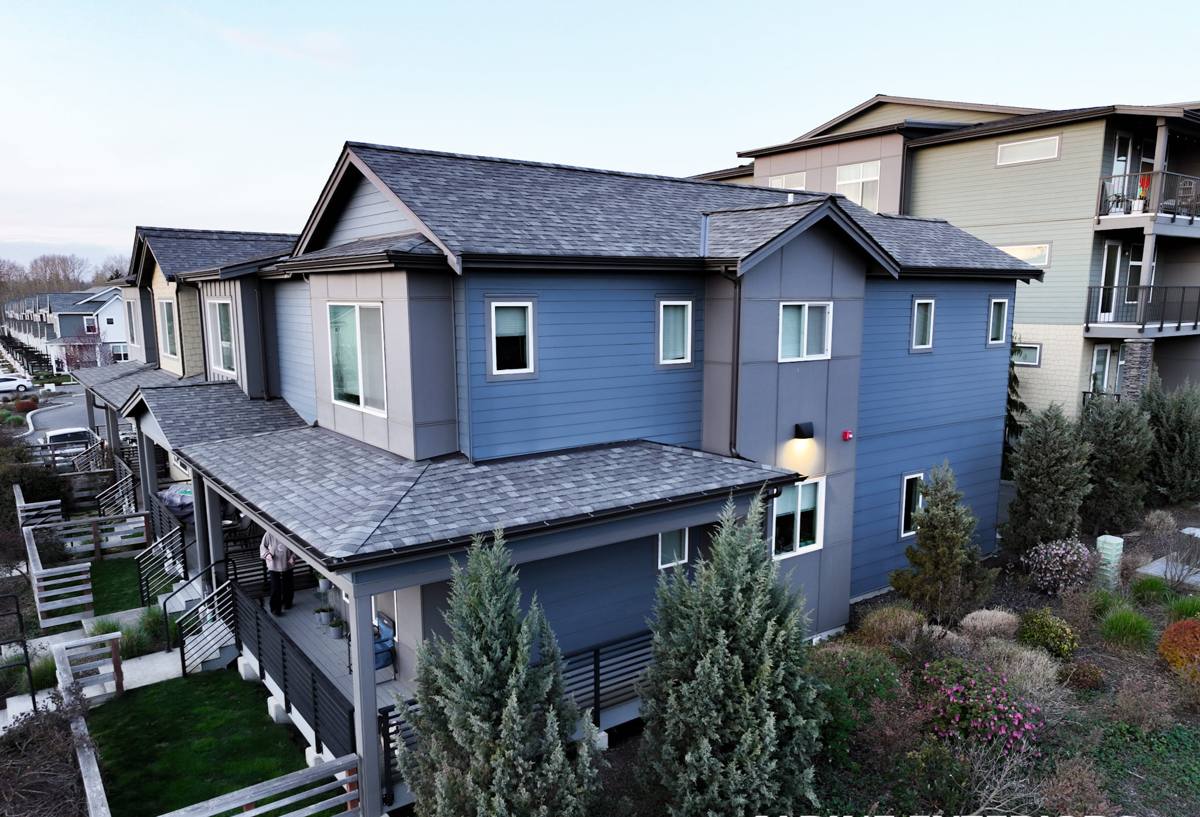
Signs Your Siding Has Moved From "Needs Repair" to "Needs Replacement"
A lot of siding problems get patched instead of properly diagnosed. Patching buys time, but it doesn't fix the underlying issue — and in a climate this demanding, the underlying issue usually keeps spreading. Here's what tells us a full replacement is the honest recommendation rather than another repair:
- Cracking, buckling, or visible warping across multiple panels, not just one isolated spot
- Soft or spongy spots when you press on the siding, which usually means water has reached the substrate
- Paint that won't hold — you're repainting every few years and it still looks chalky or is peeling within a season
- Visible gaps opening up at seams, corners, or where siding meets trim
- Mold, mildew, or dark streaking that keeps coming back after cleaning
- A noticeable rise in cooling costs, which can point to failed insulation backing or air infiltration behind the siding
- Siding that feels unusually warm or flexible to the touch, a sign the material has lost structural integrity
If you're only seeing one or two of these and they're isolated, a targeted repair may still make sense. Once several of these show up together, replacement is almost always the more honest — and ultimately cheaper — path.
Why We Install Only James Hardie Fiber Cement Siding
We don't install vinyl, LP SmartSide, Cemplank, Allura, primed spruce, or cedar. That's a deliberate standard, not a lack of options. Vinyl softens and warps under sustained Florida heat and can crack in high wind. Wood-based and engineered-wood products are more sensitive to the exact moisture conditions Southside Village's tree cover and bay-adjacent humidity create. We've made James Hardie fiber cement our standard because it's non-combustible, holds up to wind-driven rain without swelling, and comes with a factory-applied ColorPlus finish engineered to resist Florida UV far longer than field-applied paint. Hardie's HZ5 product line is specifically formulated for hot, humid climates like ours, and the warranty is one of the strongest, most transferable in the industry when the product is installed to spec. That last part — installed to spec — matters as much as the product itself, which is why the details below matter.
What a Correct Siding Replacement Actually Involves
A Full Tear-Off, Not an Overlay
Installing new siding over old siding is sometimes offered as a shortcut. We don't do it. An overlay traps whatever moisture or damage already exists behind the old material, and it prevents a real inspection of the sheathing underneath — which, on an older Southside Village home, is exactly where problems tend to be hiding.
Weather-Resistive Barrier and Flashing Details
Once the old siding is off, the sheathing gets inspected and repaired if needed, then a weather-resistive barrier goes on correctly lapped to shed water downward. Flashing around windows, doors, and any penetration point is where most siding failures actually originate — not the siding itself. Getting this step right is what keeps wind-driven rain from getting behind the wall in the first place.
Fastening to Manufacturer Spec
James Hardie publishes specific fastening patterns and requirements for high-wind zones, and Sarasota County sits well within hurricane wind-load territory. That means correct fastener type, spacing, and placement — not "close enough." Installed off-spec, even the best siding material can fail in a storm; installed to spec, it's built to hold.
Our Process, From Estimate to Final Walkthrough
Assessment and Estimate
We look at the current siding, the condition of the substrate where visible, and the specific exposure your home has to sun, wind, and moisture, then walk you through options and an honest cost range — no pressure, no upsell script.
Tear-Off and Substrate Repair
Old material comes off, sheathing gets inspected, and any rot or damage gets addressed before anything new goes on. This is the step that gets skipped when a job is rushed, and it's the one that matters most long-term.
Installation and In-Progress Inspection
Hardie panels, planks, or trim go on to manufacturer fastening and flashing spec, with checks along the way rather than only at the end.
Final Walkthrough
We walk the finished job with you, point out what was done and why, and make sure everything meets both our standard and yours before we call it complete.
James Hardie Product Lines Worth Knowing About
Not every Hardie product is built the same way, and the right choice depends on your home's exposure and the look you want. Here's a general comparison of the lines most relevant to a coastal Sarasota County home:
| Product Line | Best Suited For | Key Feature |
|---|---|---|
| HZ5 Panels & Lap Siding | Homes with direct sun, wind, and moisture exposure | Engineered specifically for hot, humid, high-moisture climate zones |
| ColorPlus Finish | Homeowners who don't want to repaint on a short cycle | Factory-baked finish designed to outlast field-applied paint under UV |
| Artisan & Statement Collections | Homes where architectural detail and trim profile matter | Deeper reveals and refined trim options for a more custom look |
| HardieTrim | Corner boards, fascia, and window/door trim | Matches the siding's durability so trim doesn't fail before the field material does |
We'll talk through which combination fits your home rather than defaulting to one option for every house.
What Affects the Cost of a Siding Replacement in Southside Village
Every home is different, and we won't quote a number without seeing the property, but these are the factors that most commonly move the price up or down:
| Factor | Why It Matters |
|---|---|
| Home size and wall complexity | More linear footage and more corners, gables, or dormers means more material and labor |
| Substrate condition | Rotted or damaged sheathing found during tear-off adds repair work before new siding can go on |
| Trim and architectural detail | Bungalow-style detailing and custom trim profiles take more time than plain lap siding |
| Color and finish choice | ColorPlus factory finishes vs. field-painted options affect material cost |
| Site access | Mature landscaping, narrow older lots, and tight setbacks common in established neighborhoods can add labor time |
Why a Crew That Already Works Southside Village Matters
Established neighborhoods like this one come with real logistical differences from a new-build subdivision. Mature trees mean more careful staging and cleanup. Older, narrower lots mean equipment and material staging take more planning. Homes closer to the bay carry more salt exposure on fasteners and trim, which changes what we pay attention to during installation. A crew that regularly works this part of Sarasota County already knows how to work around these realities without treating your property like a blank lot — respecting landscaping, neighbors, and the character of the block while still doing the job to full spec.
Caring for Your New Siding After Installation
James Hardie siding installed correctly needs relatively little upkeep, but a few habits extend its life in this climate:
- Rinse siding periodically to clear salt residue and pollen buildup, especially on homes closer to the bay
- Keep vegetation trimmed back so leaves and branches aren't holding moisture against the siding
- Inspect caulking at trim joints and penetrations annually and touch up as needed
- Address any impact damage (from storm debris or lawn equipment) promptly rather than letting it sit exposed
If you're weighing a siding replacement for a Southside Village home, we're happy to come take a look and give you an honest read on condition, options, and cost — no pressure, no obligation. The form below gets you a free estimate.