 Sarasota Window
 Decking in The Meadows Has to Survive Sarasota's Climate, Not Just Look Good
The Meadows sits inland enough to avoid direct coastal spray, but it still lives under the same Gulf Coast weather load as the rest of Sarasota County: long stretches of intense UV, sudden wind-driven downpours, tropical humidity that never really lets up, and the real possibility of hurricane-force wind gusts several months a year. Add in that many Meadows lots carry mature tree canopy, which means more shade, more leaf and pollen debris, and slower-drying surfaces after a storm, and you have a set of conditions that will find every weak point in a poorly built deck within a couple of seasons.
Composite decking exists because wood decking struggles with exactly these conditions — splitting, graying, cupping, and rotting faster than most homeowners expect in Southwest Florida. But composite boards are not automatically maintenance-free or storm-proof. The material only performs as well as the substructure underneath it, the fasteners holding it together, and the way it was detailed for drainage and airflow. A deck built the same way you'd build one in a dry, mild climate will underperform here, even with premium boards on top.
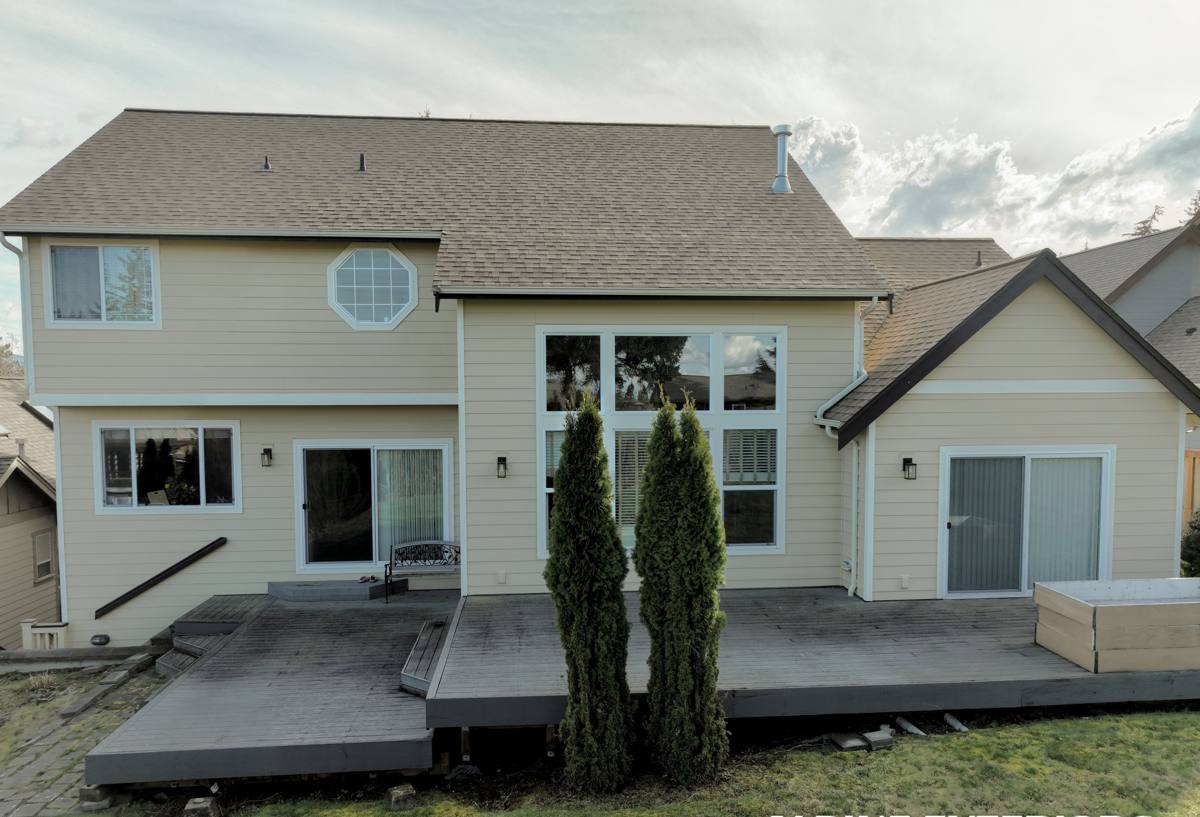
What a Correctly Built Composite Deck Involves Here
The substructure matters more than the boards
Composite decking is only as good as what's underneath it. In our climate, that means pressure-treated framing rated for ground contact where it's close to grade, joist tape or a similar barrier to keep moisture out of the top of the joists, and fasteners that won't corrode in humid, occasionally salt-tinged air. Standard zinc-coated screws work fine inland in a dry climate; here, we use fasteners rated for the exposure so rust doesn't stain the boards or weaken the connection years before the decking itself wears out.
Drainage and airflow underneath
A deck built tight to the ground, or without a slight slope and clear path for water to leave the area, holds moisture underneath long after a storm has passed. That trapped humidity is what leads to mildew staining on the underside of boards, corrosion on fasteners, and a musty smell that homeowners often blame on the decking itself when the real cause is what's happening below it.
Fastening that accounts for heat movement
Composite boards expand and contract with temperature swings — and Sarasota's swing between a cool winter morning and a 95-degree August afternoon on a sun-exposed deck is significant. Gaps between boards, hidden fastener spacing, and picture-frame trim all need to be installed with that movement in mind. Get it wrong and you'll see boards buckle, fasteners pop, or gaps close up and creak within a year or two.
Choosing a Composite Board for Sarasota Heat and Humidity
Not every composite product is built the same, and the differences matter more here than in a milder climate. The table below is a general guide to how the common tiers of composite decking tend to perform under intense UV and humidity — it's not a recommendation of any specific brand, and we're happy to walk through actual product samples during an estimate.
| Board Type | UV / Fade Resistance | Moisture & Mold Resistance | Heat Underfoot | Typical Warranty Range |
|---|---|---|---|---|
| Entry-level capped composite | Good, some fading expected over time | Good with proper substructure | Moderate to warm in direct sun | Shorter, often prorated |
| Mid-tier capped composite | Very good | Very good | Moderate | Mid-range, often 25 years |
| Premium capped composite | Excellent, best color retention | Excellent | Varies by color — lighter colors stay cooler | Longest, often 25-50 years |
| Uncapped composite (older-style) | Weaker, more prone to fading and staining | Weaker, absorbs more moisture | Moderate | Shorter |
One detail homeowners often overlook: darker composite boards absorb significantly more heat in direct Florida sun and can become uncomfortably hot to walk on barefoot by midafternoon. If the deck faces west or gets long, unshaded sun exposure, we'll talk through lighter color options as part of the consultation rather than let that surprise you after installation.
Our Process for a Meadows Composite Deck Project
- Site visit and consultation. We look at sun exposure, drainage, tree canopy, existing structure (if replacing an old deck), and how the space will actually be used.
- Structural assessment. Ledger board condition, footing depth, and framing layout get checked against current wind-load requirements for our area — not just what was code when an older deck was originally built.
- Permitting. Decking projects in Sarasota County typically require a permit, and if the property is in an HOA-governed community, some form of association approval as well. We handle the paperwork side and won't start construction ahead of the required approvals.
- Removal of existing decking, if applicable. Old boards and any compromised framing are removed and hauled off before new substructure goes in.
- Framing and substructure work. This is where the moisture barrier, fastener selection, and drainage detailing happen — the part of the job that doesn't show once the deck is finished but determines how long it lasts.
- Composite board installation. Boards go down with proper gap spacing for thermal movement, using a hidden fastener system where the product allows for it.
- Railing, fascia, and trim. Finished edges and any required railing are installed to match the board line and meet code height and spacing requirements.
- Final walkthrough. We check the deck with you before calling the job done — fastener lines, gap consistency, drainage, and overall finish.
Cost Factors for a Meadows Composite Deck
Every deck is different, so we don't quote sight-unseen prices — but these are the factors that actually move the number, in rough order of impact.
| Factor | Why It Affects Cost |
|---|---|
| Deck size and shape | Square footage and the number of angles, cutouts, or multiple levels drive material and labor time |
| Board tier selected | Entry-level, mid-tier, and premium composite boards carry different material costs and warranty backing |
| Condition of existing structure | Full tear-out and reframing costs more than building on sound existing footings and framing |
| Railing requirements | Composite, aluminum, or cable railing systems vary in cost and installation labor |
| Height and code requirements | Elevated decks may need additional footings, guardrails, and stairs that ground-level decks don't |
| Permit and HOA review | Additional design documentation may be needed depending on the association's requirements |
Keeping a Composite Deck Looking Right Year After Year
Composite decking cuts down on maintenance compared to wood, but "low-maintenance" isn't "no-maintenance" in a climate like ours. A little routine care goes a long way toward protecting the finish and the warranty.
- Rinse the deck periodically to clear pollen, tree debris, and salt-laden dust before it builds up in the board grain
- Use a soft-bristle brush and mild soap for general cleaning rather than harsh chemical cleaners
- If pressure washing, keep the nozzle wide and the pressure low — high pressure can damage the cap layer on composite boards
- Keep gutters and downspouts clear so runoff isn't dumping directly onto or under the deck
- Trim back overhanging branches where practical to reduce constant leaf litter and shade-trapped moisture
- After a major storm, take a quick look at railing connections and fastener lines for anything that shifted
- Address any standing water or slow-draining spots on the deck surface promptly rather than letting it sit
Permits, Wind Ratings, and HOA Review
Sarasota County requires permits for most new deck construction and significant deck replacements, and inspections confirm the structure meets current wind-load standards for our area — a meaningful requirement given how often this region sees tropical storm and hurricane conditions. If a deck is being rebuilt after storm damage or age-related failure, this is also the point where an older structure gets brought up to current standards rather than simply rebuilt to match what was there before.
Many Meadows properties also fall under HOA or deed-restriction review for exterior changes, including decking. That process usually asks for basic plans, material and color selections, and sometimes a rendering of how the finished deck will look from the street or common areas. We factor this into project timelines up front so it doesn't become a surprise delay partway through.
Why Hiring a Crew That Already Works in The Meadows Matters
A crew that's worked in this neighborhood before isn't guessing at things a crew from outside the area has to learn on your project. That means knowing generally what the local permitting process expects, having a realistic sense of how tree canopy and drainage patterns on wooded lots affect a deck's footing placement, and understanding what board colors and finishes actually hold up under the specific mix of sun exposure and humidity found in this part of Sarasota County — not just in a manufacturer's spec sheet written for a national market.
It also means fewer surprises during the job. A crew unfamiliar with the area's HOA review timelines, county inspection scheduling, or common site conditions can end up quoting a timeline that doesn't hold up once the project actually starts. Local experience shortens that gap between what's promised and what actually happens.
Getting an Honest Look at Your Deck Project
Whether you're replacing an aging wood deck, upgrading an older composite deck that's past its prime, or adding decking to a home that's never had it, the right approach starts with a real look at your specific lot — sun exposure, drainage, tree cover, and how you actually want to use the space. If you're in The Meadows and want a straight answer on what a correctly built composite deck involves for your home, reach out for a free, no-pressure estimate using the form below.