 Sarasota Window
 Custom Windows Built for University Park's Climate
University Park sits inland enough to feel a little removed from the beach, but it still lives under the same Gulf Coast weather that defines every home in Sarasota County. Hurricane-force winds, wind-driven rain that finds its way through the smallest gap, intense year-round UV, and salt-laden air all reach this neighborhood, even without direct waterfront exposure. Custom windows here aren't a cosmetic upgrade — they're a structural component of the house, and getting the job right matters as much as picking a style you like.
"Custom" doesn't just mean a nicer-looking window. It means a window built to the exact rough opening of your home, rated for the wind and pressure loads required in this part of Florida, and installed with flashing and sealing details that account for how sideways rain actually behaves during a real storm. A stock window forced into an opening it doesn't quite fit, or installed with generic caulk instead of a proper moisture-management system, is where most leak and failure problems start.
What Custom Sizing and Design Solve for Local Homes
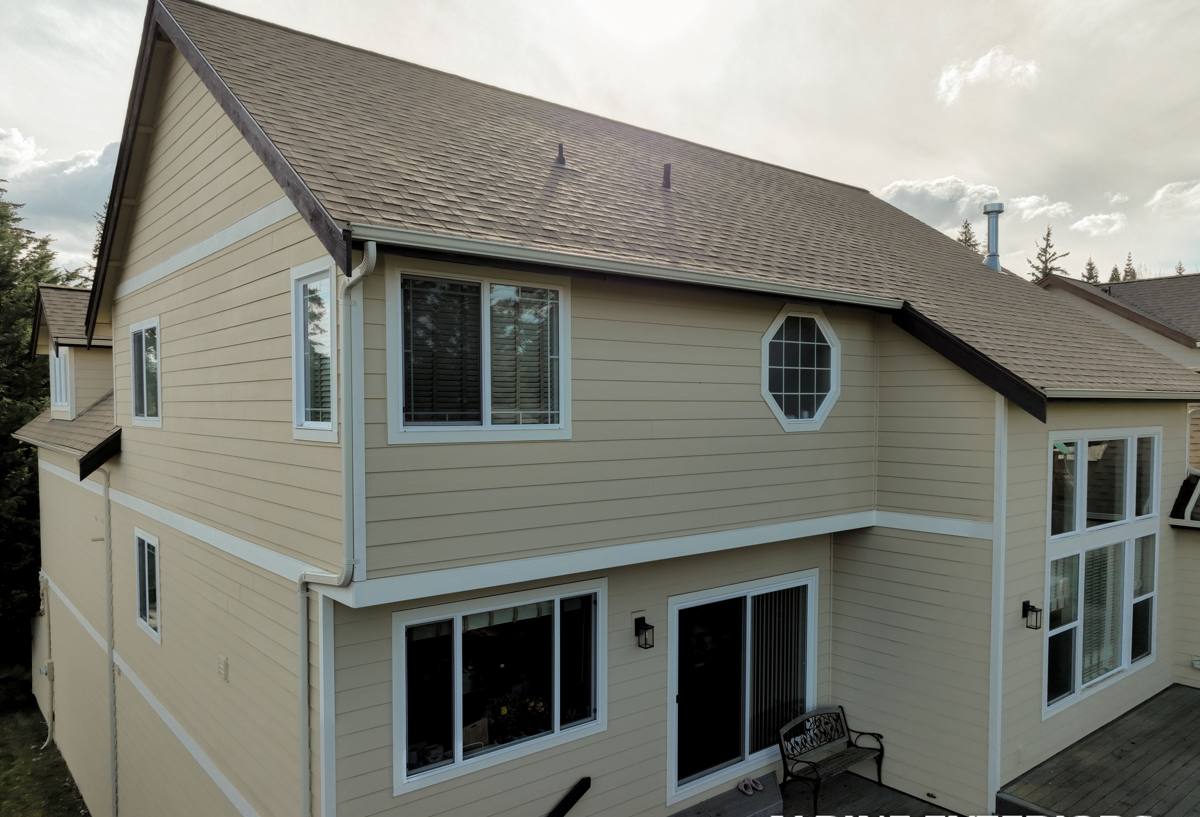
University Park includes a mix of home ages and builder styles, and no two openings are ever perfectly identical once you account for settling, prior renovations, or slight variations in original construction. Custom-manufactured windows are built to the actual measured opening rather than forcing a standard size to fit, which matters for a few practical reasons:
- A properly sized window seals correctly on the first install, without shims, gaps, or field modifications that weaken the frame
- Sightlines and sash proportions can match the rest of the home instead of looking like an obvious retrofit
- Homes with lanais, pool cages, or covered patios often have unusual window shapes or transoms that off-the-shelf sizes simply don't cover
- Custom orders let you match glass tint, frame color, and grid pattern across the whole house for a consistent look
Custom sizing also matters when you're replacing older aluminum-frame windows that were common in Florida builds from past decades. Those original openings were rarely built to today's wind and water standards, so an accurate custom measurement — not just a same-size swap — is often the difference between a window that performs and one that just looks like an upgrade.
Working Around Lanais and Screened Enclosures
A lot of homes in this area have a pool cage, screened lanai, or covered rear porch attached to the main structure. That changes how windows on the back of the house should be specified — sun exposure is filtered differently under a screen enclosure, and the framing sequence around an attached structure needs to account for how the two systems meet. We look at that condition specifically rather than treating every elevation of the house the same way.
Wind, Water, and What a Correct Installation Actually Involves
Sarasota County enforces Florida Building Code wind-borne debris region requirements, which means replacement windows generally need to be impact-rated or paired with code-approved protection, and installed in a way that's been engineered for the pressures a storm can put on a wall opening. This isn't paperwork for its own sake — it's the difference between a window that stays put during a bad storm and one that becomes a failure point that lets wind and water into the house.
A correct installation involves several things working together, not just the window unit itself:
- Accurate load calculations for the specific wall and opening, based on the home's height, exposure, and location
- Proper flashing and weatherproofing membrane integrated with the existing wall assembly, not just caulked over the gap
- Correct anchoring into structurally sound framing or masonry, following the manufacturer's tested installation instructions
- Sealant compatible with both the window frame material and the surrounding wall finish
- Permitting and inspection through Sarasota County, which confirms the installation meets code rather than just "looking finished"
Skipping any one of these doesn't usually show up on day one. It shows up during the first serious wind-driven rain event, when water tracks in around improperly flashed corners, or during a storm when a window that wasn't anchored to code becomes a pressure failure point for the whole wall.
Frame Materials and Glass: What Actually Holds Up Here
Frame material and glass package both affect how a window performs against UV, humidity, and salt air over time — not just how it performs in a single storm. Here's how the common options compare for this climate:
| Option | Strengths in this climate | Trade-offs to consider |
|---|---|---|
| Vinyl frame | Won't corrode from salt air, low maintenance, good insulating properties | Can expand/contract with heat cycling; quality varies significantly by manufacturer |
| Aluminum frame | Strong, slim sightlines, holds up structurally under high wind loads | Conducts heat, and lower-grade coatings can pit or corrode faster near salt air |
| Fiberglass frame | Very stable dimensionally, resists UV degradation well, low expansion/contraction | Higher upfront cost than vinyl in most product lines |
| Wood-clad frame | Interior warmth and traditional appearance | Highest maintenance burden in humid, salt-exposed conditions; not our first recommendation for exposed elevations |
Glass matters just as much as frame. Impact-rated laminated glass is the standard we recommend for full exposure and peace of mind without relying on separate shutters, and a low-E coating with the right tint cuts down on the UV load that fades flooring and furniture over a Florida summer. We'll walk through which combination makes sense for your specific elevations and budget rather than pushing one package for the whole house.
Our Process, Start to Finish
Every custom window job follows the same sequence, whether it's a single window or a full-house replacement:
- On-site assessment — we look at existing window condition, framing, water intrusion history, and sun/wind exposure by elevation
- Precise measurement — every opening is measured individually; nothing is assumed to match "standard" sizes
- Product selection — frame material, glass package, and grid style chosen based on your priorities and each elevation's exposure
- Permitting — we handle the Sarasota County permit application and coordinate required inspections
- Manufacturing lead time — custom units are built to your exact specs, which takes longer than stock inventory but ensures fit and code compliance
- Removal and installation — old units removed, openings inspected for hidden damage before new windows go in, proper flashing and sealing applied
- Final inspection and walkthrough — code inspection completed, and we walk the job with you before calling it done
The step homeowners are most often surprised by is the framing inspection during removal. Once an old window comes out, we can finally see the condition of the wall opening underneath — and in older homes, that's sometimes where hidden moisture damage from a prior leaky installation turns up. We'll flag anything like that before proceeding rather than closing it back up and hoping it holds.
Problems We Commonly Find and Correct
A meaningful share of our University Park calls aren't first-time installs — they're fixes for a prior installation that didn't hold up. The recurring issues we see aren't really about any one product being bad; they're almost always about installation shortcuts:
- Caulk used as the primary water barrier instead of proper flashing — caulk fails over time, especially under constant UV exposure
- Windows anchored into framing that wasn't structurally sound, discovered only once removed
- Non-impact glass installed in fully exposed locations with no shutter protection at all
- Mismatched sealants that degrade faster than expected against certain frame materials
- Gaps left around the frame that let humid air condense inside the wall cavity over time
Our standard is to treat the installation, not just the window unit, as the product. That's a professional choice about how we do the work — it's the reason we won't cut corners on flashing or anchoring even when it would make a job faster.
Maintenance That Actually Matters in This Climate
Even a correctly installed custom window needs some upkeep in a coastal-influenced climate like Sarasota's. This is a short list, not a full maintenance contract, but it covers what actually extends window life here:
- Rinse frames and hardware periodically to clear salt residue, especially on elevations facing open exposure
- Check and clean weep holes so water can drain out of the frame system instead of pooling
- Inspect exterior sealant lines annually for cracking or separation, particularly after a hard summer of UV exposure
- Lubricate hardware and tracks so locking mechanisms continue sealing tightly under wind pressure
- Have impact glass and seals checked after any major storm, even if there's no visible damage
Cost Factors Worth Understanding Upfront
Custom window pricing varies by opening size, frame material, and glass package, and we'll give you specific numbers after seeing the job — but these are the factors that move the price most:
| Factor | Why it affects cost |
|---|---|
| Impact-rated vs. standard glass | Impact glass costs more upfront but removes the need for separate shutter systems |
| Frame material | Vinyl is typically the most budget-friendly; fiberglass and higher-grade aluminum cost more |
| Number of unique sizes | Custom manufacturing for many different openings costs more than repeating one size |
| Existing wall condition | Hidden framing repairs found during removal add to the scope |
| Access and elevation | Second-story or hard-to-access openings take more labor time |
We'd rather walk you through these trade-offs honestly than quote a number without context, since the right answer is different for a single problem window than it is for a full-house replacement.
Why Local, University Park–Familiar Experience Matters
Window work in this area isn't generic construction — it's shaped by Sarasota County's permitting process, the specific wind-borne debris region requirements that apply here, and the realities of homes that have already weathered years of Gulf Coast sun and storms. A crew that already works in and around University Park knows what to expect from typical framing conditions, understands the county inspection process without delays, and has already seen how different products actually hold up locally over time rather than just on a spec sheet. That translates into fewer surprises, a smoother permit process, and a window system that's actually matched to this specific environment rather than a one-size-fits-all approach.
If you're weighing a single replacement window or planning a full-house upgrade, we're happy to take a look and give you a straightforward, no-pressure estimate — just fill out the form below to get started.