 Sarasota Window
 Storm Damage Roofing in University Park
University Park sits inland from the coast, but that doesn't mean the roofs there get off easy. Every named storm that tracks through Sarasota County brings the same combination that wears on shingles, tile, and flashing here: sustained straight-line winds, sudden gusts that spike well above the sustained number, and driving rain that finds every weak seam a roof has. Homes in this community tend to be newer than a lot of Sarasota's older neighborhoods, which helps, but "newer" isn't the same as "storm-proof" — a roof installed to code in the early 2000s or 2010s can still take a real hit from a strong system, and the damage isn't always obvious from the ground.
We work in University Park regularly, which matters more than it sounds like. A roof crew that knows the roof pitches, common tile and shingle profiles, and typical construction details used across the neighborhood's builders can move faster and more accurately than someone seeing the roof type for the first time. That familiarity shows up in how quickly we can tell you what's actually wrong versus what merely looks alarming after a storm.
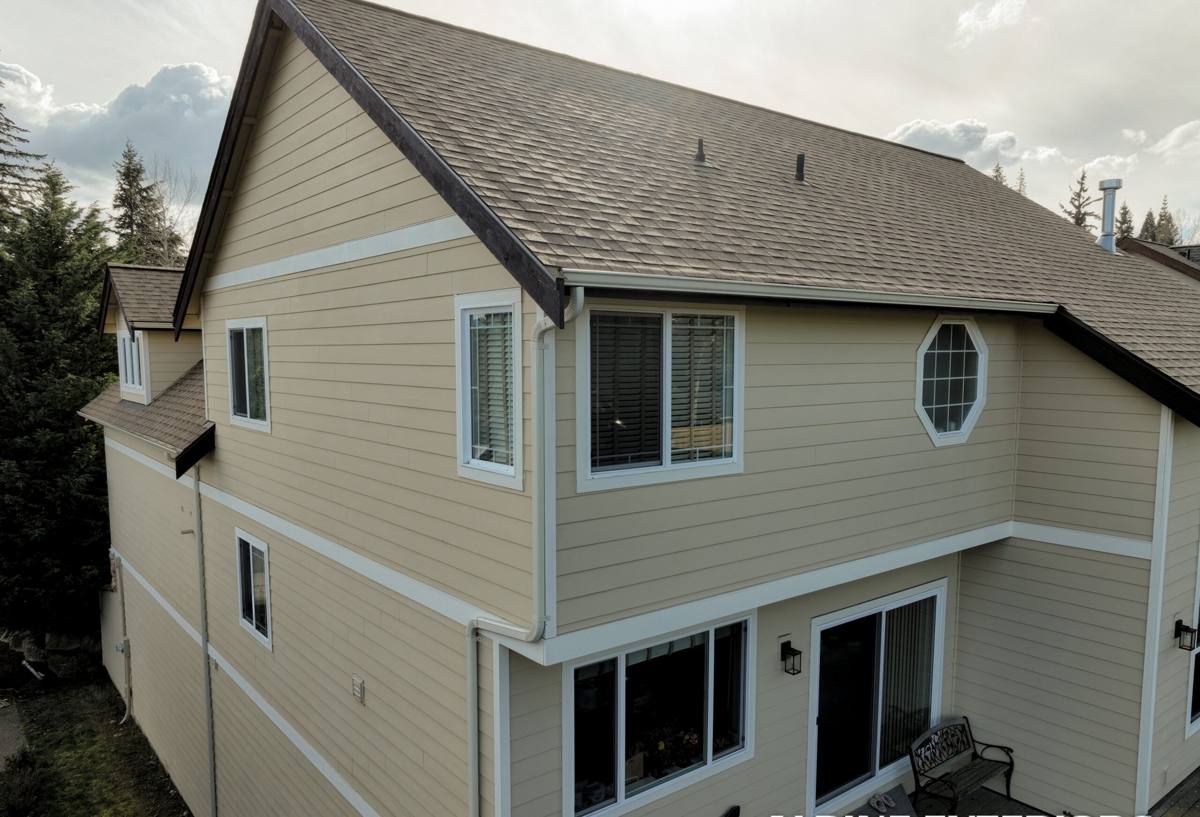
What Sarasota County Storms Actually Do to a Roof
Storm damage isn't one thing — it's a handful of distinct failure modes, and the fix is different for each one.
Wind Uplift and Lifted or Missing Shingles/Tiles
Wind doesn't just push on a roof, it creates lift at edges, ridges, and corners — the same aerodynamic effect that lifts an airplane wing. That's why storm damage so often starts at the roof perimeter and ridge line rather than the middle of a roof plane. Shingles crease or tear loose at the tab; tiles crack at the nail or foam-adhesion point or slide out of alignment entirely.
Wind-Driven Rain Intrusion
Sarasota storms rarely drop rain straight down — it comes in sideways. That means water gets pushed up and under roof edges, around flashing, and through any gap that would never leak in a normal vertical rain. A roof can look intact from the street and still have taken on water at a valley, a wall flashing, or a vent boot that a straight-down rain would never have found.
Impact Damage
Wind-thrown debris — palm fronds, branches, loose yard items, even hail on rarer systems — can bruise or crack shingles and tiles without knocking anything visibly out of place. This kind of damage is easy to miss on a walk-by inspection and is exactly why we look closer, not just from the ground.
Long-Term UV and Heat on Top of Storm Stress
Florida's near-constant UV exposure dries out and embrittles roofing materials year-round. A roof that's already UV-stressed handles a storm worse than a fresh one — brittle shingles crack instead of flexing, and aged sealant fails instead of holding. Storm damage repair in Sarasota County almost always has to account for this baseline wear, not just the event itself.
Signs Your University Park Roof May Have Storm Damage
- Granules collecting in gutters, downspouts, or at the base of downspouts after a storm
- Shingles that look curled, lifted at the corners, or visibly out of line with neighboring shingles
- Tiles that are cracked, chipped, or sitting slightly higher/lower than the tiles around them
- Water stains on interior ceilings or upper walls, especially near where roof planes meet (valleys) or where the roof meets a wall
- Soft spots or discoloration on soffits and fascia
- Visible gaps or damage at flashing around chimneys, skylights, or plumbing vents
- A noticeable increase in attic humidity, musty smell, or visible daylight through the roof deck from inside the attic
- Debris (branches, roofing granules, torn underlayment fragments) on the ground near the house after wind events
Any one of these on its own might be minor. Several together, or any interior water staining, means it's worth having someone look before the next system comes through.
What a Correct Storm Damage Roof Repair Involves
A repair that actually holds isn't just "replace what's obviously broken." It has a few consistent steps regardless of roof type:
1. Full Roof Assessment, Not Just the Damaged Area
We look at the whole roof, not only the spot that's leaking or visibly damaged. Storm stress is rarely isolated — if wind lifted shingles or tiles in one area, it's worth checking whether fasteners, adhesion, or flashing nearby are also compromised, even if they haven't failed yet.
2. Underlayment and Deck Check
If water got past the roofing surface, the underlayment and roof deck underneath need to be checked for saturation or rot before new material goes back down. Covering damaged decking with new shingles or tile doesn't fix anything — it just hides a problem that will resurface, usually as a leak in a different spot.
3. Matching Materials
Repairs should match the existing roof's material, profile, and where reasonably possible, color and age-weathering — not just "close enough." A mismatched patch stands out and can also create a slightly different water-shedding path at the seam.
4. Flashing and Sealant Restoration
Flashing at valleys, walls, chimneys, and penetrations is where most wind-driven-rain leaks actually originate, even when the visible damage is elsewhere. Any storm repair should include inspecting and, where needed, resealing or replacing flashing — not just addressing the shingles or tiles on top of it.
5. Documentation
We photograph and document damage as we find it, which is useful both for your records and for insurance purposes if you're filing a claim.
Repair vs. Replacement: How We Make the Call
| Factor | Leans Toward Repair | Leans Toward Replacement |
|---|---|---|
| Extent of damage | Isolated to one area or slope | Spread across multiple roof planes |
| Roof age | Roof is under roughly half its expected service life | Roof is near or past typical service life already |
| Underlayment/deck condition | Dry, sound decking under the damaged area | Saturated or rotted decking found during inspection |
| Material availability | Matching shingles/tile still available | Discontinued material, poor match likely |
| Storm history | First significant damage event | Repeated storm damage over recent years |
We'll walk you through where your roof falls on this before recommending either path — a repair that's likely to fail again within a season or two isn't a good use of your money, and we'll tell you that plainly.
Insurance and Documentation
Storm damage claims in Sarasota County move faster when the damage is documented clearly and promptly. We provide photo documentation of what we find, a written scope of the repair, and can walk through what we observed with your adjuster if that's useful. We don't process claims on your behalf and we're not a public adjuster — but we make sure the roofing side of your documentation is solid, which is the part that determines whether a claim gets approved cleanly or gets questioned.
Our Process for University Park Storm Repairs
- Contact and initial details — tell us what you're seeing (leak, missing material, visible damage) and when the storm event happened
- On-site inspection — we assess the full roof, not just the reported area, and check the attic/interior for water intrusion signs where accessible
- Written estimate — a clear scope of what needs repair, what materials are involved, and honest reasoning if replacement makes more sense than repair
- Scheduling — we prioritize active leaks and exposed decking, since those get worse with every additional rain
- Repair work — matched materials, proper flashing and underlayment attention, not just a surface patch
- Follow-up — we confirm the repair is holding, particularly after the next rain event
Why a Local Sarasota Crew Matters for This Kind of Repair
Storm damage repair rewards familiarity. A crew that already works in University Park and across Sarasota County has seen how the local building stock, roof pitches, and material choices here typically hold up — and typically fail — under wind and wind-driven rain. That means less guesswork diagnosing where a leak is actually originating, and less risk of a repair that addresses the symptom instead of the cause. It also means someone accountable and reachable nearby, not a storm-chasing crew that's gone once the immediate work is done and doesn't answer if something resurfaces two months later.
Sarasota's climate doesn't give a roof a break between storms, either — high UV and salt-influenced air keep working on materials year-round, so a repair also needs to hold up to that ongoing exposure, not just survive the next named storm.
Preventing the Next Round of Damage
- Have your roof inspected before hurricane season each year, not just after damage occurs
- Trim back tree branches and secure loose yard items ahead of forecasted storms
- Keep gutters and downspouts clear so wind-driven rain has somewhere to go
- Address minor issues (a lifted shingle, a cracked tile) promptly — small damage becomes a bigger repair after the next storm finds it first
- Ask about the age and remaining service life of your roof so you're not caught off guard by a major system failing during a storm
If your University Park home has visible roof damage, a new leak, or you just want a second set of eyes after a recent storm, we're glad to take a look. Fill out the form below for a free, no-pressure estimate — we'll tell you honestly what we find and what it needs, nothing more.