 Sarasota Window
 Why Bradenton Roofs Take a Beating on This Stretch of the Gulf Coast
Bradenton sits just up the coast from our home base in Sarasota, and the two areas share the same weather problems that wear roofs down faster than most homeowners expect. It's not one dramatic event that causes most of the repair calls we get — it's the steady combination of wind, sun, rain, and salt air working on a roof year after year. Understanding what's actually attacking your roof helps explain why the right repair matters so much more here than it would in a milder climate.
Hurricane-Force Wind and Uplift
Every storm season, Gulf Coast roofs get tested by sustained winds and gusts that try to peel material off the deck. Shingles lift at the tab edges, ridge caps work loose, and tile can shift or crack where fasteners have fatigued over time. A roof doesn't have to lose a whole section to have a real problem — a handful of lifted shingles or a cracked tile is often the first sign that wind has already compromised the seal underneath.
Year-Round UV and Heat Cycling
Florida sun is relentless almost every month of the year, and roofing materials expand and contract daily as surface temperatures swing between hot afternoons and cooler nights. That constant movement dries out asphalt shingles, breaks down sealant strips, and stresses flashing joints. UV exposure alone will shorten the useful life of a roof, even one that's never seen a bad storm.
Wind-Driven Rain and Salt Air
Rain that falls straight down is rarely the problem — rain that gets pushed sideways by wind is what finds its way under lifted shingles, around flashing, and into fastener holes. Add in the salt air that drifts inland off the Gulf, which accelerates corrosion on metal flashing, nails, and vents, and you have a climate that's genuinely harder on a roof than most parts of the country.
Common Roof Repair Problems We See in Bradenton Homes
The repairs we're called out for in this area tend to fall into a few recurring categories, depending on the roofing material.
Shingle Roofs
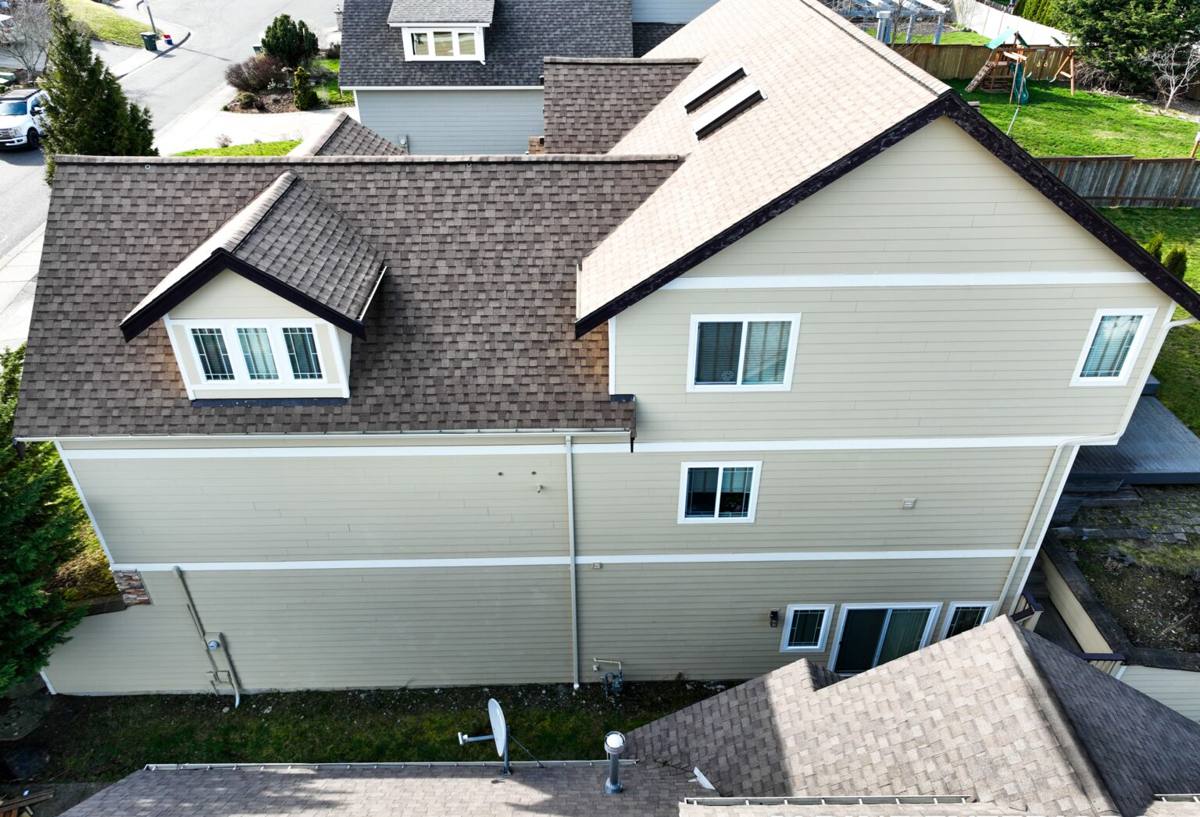
Lifted or missing tabs, cracked and curling shingles, exposed nail heads, and granule loss around valleys and roof penetrations are the most common issues. Left alone, these small failures let water track under the roof covering long before you'd see a stain on the ceiling.
Tile Roofs
Cracked, slipped, or broken tiles are usually a fastener or underlayment issue more than a tile-quality issue. The tile itself often outlasts the underlayment beneath it, so a repair sometimes means pulling tile in the damaged area, replacing worn underlayment, and resetting the tile correctly rather than just swapping a broken piece.
Flat and Low-Slope Sections
Many Bradenton homes have a flat or low-slope section over a lanai, garage, or addition. These areas rely on membrane seams, proper slope for drainage, and clean flashing details at every wall and penetration. Ponding water and seam separation are the two issues that show up most, especially after a stretch of heavy summer rain.
What a Correct Roof Repair Actually Involves
Not every roof repair is done the same way, and the difference between a repair that lasts and one that fails again in a year usually comes down to a few fundamentals.
Diagnosing the Real Problem, Not Just the Symptom
A stain on a ceiling or a missing shingle is a symptom, not necessarily the source. Water travels along the roof deck and underlayment before it shows up inside, so the visible damage and the actual entry point are often several feet apart. A correct repair starts with tracing the leak back to where it's actually getting in, not just patching the spot that's easiest to see.
Matching Materials and Fasteners
Repairs should use materials and fastening patterns that match the performance of the surrounding roof — the right shingle profile, the right tile shape and weight, and fasteners rated for coastal wind exposure. A mismatched patch can look fine for a while but create a weak point that fails again the next time wind or rain tests the roof.
Flashing, Underlayment, and What's Underneath
Most repeat leaks trace back to flashing around chimneys, vents, and roof-to-wall transitions, or to underlayment that's degraded from age and heat. A repair that only replaces the visible roofing material without addressing failed flashing or underlayment underneath it is a temporary fix at best.
Repair or Replace? How We Help You Decide
Not every roof problem in Bradenton needs a full replacement, but not every roof is a good candidate for another round of patching either. We walk homeowners through the honest trade-offs rather than defaulting to the bigger job.
| Factor | Leans Toward Repair | Leans Toward Replacement |
|---|---|---|
| Roof age | Well within expected service life | At or past the typical lifespan for the material |
| Extent of damage | Isolated to one area or a few penetrations | Spread across multiple sections or slopes |
| Underlayment condition | Still intact and flexible | Brittle, torn, or failing in multiple spots |
| Repair history | First or second repair in this area | Same section has needed repeated fixes |
| Decking condition | Solid, no soft spots or rot | Soft decking or visible rot found during inspection |
When a roof is a genuine repair candidate, we say so and price it that way. When the underlying material or structure is telling a different story, we'll explain exactly what we found and why a patch wouldn't hold.
Our Roof Repair Process
- Inspection. We get on the roof (or use appropriate access for steep or fragile sections) to trace the actual source of the problem, not just the visible symptom.
- Written assessment and quote. You get a clear explanation of what's damaged, what caused it, and what the repair involves — before any work starts.
- Repair. We remove and replace only what's compromised, match materials and fastening to the surrounding roof, and rebuild flashing and underlayment details correctly rather than covering them over.
- Cleanup and check. Job site is cleared of debris and fasteners, and the repaired area is checked for proper seal and fit before we consider the job done.
- Follow-up. If anything about the repair doesn't hold up the way it should, you have a local crew to call — not a number that goes nowhere once the invoice is paid.
Why a Crew That Already Works in Bradenton Matters
Roofing work in this part of Florida has to account for local wind-load requirements and permitting, and a crew that regularly works Sarasota and Bradenton roofs already knows what inspectors expect and what a repair needs to hold up to code here. That familiarity also means we're not guessing at how a particular roof type performs in this climate — we've seen how shingle, tile, and flat sections age in this exact combination of sun, wind, and salt air, because it's the same climate we work in every week, not an occasional job across the state.
There's also a practical side to hiring local: a crew based nearby can respond faster when a repair needs to happen before the next storm rolls through, and they're around afterward if a question comes up about the work.
Simple Roof Maintenance Between Repairs
A repair lasts longer when the rest of the roof gets basic attention between service calls. A few habits go a long way in this climate:
- Keep gutters and valleys clear of leaves and debris so water has a clean path off the roof.
- Trim back tree limbs that overhang the roof — they scrape shingles and tile in wind and drop debris into valleys.
- After any major wind event, do a visual check from the ground for lifted shingles, displaced tile, or debris on the roof.
- Watch for granule buildup in gutters or downspouts, which can signal shingle wear.
- Have a roof looked at by a professional periodically rather than waiting for an interior stain to show up — by then, water has usually been getting in for a while.
Getting a Roof Repair Estimate in Bradenton
If you've noticed a lifted shingle, a cracked tile, a stain on a ceiling, or you just want an honest read on where your roof stands after this stretch of Gulf Coast weather, we're glad to take a look. There's no pressure and no obligation — just a straightforward assessment and a clear estimate from a crew that already knows this climate. Use the form below to request your free estimate.