 Sarasota Window
 Composite Decking Built for Osprey's Coastal Climate
Osprey sits in one of the more demanding outdoor environments in Sarasota County. A deck here isn't just furniture for the backyard — it's a structure that has to survive intense year-round sun, salt-laden air off the Gulf, wind-driven rain, and the occasional hurricane-force gust, all while still looking good enough to actually use. Composite decking has become the practical choice for a lot of Osprey homeowners precisely because it's engineered to shrug off most of what that climate throws at it, but "composite decking" covers a wide range of products and installation quality, and not every deck built with composite boards is actually built correctly for this area.
This page covers what composite decking specifically needs to hold up in Osprey, what a correct installation actually involves, and how our process works when we build or replace a deck in this part of the county.
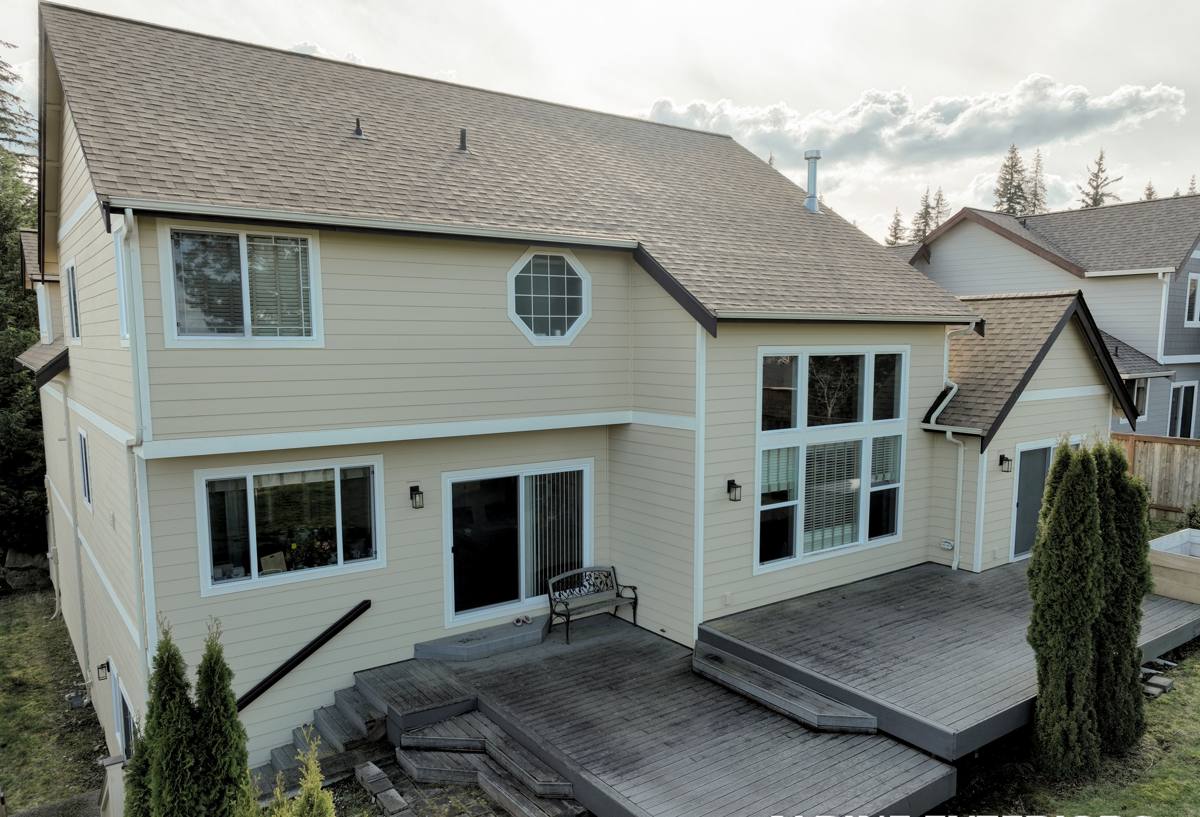
What Osprey's Weather Does to an Outdoor Deck
UV and Heat
Florida sun is relentless, and a west- or south-facing deck can see direct exposure most of the day for most of the year. Cheap or uncapped decking materials fade, chalk, and lose surface integrity under that kind of UV load. Fully capped composite boards are formulated specifically to resist this, but the quality of the cap layer varies by manufacturer and product line, which is part of why board selection matters as much as installation.
Salt Air and Humidity
Even a few miles inland from the coast, salt air accelerates corrosion on anything metal — fasteners, joist hangers, railing brackets, post bases. Humidity that never really lets up also keeps wood substructures damp longer after every rain, which is where rot and fastener failure usually start, even underneath a deck surface that looks fine.
Wind-Driven Rain
Rain in this area rarely falls straight down. Wind-driven rain gets pushed sideways into ledger connections, under railings, and into any gap that wasn't properly flashed or sealed. Over time, that's how water finds its way into a house's rim joist or framing even when the decking itself is doing its job.
Hurricane-Force Wind Loads
Sarasota County decks have to be built to withstand real wind loads, not just support foot traffic. Railings, post connections, and ledger attachments are all structural elements during a storm, and undersized hardware or a poorly attached ledger board is one of the more common failure points we see on older or DIY-built decks in this area.
Composite vs. Wood vs. PVC Decking: What Actually Holds Up Here
Every decking material has trade-offs. Here's how the three most common options compare specifically for Osprey's conditions:
| Material | Sun & Heat | Salt Air / Moisture | Maintenance | Typical Lifespan |
|---|---|---|---|---|
| Pressure-treated wood | Fades and grays quickly; can get hot underfoot | Prone to rot and splintering if not sealed regularly | Annual sealing/staining needed | 10–15 years with upkeep |
| Capped composite | Strong UV resistance; holds color well | Won't rot; fasteners/hardware still need to be corrosion-resistant | Occasional washing, no sealing | 25–30+ years |
| PVC decking | Excellent UV resistance | Fully moisture-immune, lighter weight | Minimal; can show scratches more than composite | 25–30+ years |
We install composite most often on Osprey projects because it gives homeowners a good balance of appearance, durability, and cost, but PVC is a legitimate option for waterfront or high-moisture lots where we want zero organic material in the equation. We're honest about that trade-off during your estimate rather than pushing one product for every situation.
What a Correct Composite Decking Installation Involves
Framing and Substructure
The decking boards get all the attention, but the framing underneath is what determines whether a deck lasts. In this climate, that means pressure-treated or naturally resistant framing lumber, joist spacing tight enough to support the specific composite product being used (composite typically needs closer joist spacing than wood), and a ledger board attached with proper flashing and lag bolts rated for the load — not just nailed to the rim joist.
Fasteners and Hardware
Standard galvanized fasteners corrode faster near the coast. We use stainless steel or coated fasteners rated for coastal/salt-air exposure on hardware that's structural or hard to access later — joist hangers, post bases, and hidden deck clips — because replacing corroded hardware under a finished deck is a much bigger job than doing it right the first time.
Drainage and Board Spacing
Composite boards need consistent gapping for water to drain through and for the boards to expand and contract with heat without buckling. Too tight, and boards can crown or trap moisture against the framing; too loose, and the deck looks sloppy and can be uncomfortable to walk on. Getting this right is one of the more common places rushed installations go wrong.
Railings and Code Compliance
Railing height, baluster spacing, and post attachment all fall under building code, and in a wind zone like ours, the post-to-frame connection has to be able to handle real lateral load — not just look sturdy. We build to the current Florida Building Code requirements for this area, not to whatever looks acceptable.
Our Installation Process in Osprey
- Site visit and assessment — we look at sun exposure, existing structure (if replacing a deck), drainage, and any waterfront or canal-lot considerations specific to your property.
- Design and material selection — board color, railing style, and composite vs. PVC discussion based on your home and budget.
- Permitting — we handle the permit process through Sarasota County (or your municipality, if applicable) so the deck is inspected and documented correctly.
- Framing and substructure work — built to current wind-load and coastal-hardware standards before a single deck board goes down.
- Decking installation — proper spacing, fastening, and finishing details around posts, stairs, and transitions.
- Railings and trim — installed to code, with attention to fastener corrosion resistance.
- Final walkthrough — we go over the finished deck with you, including basic care so it stays looking right.
What Affects the Cost of a Composite Deck
Composite decking costs more upfront than pressure-treated wood but less over time once you factor out sealing, staining, and board replacement. The biggest cost drivers on an Osprey project are usually:
| Factor | Why It Matters |
|---|---|
| Deck size and shape | Square footage plus any curves, multiple levels, or built-in seating add material and labor |
| Board tier | Entry-level capped composite vs. premium composite or PVC changes material cost significantly |
| Substructure condition | Replacing rotted or undersized framing on an existing deck adds cost but shouldn't be skipped |
| Height and stairs | Elevated decks need more structural framing, railings, and stair construction |
| Railing style | Composite, aluminum, or cable railing all price differently |
| Permitting | Required for most new decks and many replacements in Sarasota County |
We'll walk through these factors with you during your estimate so you know exactly what's driving the price, not just a bottom-line number.
Maintaining a Composite Deck in Salt Air and Sun
One of the appeals of composite is how little maintenance it actually needs compared to wood — but "low maintenance" isn't "no maintenance," especially this close to the coast. A little routine care keeps it looking and performing the way it should:
- Rinse or sweep off salt residue and debris regularly, especially after storms
- Wash the surface a couple of times a year with mild soap and water to prevent mildew buildup in humid months
- Check railing posts and fasteners periodically for looseness or corrosion, particularly on waterfront or canal-front lots
- Keep gutters and downspouts near the deck clear so runoff isn't pooling against framing or ledger connections
- Trim back vegetation that traps moisture against the deck surface or substructure
- Address any soft spots, discoloration, or hardware corrosion early rather than waiting
Why Hire a Crew That Already Works in Osprey
Building a deck that actually holds up here isn't just about using composite boards — it's about understanding the specific combination of sun exposure, salt air, humidity, and wind load that this part of Sarasota County deals with year-round. A crew that regularly works in Osprey already knows the local permitting process, the wind-load requirements that apply to this zone, and the kind of hardware that actually lasts near the water instead of corroding within a few seasons. That local familiarity shows up in the details — framing spacing, fastener choice, flashing at the ledger — that aren't visible once the deck is finished but determine whether it's still solid in ten or fifteen years.
If you're considering a new composite deck or replacing an aging one in Osprey, we're happy to take a look and give you a straightforward, no-pressure estimate — including what your specific lot and sun exposure mean for material choice and build details. Fill out the form below to get started.