 Sarasota Window
 Composite Decking Built for Southside Village's Climate
Southside Village sits in one of Sarasota's older, established pockets — mature tree canopy, homes that have seen decades of Gulf Coast weather, and outdoor living spaces that get used most of the year. If you're planning a new deck or replacing a tired one, the material you choose matters more here than it would in a drier, cooler climate. Composite decking has become the default recommendation for homeowners in this part of Sarasota County, not because it's trendy, but because it holds up to conditions that wear out ordinary lumber fast.
This page focuses specifically on composite decking for homes in and around Southside Village — what the local climate demands, what a correctly built deck actually involves, and why working with a crew that already knows this neighborhood's homes and permitting process makes a real difference in how long the finished project lasts.
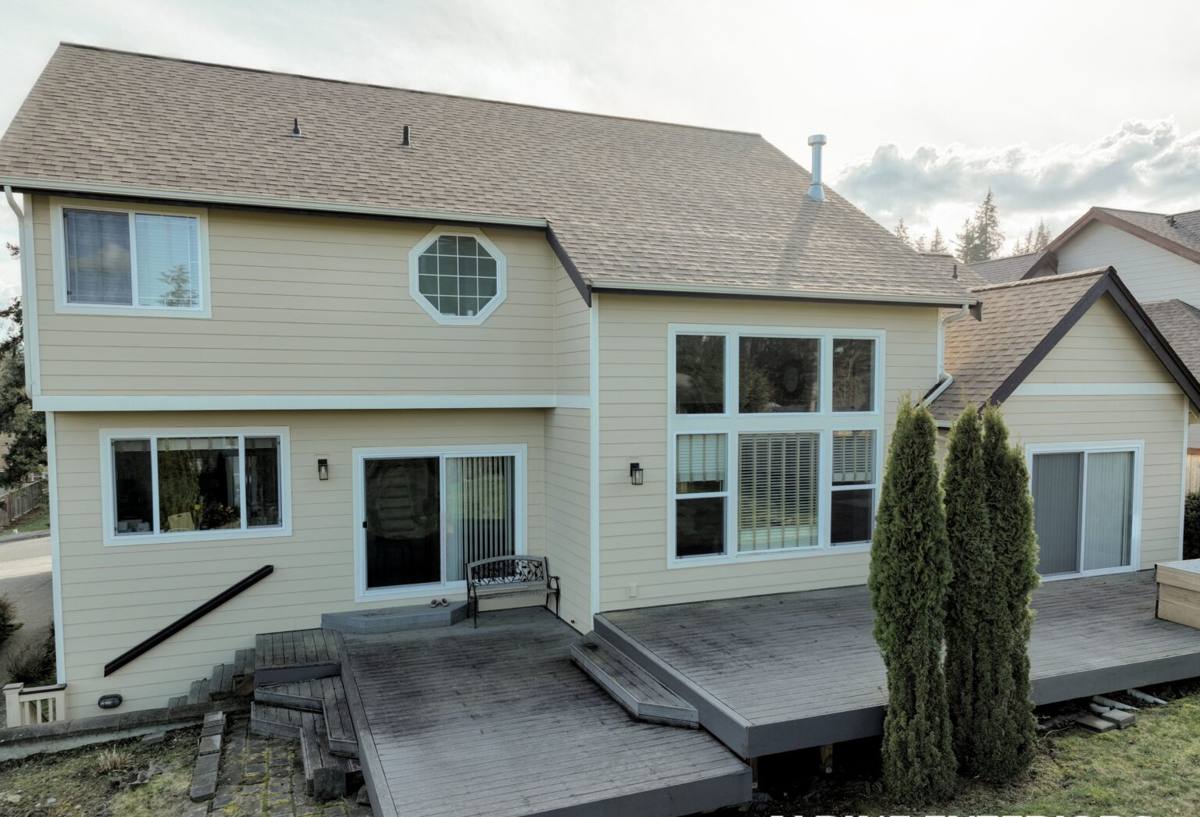
What Sarasota's Weather Does to an Outdoor Deck
Every outdoor structure in this part of Florida is fighting the same four things at once: intense year-round UV, high humidity, salt-laden air pulled in off the Gulf, and the wind-driven rain and hurricane-force winds that come with our storm season. None of these are occasional stressors — they're constant, and they compound.
UV exposure here is strong enough, year-round, to fade and dry out unprotected wood fiber within a few seasons, opening the surface to moisture intrusion. Humidity keeps deck framing damp longer after every rain, which is exactly the condition wood rot and fungal growth need to take hold. Salt air, even several miles inland, accelerates corrosion on fasteners, brackets, and any metal hardware that isn't rated for coastal exposure. And when a named storm does come through, wind-driven rain finds every gap in flashing and every under-sealed board edge, while sustained wind loads test whether the deck's structure — not just its surface boards — was actually built to hold.
Signs your current deck is already losing the fight
Not every deck that needs attention looks obviously bad from a distance. Watch for boards that feel soft or spongy underfoot, rust streaks running down from screw heads, gaps opening where the deck meets the house, a railing post that flexes more than it used to, or a musty smell and dark staining underneath. Southside Village's mix of older homes and mature landscaping means a lot of decks here were built years ago under different assumptions about materials and code, and these are usually the first visible clues that a rebuild is closer than it looks.
Why Composite Outperforms Wood in This Neighborhood
Wood decking can be installed correctly and still lose the fight against this climate over time, simply because the material itself absorbs moisture, expands and contracts, and needs a maintenance schedule that most homeowners fall behind on. Composite decking — a blend of wood fiber and recycled plastic, usually finished with a protective cap — is engineered specifically to resist the things that break wood down.
| Factor | Wood Decking | Composite Decking |
|---|---|---|
| UV fading | Fades and grays within 1-2 seasons without refinishing | Color engineered to resist fading; capped boards hold color far longer |
| Moisture absorption | Absorbs water, swells, splits, and can rot over time | Minimal absorption; capped boards are essentially moisture-sealed |
| Salt air exposure | Accelerates surface breakdown and fastener corrosion | Board material is unaffected; correct fasteners still matter |
| Maintenance | Sanding, staining, or sealing every 1-2 years | Occasional cleaning; no sealing or staining required |
| Upfront cost | Lower material cost | Higher material cost, lower lifetime cost |
| Surface hazard | Can splinter as it weathers | Smooth, consistent surface for the life of the board |
None of this means wood is a bad material everywhere — it isn't. But for a deck that spends every day of the year under Florida sun with periodic direct exposure to tropical storm systems, composite is simply the more honest long-term choice for most homeowners, and it's what we recommend by default in this part of Sarasota County.
Capped vs. Uncapped Composite: What We Recommend and Why
Not all composite decking is the same, and the distinction matters more in a coastal climate than most homeowners realize.
Uncapped composite
Early-generation composite boards are made of wood fiber and plastic blended all the way through, with no protective outer layer. They resist rot better than solid wood, but the exposed wood fiber at the surface can still absorb some moisture, stain, and support mold growth in a humid climate like ours — especially in shaded areas of a deck that don't dry out quickly.
Capped composite
Capped boards wrap that same core in a hard polymer shell on all sides. That shell is what actually blocks moisture, resists staining, and holds color under constant UV exposure. Brands like Trex, TimberTech, and AZEK all offer capped product lines, and the real differences between them come down to warranty terms, color and texture options, and price point rather than one being fundamentally more coastal-ready than another.
Our standard is to recommend fully capped composite for anything installed in Southside Village. The small premium over uncapped product is worth it given how much sun and moisture cycling this deck will see every year it's in the ground.
What a Correct Composite Deck Installation Involves
The boards get the attention, but a deck's ability to survive a Florida storm season is decided by what's underneath them. This is where most decking problems actually start — not with the decking material, but with shortcuts in the structure.
Framing and structure
Joist spacing has to match the composite manufacturer's specification, which is often tighter than standard lumber spacing because composite boards flex differently than wood under load. Framing lumber should be pressure-treated and rated for ground contact where applicable, and every structural connection — ledger to house, post to footing, joist to beam — needs hardware rated for the wind loads this area can see, not just whatever is fastest to install.
Ledger attachment and flashing
Where a deck attaches to the house is the single most common point of hidden water damage. Correct flashing — installed in the right order and lapped the right direction — keeps wind-driven rain from getting behind the siding and into the wall structure. This step is invisible once the deck is finished, which is exactly why it's the step most likely to get rushed on a lower-quality job.
Fasteners and hidden hardware
Every fastener, bracket, and hidden clip should be stainless steel or coated specifically for coastal, high-humidity exposure. Standard galvanized hardware can start corroding within a few years this close to the Gulf, and a single failed fastener under a railing post is a real safety issue, not just a cosmetic one.
Ventilation and gapping
Composite boards need proper gapping between boards and around the deck's perimeter for airflow and for the material's natural expansion and contraction with temperature. Skipping this leads to boards that buckle or that trap moisture and debris underneath, which becomes a mold and pest issue over time in our humidity.
Our Process From First Call to Final Walkthrough
Homeowners in Southside Village are usually dealing with one of two situations: an aging wood deck that's due for replacement, or a bare backyard where a deck has never existed. Either way, our process looks the same.
- An on-site visit to look at the existing structure or the space, take measurements, and talk through layout, board style, and railing options.
- A written estimate that breaks out material and labor, so you know exactly what you're paying for and why.
- Permit pulling through Sarasota County before any demolition or construction starts — we handle this, not you.
- Removal of the old deck, if applicable, with attention to what's underneath — soil grading, drainage, and any hidden rot in ledger framing.
- Framing built to current wind-load requirements, followed by composite board installation with hidden fastener systems where the product allows for it.
- A final walkthrough where we go over the finished deck, cleaning, and warranty paperwork for both materials and labor.
We don't start cutting boards until the structure underneath is right. A beautiful composite deck built on an undersized or poorly flashed frame is still a problem waiting to happen — just a slower one.
What Affects the Cost of a Composite Deck
Every deck is different, but the same handful of factors drive most of the cost difference between projects in this neighborhood.
| Cost Factor | Why It Matters |
|---|---|
| Deck size and shape | Square footage, plus curves, angles, or multiple levels, all add labor and material |
| Board tier | Uncapped composite costs less than fully capped premium lines |
| Substructure condition | Replacing rotted framing or footings adds cost beyond just the visible decking |
| Height and railing type | Elevated decks need more structural bracing; railing material (composite, aluminum, cable) varies in price |
| Fastening system | Hidden fastener systems cost more than face-screwing but leave a cleaner surface |
| Site access | Tight side yards or limited equipment access can add labor time |
We give a straight, itemized number after seeing the site — not a ballpark over the phone. Broadly, composite decks cost more upfront than a comparable wood deck, but that gap narrows considerably once you factor in years of staining and sealing that composite simply doesn't need.
Keeping Your Deck Looking Good Season After Season
Composite decking is low-maintenance, not no-maintenance. A little routine care goes a long way in this climate, especially with the pollen, humidity, and salt air Southside Village deals with year-round.
- Sweep off leaves, pollen, and debris regularly so they don't trap moisture against the board surface.
- Wash the deck with mild soap and water a few times a year to prevent mildew film from building up in shaded or low-airflow areas.
- Rinse salt residue off after storms or periods of heavy onshore wind, especially on railings and hardware.
- Check under-deck ventilation gaps periodically to make sure they haven't been blocked by landscaping, mulch, or storage.
- Inspect fasteners and railing connections once a year for early signs of corrosion or looseness.
- Keep planters and grills on protective pads to avoid trapping moisture or heat against the board surface.
None of this requires sanding, staining, or sealing — the point of capped composite is that the maintenance burden drops to basic housekeeping instead of a recurring project.
Why a Crew That Already Works Southside Village Matters
Southside Village has its own mix of lot sizes, older home foundations, mature trees, and drainage patterns that differ from newer subdivisions elsewhere in Sarasota County. A crew that has already worked in this neighborhood knows what to expect before they even walk the property — how the soil drains, how tight some of the older lots are, and what the county's permitting office wants to see for a deck attached to an older home versus new construction.
That familiarity shows up in small but real ways: fewer surprises during permitting, better judgment about tying into an older home's structure safely, and a realistic sense of how a deck here needs to be built to handle both daily sun and the occasional direct hit from a tropical system. If you're comparing quotes, it's worth asking any contractor directly how many decks they've built in this specific area and what Sarasota County's wind and permitting requirements involve — the answer tells you a lot about how the rest of the job will go.
If you're weighing a new composite deck or a replacement for an aging one, we're happy to take a look and give you a straightforward, no-pressure estimate — just fill out the form below.