 Sarasota Window
 Roof Repair Built for Laurel Park's Older Housing Stock
Laurel Park sits close to downtown Sarasota, and like much of the city's historic core, many of its homes were built decades before today's Florida Building Code windborne-debris and roofing standards existed. That's not a knock on the neighborhood — it's part of its charm — but it does mean the roofs covering these homes were often designed for a different climate reality than the one Sarasota County sees now. When we get a call for roof repair in Laurel Park, we're usually looking at a mix of aging original decking, multiple re-roofs layered over the years, and flashing details that made sense in 1975 but don't hold up to a modern summer storm cycle.
None of that means a full replacement is always the answer. Most of the calls we run in this neighborhood are legitimate repairs — a section of lifted shingles after a wind event, a stain spreading across a ceiling after wind-driven rain, a flashing detail that finally gave out. The trick is diagnosing what's actually happening under the surface before quoting a fix, because a patch that ignores the real cause just buys you a callback in a year.
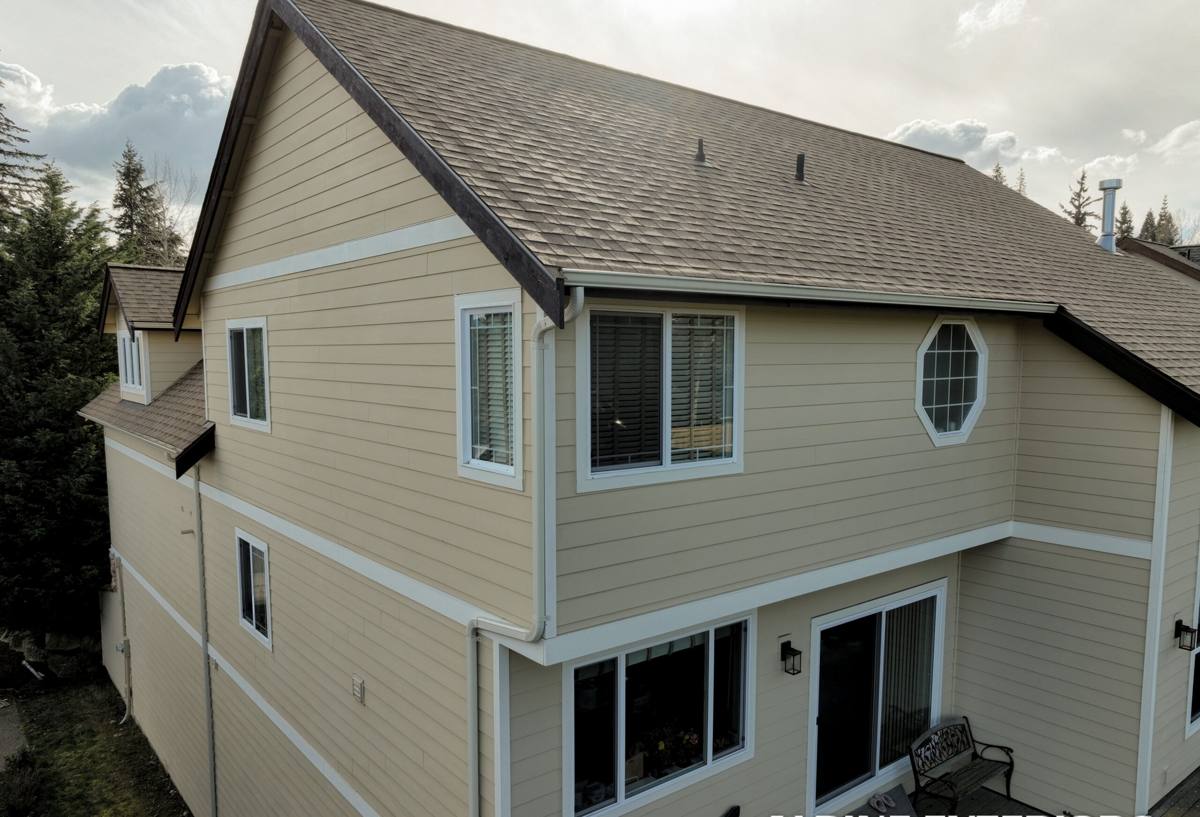
What Sarasota's Climate Does to a Laurel Park Roof
Sarasota County roofs take a beating that inland Florida doesn't see in the same combination. It's not one thing — it's four things working together, year after year.
Hurricane-Force Wind
Laurel Park is close enough to the coast that it feels the full force of tropical systems moving through the Gulf. Wind doesn't just tear off loose shingles — it gets up under a marginal edge, finds a fastener that's lost its grip, and works a small vulnerability into a bigger one. Roofs with older nailing patterns or original 1970s-80s felt underlayment are especially exposed.
Wind-Driven Rain
Wind and rain together are worse than either alone. Rain that's being pushed sideways at 40-60 mph finds paths that vertical rain never would — under lifted shingle tabs, through hairline cracks in flashing, around vent boots that have shrunk and hardened. That's why a roof can look intact from the ground and still be actively leaking during a storm.
Year-Round UV Exposure
Sarasota doesn't get a real winter break from sun. Asphalt shingles lose their oils and granules faster here than in most of the country, and that aging is often invisible until a shingle finally cracks or curls. UV also breaks down rubber vent boots and sealant well before their rated lifespan.
Salt Air
Even a few miles inland from the bay, salt-laden air corrodes exposed metal fasteners, flashing, and drip edge faster than a dry climate would. Corroded fasteners are one of the most common root causes we find behind a "mystery leak" that's actually a slowly failing flashing seam.
Signs a Laurel Park Roof Needs Repair, Not Just Watching
Homeowners in this neighborhood often live with a small problem for months because it doesn't look urgent. A few signs are worth acting on right away rather than waiting for the next storm to make the decision for you.
- A ceiling stain that appears or grows after a rain event, even a small one
- Shingles that look curled, cracked, or granule-bare in a specific area rather than uniformly across the roof
- Visible gaps or lifted edges around a chimney, skylight, or plumbing vent
- Soft or spongy decking felt when walking the attic near an exterior wall
- Rust streaks running down from metal flashing or fasteners
- Granules collecting in gutters after a normal rain, not just after a storm
- Daylight visible through the roof deck from inside the attic
Any one of these on its own might be minor. Two or three together usually means water has already found a way in and the roof needs a proper inspection before the next wind-driven rain event turns a small repair into a ceiling replacement.
What a Correct Repair Actually Involves
A repair that's done right starts with figuring out where water is actually entering, not just where it's showing up inside the house — those two points are often several feet apart, since water travels along decking and framing before it drips through. Our process on a Laurel Park repair typically looks like this:
1. Diagnose Before Quoting
We get on the roof and in the attic when it's accessible. We're checking the decking condition, the underlayment, the flashing at every penetration, and the fastener pattern — not just the spot where the leak showed up inside.
2. Match the Repair to the Cause
A leak caused by failed flashing needs new flashing, correctly lapped and sealed — not just a bead of caulk over the old metal. A leak caused by wind-lifted shingles needs the shingle re-secured or replaced and the surrounding field checked for the same vulnerability, since wind damage is rarely a single-shingle event.
3. Check the Decking
If water has been getting in for a while, the plywood or plank decking underneath may be soft or delaminated. Repairing over compromised decking is a waste of materials and labor — it needs to be cut out and replaced before new roofing goes down over it.
4. Rebuild the Water Path Correctly
Underlayment, flashing, and shingle courses all have to overlap in the right direction and sequence so water sheds outward instead of finding a seam to slip under. This is where a lot of shortcut repairs fail — they look finished but the layering is wrong.
5. Match Materials Where Possible
On an older Laurel Park roof, exact shingle matches aren't always available. We'll talk through the honest trade-offs — a close match versus a visible patch versus, if the roof is old enough, whether a repair is even the right long-term call versus planning for replacement.
Repair vs. Replacement: An Honest Look at the Numbers
Not every roof problem calls for the same fix, and cost is only one factor. Here's how we generally think through it with homeowners.
| Factor | Favors Repair | Favors Replacement |
|---|---|---|
| Roof age | Under 12-15 years | Approaching or past expected shingle lifespan |
| Damage extent | Localized to one area or penetration | Spread across multiple sections or slopes |
| Decking condition | Solid, no soft spots found | Soft, delaminated, or repeatedly patched |
| Storm history | Isolated incident | Repeated wind/hail events with cumulative wear |
| Material availability | Close shingle match available | Discontinued product, patch would be visibly different |
| Typical cost range | Several hundred to a few thousand dollars depending on scope | Full tear-off and re-roof, priced by square and material |
We'll always tell you honestly which side of this table your roof falls on. A repair that's likely to fail again within a year or two isn't a good use of your money, and we'd rather say that upfront than sell a patch we don't believe in.
Why a Crew That Already Works Laurel Park Matters
Roofing in this neighborhood isn't quite the same job as roofing on a newer subdivision roof a few miles east. A crew that's worked here before knows to expect layered re-roofs, older decking that needs careful handling, and flashing details around chimneys and dormers that aren't common on newer construction. That familiarity shows up in two practical ways: fewer surprises once the roof is opened up, and a more accurate quote before we start, because we're not guessing at what's underneath based on newer-build assumptions.
It also matters for permitting and code compliance. Sarasota County has specific requirements for roof repairs, especially when work exceeds a certain percentage of the roof area — at that point the whole roof can be required to meet current wind-uplift standards, not just the repaired section. A local crew that pulls permits in this county regularly knows where that line is and won't leave you with a repair that creates a problem at resale or insurance renewal.
Insurance and Storm-Damage Repairs
After a named storm or significant wind event, we understand many Laurel Park homeowners are dealing with insurance adjusters and claim timelines alongside the physical repair. We can document damage clearly — photos, notes on cause, scope of what's affected — which is genuinely useful when a claim is being reviewed. We're not adjusters and we don't promise claim outcomes, but a clear, honest damage assessment from a contractor who's actually been on the roof carries weight in that process.
What to Expect From Our Process
- A prompt on-site inspection, including attic access where available
- A clear explanation of what's causing the leak or damage, in plain language
- A written estimate that separates repair scope from any additional issues found (like decking replacement)
- An honest repair-versus-replace recommendation, not an upsell
- Work done to current code requirements where the scope requires it
- Cleanup of the work area, including removed materials and debris
Maintaining a Laurel Park Roof Between Repairs
A few habits go a long way toward avoiding emergency repairs in this climate. Keep gutters clear so wind-driven rain has somewhere to go instead of backing up under the roof edge. After any significant storm, a visual check from the ground — or a call to us for a look — can catch a lifted shingle before it becomes a leak. And if your roof is approaching 15-20 years old, a periodic inspection is cheap insurance against a surprise failure during hurricane season.
If you're dealing with a leak, storm damage, or just an aging roof in Laurel Park, we're glad to take a look and give you a straight answer about what it needs. Reach out for a free, no-pressure estimate using the form below.