 Sarasota Window
 New Construction Is a Different Job Than Replacement
Laurel Park is one of Sarasota's older, close-to-downtown neighborhoods, and like a lot of established neighborhoods near the water, it's seeing a steady mix of full rebuilds, additions, and ground-up new homes on lots that once held smaller, older houses. When a house is being framed from scratch — whether it's a full teardown-rebuild, a new addition, or an accessory structure — the windows go in differently than they would on a remodel of an existing home.
New-construction windows are installed with a nailing fin directly into open stud framing, before the exterior finish and weather barrier are fully closed up. That's a very different sequence than a "replacement" or "retrofit" window, which gets fitted into an existing opening with the old frame still in place. New construction gives us access to the rough opening, the sheathing, and the house wrap all at once — which means the flashing and water management can be done correctly the first time, with no shortcuts forced by an existing wall. It's also the only point in a build where design pressure, impact resistance, and long-term durability decisions get baked into the structure itself instead of retrofitted later.
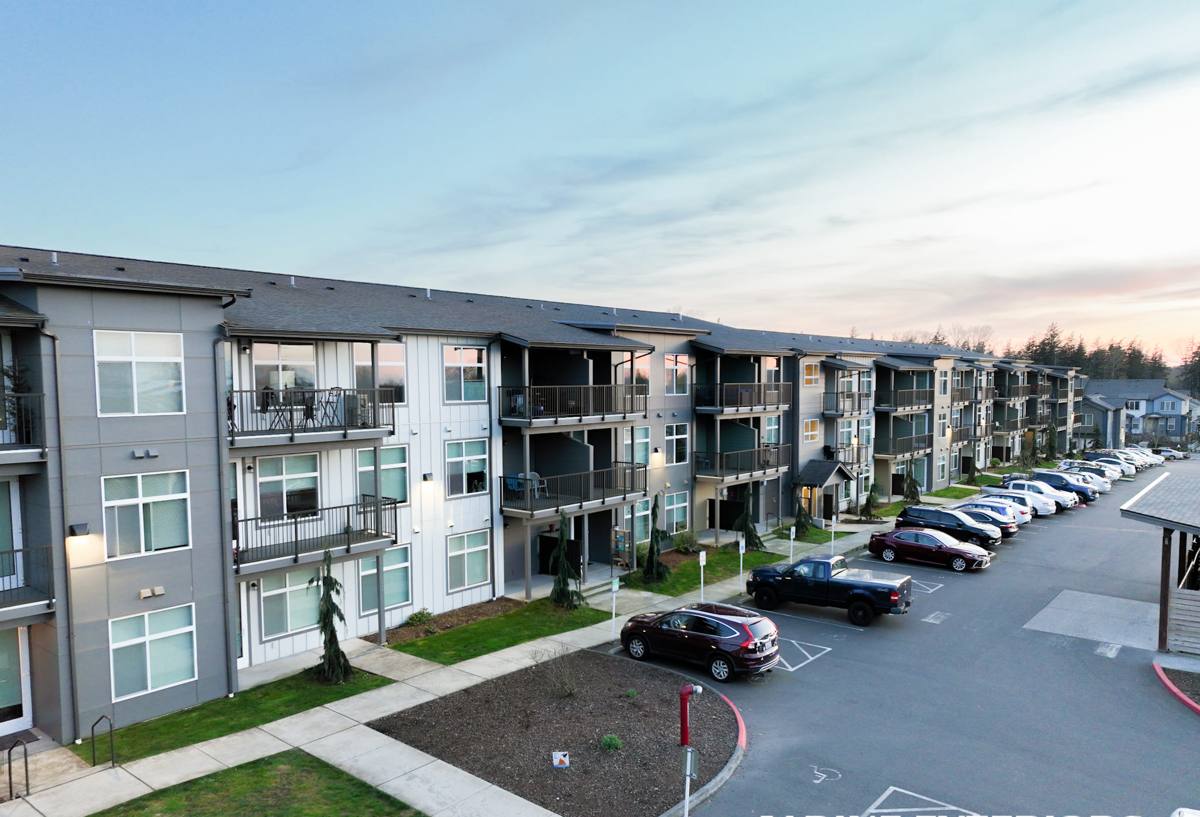
What Sarasota's Climate Actually Demands From a Window
Sarasota County sits on the Gulf coast, and that comes with a specific set of stresses that windows here have to be built and installed to handle. This isn't marketing language — it's the actual list of things a window assembly in Laurel Park has to survive, year after year.
Hurricane-Force Wind and Wind-Borne Debris
Sarasota is in a wind-borne debris region under the Florida Building Code, which means new-construction windows have to meet a design pressure (DP) rating appropriate to the site and either carry large-missile impact certification or be paired with code-approved impact protection. On a new build, this isn't optional and it isn't something you can add later without real cost — the window, the anchoring, and the opening all have to be engineered together from day one.
Intense, Year-Round UV
Sarasota gets strong sun essentially all year. UV breaks down vinyl, dries out seals, and fades interior floors and furnishings faster than most homeowners expect. Glass package and frame material both matter here — a window that isn't rated for this kind of sun exposure will show it within a few years in the form of chalky frames, brittle weatherstripping, or a noticeably hot room.
Wind-Driven Rain and Salt Air
Storms here don't just bring wind — they push rain sideways, and it finds any gap in flashing or sealant. Combine that with the corrosive effect of salt air moving inland from the Gulf and Sarasota Bay, and you get two separate problems: water intrusion at the opening, and slow corrosion of hardware, fasteners, and lesser-grade metal components. Both are manageable with the right materials and installation detailing, but both will punish a job done in a hurry.
Florida Building Code and Sarasota County Permitting
New-construction windows on a Laurel Park project go through Sarasota County (or City of Sarasota, depending on the exact parcel) plan review and permitting, and they're evaluated against the Florida Building Code's wind load and impact requirements for this region. Every window on the plan needs a documented design pressure rating that matches the engineering for that wall and elevation, and the products used need current Florida product approval or Miami-Dade NOA listings accepted under the FBC.
This is one of the most common places projects lose time. If a window ordered for the job doesn't match the DP rating called for on the approved plans, or the paperwork doesn't line up with what's installed, it can hold up inspection and delay the whole build schedule. Getting this right at the ordering stage — not discovering a mismatch at inspection — is one of the more valuable things a window contractor does on a new build.
Choosing Frame Material and Glass for This Climate
There's no single "best" window for every new-construction project — the right choice depends on the home's style, budget, and how exposed the site is. Here's how the common frame options actually perform under Sarasota conditions:
| Frame Material | UV / Sun Performance | Salt Air / Coastal Durability | Typical Use |
|---|---|---|---|
| Vinyl | Good with quality UV-stabilized formulations; lower grades can chalk or warp over time | Won't corrode; performance depends on hardware quality | Budget-conscious new builds, additions |
| Aluminum | Handles heat and sun well, holds shape under load | Needs a good coastal-grade finish or it will pit and corrode near the water | Impact-rated systems, larger openings, modern designs |
| Fiberglass | Very stable in heat and sun, minimal expansion/contraction | Naturally resistant to corrosion | Higher-end new construction, long-term low-maintenance goals |
On glass, the standard for new construction here is laminated impact glass with a low-E coating. The lamination is what gives the glass its wind-borne debris protection, and the low-E coating cuts down the solar heat gain that Sarasota's sun otherwise pushes straight through untreated glass. We size the glass package to the elevation and sun exposure of each opening rather than using one spec for the whole house — a west-facing wall of glass doesn't need the same coating as a shaded north wall.
How We Install New-Construction Windows on a Laurel Park Build
The window unit itself only does half the job. The other half is the installation detailing — flashing, sealant, and anchoring — which is where most long-term leaks and failures actually originate, not in the glass or frame. On every new-construction install, we work through the same sequence:
- Verify the rough opening is square, sized correctly, and framed to the dimensions the window schedule calls for before the unit ever arrives on site
- Install a sloped sill pan flashing so any water that gets past the window has somewhere to go besides the framing
- Integrate the window's flanges with the house wrap or weather barrier in the correct shingle-lap order, so water is always directed outward and down
- Anchor the unit per the manufacturer's engineered fastening schedule for the required design pressure — not a generic fastener pattern
- Seal and back-caulk per code and manufacturer spec, using sealants rated for exterior UV and movement
- Confirm labeling and product approval documentation matches what's on the approved plans, before covering anything up
- Photograph flashing and rough-opening details before they're closed in, for the homeowner's records and for inspection
Skipping or rushing any one of these steps is how a brand-new window ends up with a stucco stain, a soft spot in the wall, or a failed inspection months into a build.
Fitting Windows to Laurel Park's Character
Laurel Park is an older, established part of Sarasota with a mix of home styles, and new builds and additions here often aim to sit comfortably next to the neighborhood's existing character rather than stand out from it. That's mostly an aesthetic conversation, not a code one — grille patterns, sightlines, and proportions that read as traditional versus more contemporary sash and frame profiles. We talk through those choices with the homeowner or builder early, because window style is much easier to settle on paper than to change once framing and rough openings are locked in. If your project falls inside a designated historic district or is subject to specific neighborhood design review, we'll work from whatever guidelines apply to that property — that's a conversation worth having with the county or city planning office before openings are finalized.
Our Process, Start to Final Inspection
For a new-construction project in Laurel Park, the work generally moves through these stages:
- Plan review and takeoff — we go through the architectural plans and window schedule, confirm sizes, and check that specified DP ratings match the engineering for each elevation.
- Product selection — we walk through frame material, glass package, and style options based on budget, exposure, and the look you're going for.
- Ordering and lead time planning — impact-rated windows built to a specific DP rating are manufactured to order, so we build the timeline around real lead times rather than guessing.
- Coordination with the framer or GC — rough openings get checked before the windows arrive, so there are no surprises on install day.
- Installation — flashing, anchoring, and sealing per the steps above, with documentation as we go.
- Inspection support — we make sure the paperwork, labeling, and installation are ready for the county or city inspector, and we're available if questions come up during that review.
Why a Crew That Already Works Laurel Park Matters
New-construction window work touches building code, county-specific permitting, coastal engineering, and finish carpentry all at once. A crew that regularly works in Sarasota County knows what local plan reviewers and inspectors expect to see, knows how DP ratings and product approvals actually get checked at inspection, and has already worked through the coordination that comes with building alongside framers and GCs on infill lots like the ones common in Laurel Park. That familiarity is what keeps a window package from becoming the thing that stalls your inspection or shows up as a callback two years later when a flashing detail finally fails.
If you're planning a new build, addition, or rebuild in Laurel Park, we're happy to look at your plans and talk through window options, code requirements, and realistic timelines. Reach out for a free, no-pressure estimate using the form below.