 Sarasota Window
 Why Ellenton Roofs Wear Out Faster Than People Expect
Ellenton sits right in the stretch of Gulf Coast Florida where a roof earns its keep. The same air that makes this area pleasant to live in is also what breaks roofs down early: intense UV exposure nearly year-round, sudden wind-driven rain that finds every weak seam, salt-laden air drifting in off the coast, and the real possibility of hurricane-force wind gusts during storm season. None of that is unique to any one street or subdivision — it's the baseline condition for every roof in the Sarasota-Manatee corridor, and it's why a roof that would last thirty years in a drier, milder climate often needs replacement well ahead of that timeline here.
A new roof installation in this area isn't just about covering the house. It's about choosing materials and installation details that are built for sustained heat, sideways rain, and wind uplift, and then installing them correctly enough that they actually perform that way. A roof that looks right from the ground can still be installed wrong underneath — and in this climate, the underneath details are usually what fail first.
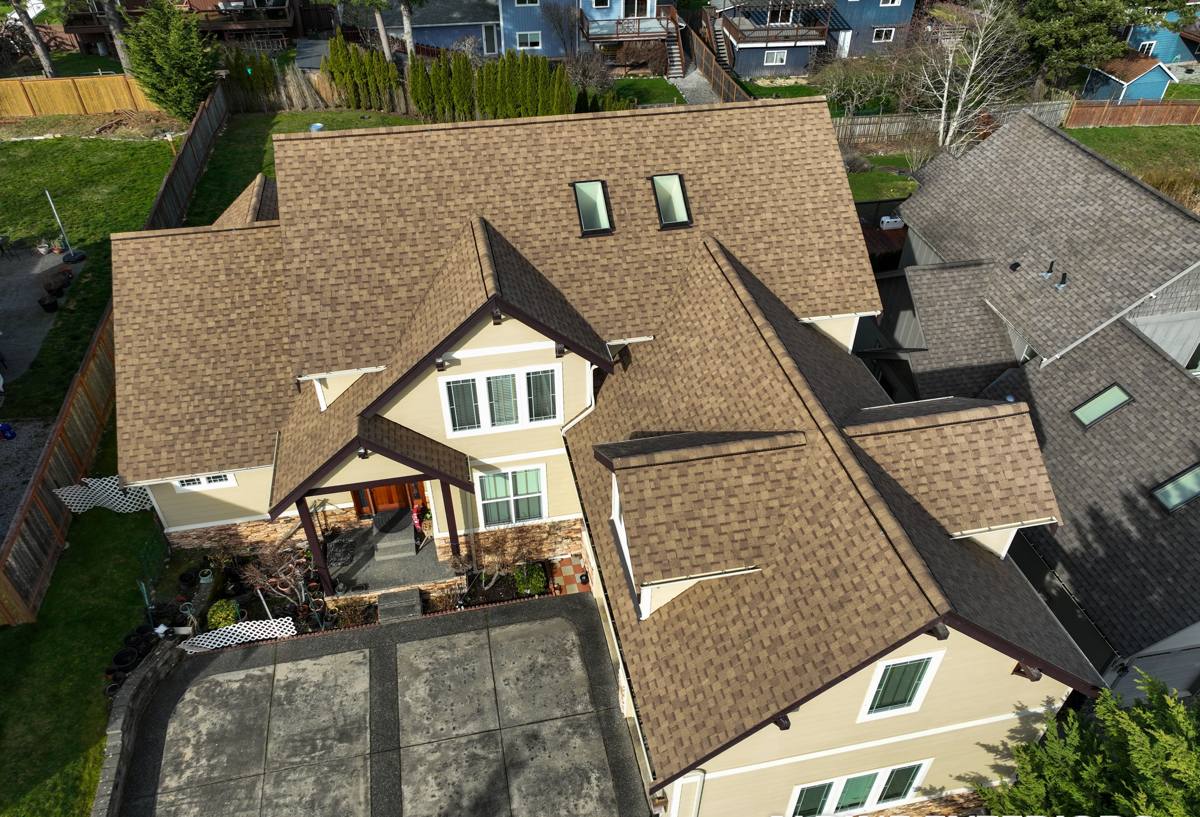
Signs a Repair Won't Cut It Anymore
Not every roof problem means a full replacement. But there's a point where patching becomes throwing money at a roof that's already lost the fight. Common signs we look for on Ellenton-area homes include:
- Shingles that are curling, cupping, or losing their granules in large patches rather than isolated spots
- Soft spots or sagging in the roof deck when walked, which usually means water has already reached the wood
- Repeated leaks in different locations after past repairs — a sign the underlayment has failed broadly, not just at one point
- Visible daylight through the attic decking, or consistent staining on interior ceilings
- A roof approaching or past 18-25 years old (asphalt shingle) that has had multiple storm seasons of UV and wind exposure
- Missing or lifted shingles after wind events, especially along ridges and edges where uplift pressure is highest
If a roof is showing two or more of these at once, replacement is usually the more honest recommendation than another round of patchwork.
Roofing Materials That Actually Hold Up Here
We install a limited set of roofing systems on purpose — the ones with a real track record against sun, salt air, and wind in this part of Florida. Every material has trade-offs, and we'll walk through them honestly rather than push whatever has the best margin.
| Material | Wind Performance | Maintenance | Typical Lifespan Here |
|---|---|---|---|
| Architectural asphalt shingle | Good, when installed with correct nailing pattern and starter strips | Low; periodic inspection after storms | 18-25 years |
| Standing seam metal | Excellent; concealed fasteners resist uplift well | Very low; occasional fastener and seam check | 40-50+ years |
| Concrete or clay tile | Very good if properly fastened, but individual tiles can crack from debris impact | Moderate; cracked tiles need timely replacement | 30-50 years |
| 3-tab asphalt shingle | Fair; lower wind rating than architectural shingles | Low | 12-18 years |
For most Ellenton-area homes, we steer customers toward architectural shingle or metal, not because 3-tab shingle is a bad product in general, but because its lower wind rating makes it a weaker match for this specific climate. Tile has its place, especially on homes where it matches the surrounding architecture, but it requires more disciplined installation and more responsive maintenance when a tile cracks from a falling branch or debris.
Underlayment Matters as Much as the Surface Material
The shingles or tiles are what you see, but the underlayment is what keeps water out when wind drives rain up under the surface layer — which happens regularly here during tropical systems and even ordinary summer storms. We use synthetic or self-adhering underlayment rated for wind-driven rain rather than the thinner felt products that were standard decades ago. This one layer is often the difference between a roof that leaks in a storm and one that doesn't.
What a Correct Roof Installation Actually Involves
A new roof is a system, not a single product laid down over the old one. Getting it right means getting every layer right, in the right order.
Deck Inspection and Repair
Before anything new goes down, the roof deck gets inspected board by board. Soft, delaminated, or water-damaged plywood gets replaced — not covered up. Installing new roofing over a compromised deck just hides the problem until it shows up again as a leak or a soft spot.
Flashing at Every Penetration
Valleys, chimneys, skylights, vent pipes, and wall intersections are where roofs actually fail, far more often than the open field of shingles or tile. Correct flashing — properly lapped, sealed, and integrated with the underlayment — is what keeps wind-driven rain from working its way in at these transition points.
Fastening Rated for Wind Uplift
Nailing pattern and fastener count matter more here than in most parts of the country. We follow manufacturer specifications and Florida Building Code requirements for wind resistance in our area, including proper starter strip installation and ring-shank nails where called for, rather than the minimum fastener count that a lower-cost install might use.
Attic Ventilation
Florida attics run hot, and poor ventilation shortens the life of a new roof from underneath by trapping heat and moisture against the deck and shingles. Ridge vents, soffit intake, and balanced airflow are part of a correct install, not an optional upgrade.
Our Process, Start to Finish
- Inspection and honest assessment. We look at the whole roof system — deck, flashing, ventilation, and current material — and tell you plainly whether you need a repair or a replacement.
- Written estimate with material options. You'll see the trade-offs between shingle, metal, and tile in plain terms, with a written scope so there are no surprises once work starts.
- Permitting. New roof installations require a permit, and we handle that process rather than leaving it to the homeowner.
- Tear-off and deck inspection. Old material comes off completely so the deck can be properly inspected and any damaged sections replaced.
- Underlayment, flashing, and fastening. Each layer goes down to code and manufacturer spec, with attention to every valley, penetration, and edge.
- Final material installation and cleanup. The finished roof goes on, the site gets cleaned of debris and nails, and we walk the property with you.
- Final inspection and documentation. The completed roof is inspected, and you're given documentation you may need for insurance or a future wind mitigation report.
Permits, Wind Mitigation, and Insurance
Ellenton falls under Manatee County for permitting and inspections, even though it sits right along the Sarasota-Manatee line and shares the same coastal exposure that shapes our recommendations across the region. A new roof triggers a permit and a final inspection regardless of which county line it lands on, and skipping that step — even if a contractor offers to — can cause real problems later when you try to sell the home or file an insurance claim.
A new roof can also improve your wind mitigation inspection results, which insurers use to set windstorm premiums in Florida. Features like a properly rated roof covering, correctly installed roof-to-wall connections, and a compliant roof deck attachment can all factor into that inspection. We can't promise a specific premium change, since that's between you and your insurer, but we'll make sure the installation itself is documented well enough to support whatever inspection comes next.
Why a Crew That Already Works Ellenton Matters
Roofing quality isn't just about the materials — it's about whether the crew installing them understands the specific conditions they're building for. A crew that regularly works the Sarasota and Manatee area already knows which flashing details tend to fail first in this climate, how much fastening margin to build in for wind exposure, and how salt air and humidity affect material choices over time. That familiarity shows up in fewer callbacks and a roof that performs the way it's supposed to when the next storm season arrives, not just on the day it's installed.
It also means straightforward logistics: local permitting familiarity, faster scheduling since we're not traveling in from another region, and a crew that's still reachable if a question comes up after the job is done.
What to Ask Before You Hire a Roofing Contractor
- Are you licensed to perform roofing work in Florida, and can you provide proof of that license?
- Do you carry general liability and workers' compensation insurance, and can you provide certificates?
- Will you pull the required permit yourself, or is that left to me?
- What underlayment and fastening method will you use, and why?
- What's included in the written estimate — tear-off, deck repair if needed, disposal, cleanup?
- What manufacturer warranty applies, and is it tied to certified installation?
- Will I get documentation useful for a wind mitigation inspection after the job is complete?
If a contractor is vague on more than one of these, that's worth treating as a warning sign rather than a minor detail.
Get a Straightforward Roof Estimate
If your roof in Ellenton is showing its age or you're just planning ahead of the next storm season, we're happy to take a look and give you a clear, honest assessment — no pressure, no inflated scare tactics, just what the roof actually needs. Use the form below to request a free estimate, and we'll walk you through your options in plain terms.