 Sarasota Window
 Why Nokomis Siding Wears Differently Than Siding Inland
Nokomis sits close enough to the Gulf that salt-laden air, wind-driven rain, and near-constant UV exposure are simply part of daily life for a home's exterior. Siding here isn't just a cosmetic layer — it's the barrier standing between your framing and a climate that pushes moisture sideways during storms and bakes painted surfaces for most of the year. Add the risk of hurricane-force wind gusts during the active season, and it becomes clear why siding replacement decisions carry more weight in Sarasota County than they would in a drier, calmer part of the country.
A lot of siding problems we see on Nokomis homes aren't failures of age alone — they're failures of a product or installation that was never really matched to this environment in the first place. That's the lens we bring to every siding replacement job in this area: not "what's the cheapest fix," but "what will actually hold up here."
What Siding Replacement Actually Involves
Replacement is a different job than a repair or a recover, and it's worth understanding the difference before you decide which one your home needs.
- Spot repair — swapping out a few damaged boards or panels while leaving the rest of the system in place. Reasonable for isolated storm damage on otherwise sound siding.
- Recover (siding over siding) — installing new material directly over old. Faster and cheaper, but it traps whatever moisture or rot already exists underneath, which is a real liability in a humid coastal climate.
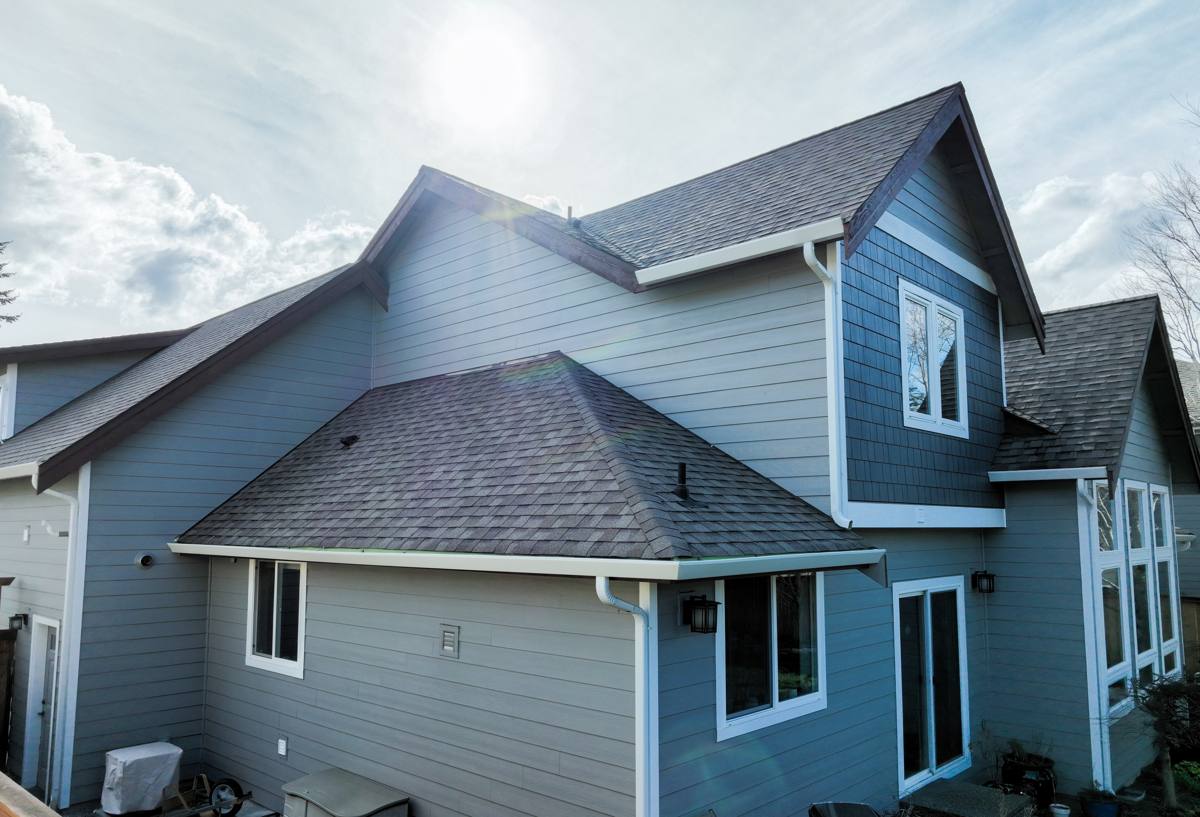
- Full replacement — stripping siding down to the sheathing, inspecting and repairing what's underneath, correcting flashing and water-management details, then installing new siding to spec. This is the only approach that actually resets the clock on a home's exterior.
For most Nokomis homes reaching the point where siding replacement is even being discussed, full replacement is the right call — because whatever caused the visible damage on the surface usually has a moisture or installation story underneath it.
Signs a Nokomis Home Needs Replacement, Not Repair
Some warning signs are obvious. Others show up slowly and get written off as normal wear until they aren't.
- Soft or spongy spots when you press on the siding, especially near the bottom courses and corners
- Visible warping, bowing, or buckling panels
- Paint that won't hold — repeated peeling or blistering within a year or two of repainting
- Cracked or delaminating panels, particularly on the sides of the house that take the most afternoon sun and wind-driven rain
- Persistent musty odor along exterior walls or unexplained moisture inside near exterior walls
- Visible gaps at seams, corners, or trim where caulking has failed repeatedly
- Siding that's original to a home older than 20-25 years, regardless of visible condition
If you're seeing two or more of these at once, that's usually a sign the underlying substrate is already compromised, not just the surface finish.
Where Nokomis Homes Take the Most Damage
The sides of a house facing prevailing wind and the west/southwest exposure that catches the most direct sun tend to fail first. Ground-level siding near irrigation, downspouts, or poor drainage is another common early-failure zone — constant dampness at the base of a wall does more damage over time than a single storm event.
Why the Product You Choose Matters More Here Than Elsewhere
In a moderate, dry climate, the difference between siding products is mostly cosmetic. On the Gulf Coast, it's structural. Humidity, salt exposure, and UV intensity accelerate whatever weaknesses a product has.
| Material | How It Handles This Climate | Long-Term Concern |
|---|---|---|
| Vinyl | Won't rot, but softens and can warp or crack under sustained heat and direct sun | Fading, warping, and brittleness accelerate near the coast; limited wind resistance ratings |
| Engineered wood (LP-type) | Wood-based core is vulnerable if moisture gets behind or into the panel | Swelling, edge softening, and rot risk if caulking, flashing, or coating aren't maintained perfectly |
| Untreated or primed wood | Natural material, no engineered moisture resistance | High maintenance burden — repainting and moisture monitoring are constant in humid coastal air |
| Fiber cement (James Hardie) | Non-combustible, dimensionally stable, engineered for high-heat/high-humidity climates | Requires correct installation to specification; the material itself isn't the limiting factor |
This is exactly why we standardized on one material instead of offering a menu of options. We'd rather tell a Nokomis homeowner plainly why we don't install certain products than sell something we know will underperform in this specific climate.
Why We Install James Hardie and Nothing Else
James Hardie fiber cement is engineered specifically for climates like ours — Hardie's HZ5 product line is formulated for hot, humid, high-moisture regions, which describes Sarasota County about as precisely as a spec sheet can. It's non-combustible, holds paint and color far longer than wood-based alternatives, and doesn't swell or soften when it gets wet the way engineered wood products can.
The ColorPlus factory finish baked onto the boards before they ever reach a job site is a meaningful advantage here specifically because UV intensity is so high on the Gulf Coast — a factory finish resists fading and chalking better than field-applied paint, and it comes with its own finish warranty separate from the product warranty. Combined with a strong transferable product warranty, it's the system we're comfortable standing behind on a Nokomis roof-to-ground replacement, not just a system that looks good on install day.
We're not going to tell you every other product on the market is worthless — vinyl and engineered wood siding have legitimate uses and reasonable price points. But for full siding replacement on a home exposed to this much sun, salt, and wind, we've made our call, and we install accordingly.
Our Siding Replacement Process
- On-site inspection — we walk the exterior, check problem areas by hand, and look at what's happening at the base of walls, corners, and around penetrations like vents and outlets.
- Tear-off and sheathing check — old siding comes off completely so we can see the actual condition of the wall behind it, not just guess.
- Repair and water management — any damaged sheathing gets addressed, and house wrap, flashing, and drainage details are corrected or upgraded before new siding goes on.
- Installation to manufacturer spec — proper fastener spacing, clearances, and joint treatment matter as much as the product itself; this is where a lot of siding failures actually originate.
- Trim, caulking, and finish detail — the small details around windows, corners, and transitions are what keep wind-driven rain from finding a way in.
- Final walkthrough — we go over the finished exterior with you before considering the job done.
Cost Factors for a Nokomis Siding Replacement
Every home is different, but the same handful of factors drive most of the price variation we see on siding replacement jobs in this area.
| Factor | Why It Affects Cost |
|---|---|
| Home size and wall complexity | More corners, gables, and dormers mean more cutting, fitting, and trim work |
| Sheathing condition | Rot or moisture damage found during tear-off adds repair scope beyond the siding itself |
| Siding profile and accessories | Lap, shingle, or panel styles, plus trim and soffit work, price differently |
| Story height | Second-story and steep-roof access adds labor and equipment time |
| Color and finish | Factory ColorPlus finishes carry their own cost but reduce future repainting |
We don't publish flat pricing because two homes that look similar from the street can have very different sheathing conditions underneath — which is exactly why the on-site inspection comes first.
Why a Local Crew That Already Works Nokomis Matters
Hurricane-code requirements, wind-load expectations, and moisture behavior in this part of Sarasota County aren't the same as they are two states away — or even in a drier inland region. A crew that works Nokomis regularly already understands the local wind exposure categories, knows how coastal humidity affects cure times and material handling, and isn't learning the area's climate quirks on your home for the first time. That familiarity shows up in details like fastener selection, flashing choices, and how tightly seams are treated — the parts of the job that determine whether siding lasts 10 years or 30.
Local presence also matters after the job is done. If a named storm rolls through and you need someone to check on your home's exterior, it helps enormously to be working with a crew that's actually based in the area rather than one that installed and moved on.
Ready to Talk About Your Nokomis Home?
If your siding is showing wear, failing to hold paint, or you're just planning ahead for a home that needs to hold up to Sarasota County's sun, wind, and salt air, we're happy to take a look and give you an honest read on what your home actually needs. Request a free, no-pressure estimate using the form below.