 Sarasota Window
 Why Decks in Palmer Ranch Wear Out Faster Than Homeowners Expect
Palmer Ranch sits inland enough from Siesta Key and the Gulf that people sometimes assume their outdoor structures get a break from coastal wear. In practice, they don't get much of one. Sarasota County still delivers the same combination that ages decks everywhere in the region: intense, nearly year-round UV exposure, humidity that never fully lets wood dry out between rains, wind-driven rain that finds its way into joints and fastener holes, and salt-laden air that drifts well inland on sea breezes. Add in the occasional hurricane-force wind event, and a deck that looked fine five or six years ago can be hiding real structural problems today.
Most of the damage isn't cosmetic surface graying — that part is normal and expected. The real issue is what's happening underneath: ledger boards pulling away from the house, joists softening from trapped moisture, and fasteners corroding faster than their rated lifespan because of the salt content in the air. A deck can look presentable from the yard and still not be safe to stand on in the corners.
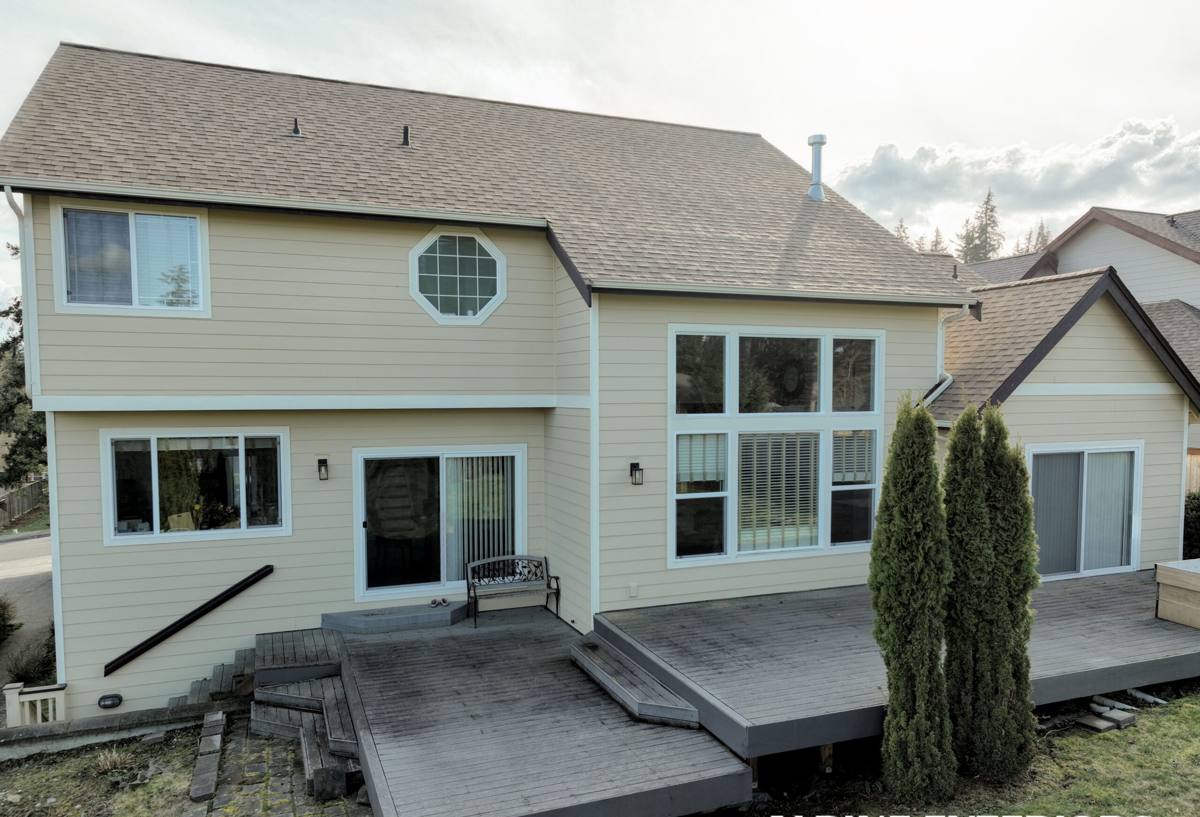
Signs a Deck Needs Replacement, Not Just Repair
Homeowners often call us wanting a few boards swapped out, and sometimes that's genuinely all that's needed. But there's a point where patching individual boards is just delaying a full rebuild, and it's worth knowing the difference before spending money on the wrong fix.
- Soft, spongy, or bouncy spots anywhere on the deck surface, not just at the edges
- Visible gaps or rust streaks where the ledger board meets the house
- Posts or footings that shift, wobble, or show cracking at the base
- Fasteners that are corroded, backed out, or leaving dark stains around the head
- Boards that are cupping, splitting along the grain, or delaminating (common on older composite)
- A railing that flexes noticeably when leaned on
- Any deck attached to the house that was built before current code requirements for ledger fastening
If more than one or two of these apply, you're usually looking at a replacement rather than a repair, even if the surface boards still look decent from a distance.
Why "It's Only the Boards" Is Often Wrong
The visible decking is the easiest part to replace and the least likely to be the actual problem. Framing, ledger attachment, footings, and fastener hardware take the real abuse from moisture cycling and salt exposure, and none of that is visible until a board is pulled up. A responsible contractor checks the substructure before ever quoting a straightforward "board swap," because installing new decking over compromised framing just moves the failure point a few years down the road instead of fixing it.
What a Correct Deck Replacement Actually Involves
A full deck replacement in this climate isn't just removing old boards and screwing down new ones. Done right, it includes:
- Full teardown to the framing — every deck board, fascia piece, and railing component removed so the frame underneath can be inspected directly
- Framing and footing inspection — checking posts, beams, joists, and footings for rot, movement, or undersized spans relative to current code
- Ledger board correction — proper flashing and fastening where the deck ties into the house, which is the single most common failure point on older decks
- Corrosion-resistant fasteners and hardware — hot-dip galvanized or stainless connectors rated for coastal exposure, not the standard hardware sold for inland climates
- Proper board spacing and drainage — gaps sized to let wind-driven rain shed rather than pool, and to allow the frame underneath to actually dry out between storms
- Code-compliant railings and stair details — height, baluster spacing, and graspable rail profiles matching current Sarasota County requirements
- Permit and inspection sign-off — pulled and closed out properly, not skipped to save time
Choosing Decking Material for This Climate
There's no single "best" decking material — there's a best fit for how a homeowner plans to use and maintain the deck. We'll walk through the honest trade-offs rather than push one product line, because the right choice depends on budget, tolerance for upkeep, and how the deck sits relative to sun and salt exposure.
| Material | Upfront Cost | Maintenance | Coastal Durability | Heat Underfoot |
|---|---|---|---|---|
| Pressure-treated wood | Lowest | Annual sealing/staining needed | Moderate — vulnerable if sealing lapses | Moderate |
| Capped composite | Mid-to-high | Low — occasional washing | Good — resists moisture and salt well | Can run hot in direct summer sun |
| PVC/cellular decking | Highest | Lowest — no staining ever | Very good — fully moisture-immune core | Similar to composite, varies by color |
Wood costs less to install but demands the most ongoing attention — in a climate with this much sun and moisture, skipped maintenance shows up fast as graying, splintering, and eventually rot. Composite and PVC cost more upfront but hold up with far less babysitting, which is why we see more homeowners in this area moving toward them for decks that get heavy sun or salt exposure. None of these are wrong choices; they're just different bargains between money now and time later.
A Note on Fasteners and Hardware
Whatever decking material gets chosen, the hardware underneath matters just as much. We don't cut corners here with standard-grade fasteners on coastal-exposed builds — the maintenance burden and premature corrosion risk isn't worth the small savings, and it's the kind of thing that causes real problems five years down the line rather than five months.
Permits, Code, and Palmer Ranch's HOA Considerations
Deck replacement in unincorporated Sarasota County requires a permit, and for good reason — ledger attachment, footing depth, and railing details are exactly the things that fail first in wind events if they weren't done to current code. Many Palmer Ranch homes also fall under HOA or deed restriction guidelines covering exterior materials, colors, and railing styles, on top of the county permit itself. We handle the permit process directly and can work with whatever documentation an HOA review requires, but it's worth checking your community's specific guidelines early so material and color choices don't need to be revisited mid-project.
Our Process, Start to Finish
- On-site assessment — we inspect the existing deck, including framing where accessible, and discuss what you actually use the space for
- Written estimate — clear scope, material options, and a realistic cost range, no surprise add-ons buried in fine print
- Permit filing — submitted and tracked through Sarasota County before demolition begins
- Teardown and disposal — old materials removed and hauled off, framing exposed for inspection
- Framing repair or rebuild — any compromised structure addressed before new decking goes down
- Installation — decking, railings, and stairs installed per code and per the agreed spec
- Final inspection and walkthrough — county sign-off, then a walkthrough with you before we consider the job done
Maintaining a New Deck in Sarasota's Climate
Whatever material gets installed, a little seasonal attention goes a long way here. Rinsing off salt residue and pollen buildup periodically, keeping gutters and downspouts clear so runoff isn't dumping directly onto the deck, and checking railing hardware once a year for corrosion are simple habits that meaningfully extend a deck's life. Wood decks need a real maintenance schedule — sealing or staining on a regular cycle, not "whenever it starts looking rough." Composite and PVC need far less, but "low maintenance" doesn't mean zero; periodic cleaning still matters, especially under furniture or planters where debris and moisture collect.
Why a Crew That Already Works in Palmer Ranch Matters
Deck framing that meets code inland isn't automatically right for a property with more direct wind or salt exposure, and a crew unfamiliar with Sarasota County's permitting process can turn a straightforward project into a paperwork delay. Working regularly in this area means we already know the inspection expectations, the common HOA documentation requests in communities like Palmer Ranch, and which fastener and framing choices actually hold up here rather than just on paper. That familiarity shows up as fewer surprises, fewer permit corrections, and a deck built for the conditions it will actually face rather than a generic spec sheet.
If your deck is showing any of the signs above, or you're just ready to stop maintaining a structure that's past its useful life, we're happy to take a look and give you a straightforward assessment. Reach out for a free, no-pressure estimate using the form below — we'll tell you honestly whether you're looking at a repair or a full replacement.