 Sarasota Window
 Siding Built for What University Park Actually Deals With
University Park sits inland from the Gulf but still gets the full weather package that defines Sarasota County: long stretches of intense UV that bake the west and south sides of a house, sudden summer downpours that drive rain sideways into wall assemblies, and tropical systems that test every seam, fastener, and flashing detail a siding job has. Add the salt-laden air that reaches well inland on sea breezes off Sarasota Bay and the Gulf, and you have a climate that is genuinely hard on exterior building materials.
Homes in University Park run the gamut from homes built in the community's earlier development phases to newer construction, which means the siding on any given block could be original, a prior remodel, or already showing its age. What all of it has in common is exposure to the same year-round cycle of heat, humidity, UV, and wind that never really lets up. Siding here isn't just cosmetic — it's the first line of defense for the wall assembly behind it, and it needs to be installed correctly to do that job.
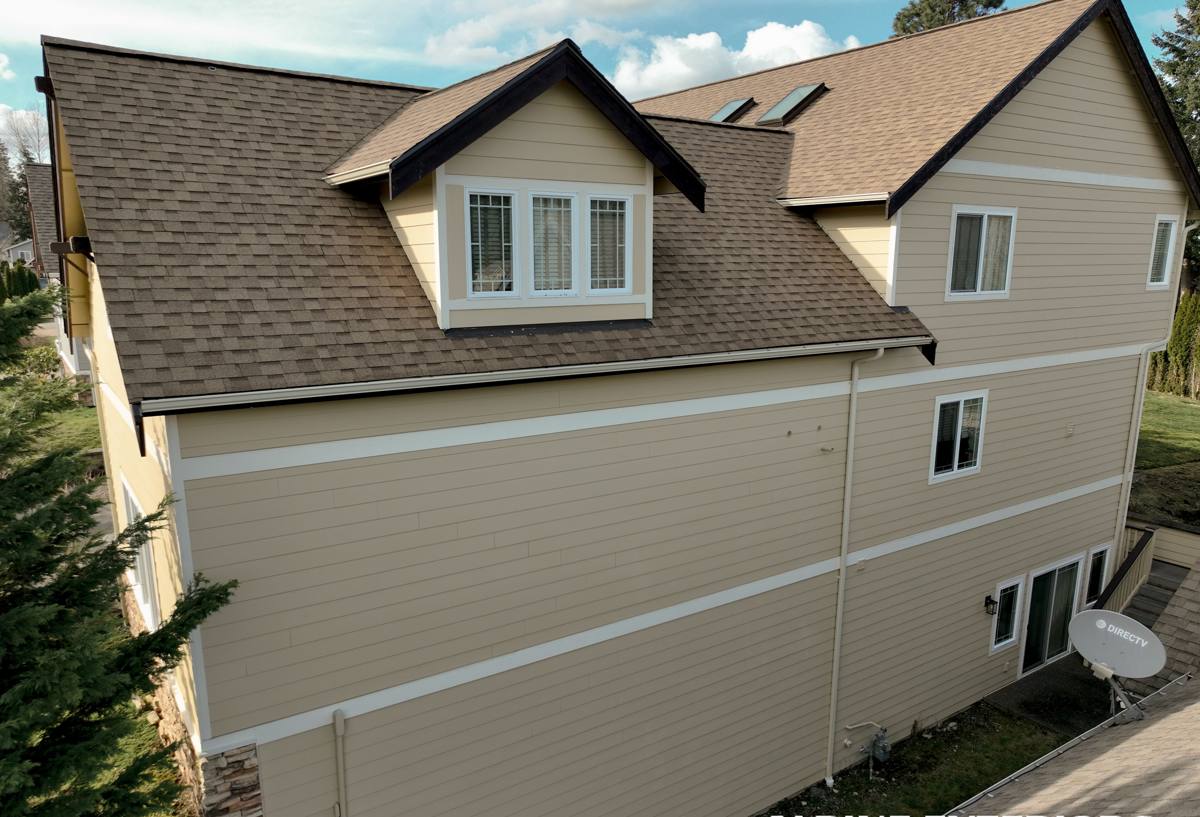
How This Climate Wears Down Siding Over Time
UV and Heat
Florida sun is relentless. Materials that aren't formulated to resist UV degradation will fade unevenly, chalk, or become brittle over years of exposure — especially on south- and west-facing walls that take direct afternoon sun. Paint film on lesser materials breaks down faster here than almost anywhere else in the country, which shows up as peeling, cracking, and color loss well before a homeowner expects to be repainting.
Wind-Driven Rain
Sarasota County sees storms that don't just rain down — they push moisture horizontally into every gap, lap, and seam in a wall system. Siding that isn't installed with proper overlap, flashing, and drainage behind it will let water find its way to the sheathing, and once moisture gets behind siding in this humidity, it doesn't dry out quickly.
Salt Air
Even well inland, University Park is close enough to the coast that salt aerosol reaches roofs and walls. Salt accelerates corrosion of fasteners and metal flashing and can contribute to the breakdown of materials not designed to handle it.
Wind Load
Hurricane and tropical-storm-force winds put real mechanical stress on siding — uplift at edges and corners, flex at panel joints, and pressure differentials that can pull poorly fastened material right off the wall. Sarasota County's wind-load requirements exist because this isn't a hypothetical; it's a recurring seasonal reality.
Signs a University Park Home Needs New Siding
- Visible cracking, warping, or buckling panels, especially on sun-exposed elevations
- Soft or spongy spots when pressed — a sign moisture has reached the substrate
- Paint that's peeling or chalking faster than a normal repaint cycle would suggest
- Gaps opening up at seams, corners, or around windows and doors
- Visible fastener corrosion or streaking below nail heads
- A musty smell or discoloration on interior walls that back up to exterior siding
- Siding that's simply reached the end of its realistic service life, regardless of visible damage
Any one of these is worth a professional look. Several together usually mean the wall assembly has been compromised longer than it looks from the curb.
Why We Install Only James Hardie Fiber Cement Siding
We don't install vinyl, LP SmartSide, Cemplank, Allura, or primed wood siding. That's a deliberate standard, not an oversight, and it's worth explaining rather than just stating.
Vinyl softens, warps, or cracks under sustained heat and UV, and it offers essentially no wind resistance on its own — it relies heavily on correct installation and can still fail in high-wind events. Engineered wood products like LP SmartSide perform well in many climates but are more vulnerable to sustained moisture exposure, and Florida's humidity and wind-driven rain are exactly the conditions that stress that vulnerability. Other fiber cement brands (Cemplank, Allura) are legitimate products, but we've standardized on one manufacturer so our crews master one installation system, one flashing detail set, and one warranty structure rather than splitting expertise across several.
James Hardie fiber cement is non-combustible, holds paint and factory finish far longer than wood or vinyl in intense UV, resists moisture intrusion when installed to spec, and is engineered specifically for high-humidity, storm-prone climates through its HZ5 product line — the version formulated for exactly the conditions Gulf Coast Florida throws at a house. It carries a strong transferable warranty backed by a manufacturer with decades of track record in coastal markets. That combination is why it's the only product we put on homes.
James Hardie Product Lines for This Climate
| Product | Best Use | Why It Fits University Park |
|---|---|---|
| HardiePlank Lap Siding | Primary wall cladding | Traditional profile, factory ColorPlus finish resists UV fade |
| HardieShingle | Accent areas, gables | Adds architectural detail without sacrificing durability |
| HardiePanel | Modern/vertical siding sections | Clean lines for contemporary elevations |
| HardieTrim | Corners, fascia, window trim | Matches durability of the field siding so trim doesn't fail first |
All of these are available in the HZ5 formulation, engineered specifically for high-humidity, storm-exposed climates like Sarasota County's — which is the version we install here.
What a Correct Installation Actually Involves
Fiber cement siding is only as good as the assembly it's installed into. The board itself resists moisture and impact well, but the details around it — flashing, water-resistive barrier, fastening, and clearances — determine whether the wall stays dry over decades or starts failing in five years.
- Water-resistive barrier: A continuous, properly lapped weather barrier goes on before any siding, giving the wall a drainage plane behind the cladding
- Flashing at every penetration: Windows, doors, and any wall penetration get flashed to shed water outward, not into the wall cavity
- Correct fastener pattern and type: Corrosion-resistant fasteners, placed per manufacturer spec, not just "close enough" — this matters enormously for wind resistance
- Proper clearances: Siding held clear of roof lines, decks, and grade per Hardie's published guidelines so it isn't sitting in standing water or trapped moisture
- Correct joint treatment: Butt joints and seams sealed or flashed per spec, not just butted and caulked
- Factory-finished ColorPlus panels handled correctly: Touch-up and caulk matched to the finish system so color and warranty coverage aren't compromised
Skip any one of these and the siding may look fine for a while and still fail early. This is where installation quality matters as much as the product choice.
Our Process, Start to Finish
1. On-Site Assessment
We walk the property, check the existing siding and substrate condition, note problem areas (window returns, corners, ground clearance), and talk through what's realistic for the home.
2. Written Estimate
A clear scope of work and price — what's being removed, what's going on, what product lines and colors are involved, and the timeline.
3. Tear-Off and Substrate Check
Old siding comes off and we inspect the sheathing underneath. Any water damage or rot found here gets addressed before new siding goes on — covering a compromised substrate just hides a bigger problem.
4. Weather Barrier and Flashing
This is the step that determines long-term performance. We install the water-resistive barrier and flash every opening and penetration before a single piece of siding goes up.
5. Hardie Installation to Manufacturer Spec
Fastening, spacing, and clearances follow James Hardie's published installation guidelines — not shortcuts, because shortcuts are what void warranties and cause early failures.
6. Final Walkthrough
We review the finished work with the homeowner, confirm trim and caulk details, and go over basic care.
What Drives Cost on a University Park Siding Job
| Factor | Why It Matters |
|---|---|
| Home size and wall complexity | More corners, gables, and dormers mean more cutting, flashing, and labor |
| Substrate condition | Rot or water damage found during tear-off adds repair scope before new siding goes on |
| Product line and profile | Lap width, shingle-style accents, and trim details all affect material cost |
| Color selection | Factory ColorPlus finishes vs. field-painted primed panels affect both cost and long-term maintenance |
| Access and site conditions | Mature landscaping, fencing, or tight lot lines can add labor time |
| Removal and disposal | Tear-off and hauling of old siding is part of a full replacement |
We don't quote a number until we've actually looked at the house — anything else is a guess, and guesses aren't useful to a homeowner trying to budget.
Why It Matters That We Already Work in This Area
A contractor who regularly works in University Park and the surrounding Sarasota County communities understands the county's wind-load and permitting requirements without having to learn them on your job. We know what inspectors here are looking for, what HOA architectural review typically expects in terms of color and material documentation, and how to sequence a project around Florida's rainy season so a home isn't left exposed longer than necessary. That local familiarity translates directly into fewer surprises, fewer delays, and a job done right the first time.
It also means we're not guessing about how a product performs here — we see the results of installations we did years ago, on homes exposed to the same sun, salt, and storms yours is. That feedback loop is part of why we standardized on one product installed one correct way.
Caring for Hardie Siding After Installation
- Rinse siding periodically with a garden hose to clear salt residue and airborne debris
- Keep sprinklers from spraying directly on siding — repeated soaking accelerates wear at any material's fastener points
- Trim landscaping back so foliage isn't holding moisture against the wall
- Inspect caulking at trim and joints annually and touch up as needed
- Address any impact damage promptly rather than letting it sit exposed
Fiber cement is low-maintenance compared to wood or repeatedly-painted materials, but "low-maintenance" isn't "no-maintenance" — a little attention keeps a correctly installed system performing for decades.
If your University Park home's siding is showing its age, or you're planning ahead for a replacement, we're happy to take a look and give you a straightforward, no-pressure estimate. Use the form below to get started.