 Sarasota Window
 Why Siding Wears Out Faster in the Ellenton Area
Ellenton sits close enough to the Gulf Coast that homes here deal with a combination of stressors that inland siding never has to survive: intense year-round UV exposure, wind-driven rain during summer storms, salt-laden air carried in on coastal breezes, and the occasional hurricane-force wind event. None of these alone is unusual for Florida. Together, over years, they're what separates a siding job that looks good for two decades from one that starts failing in five or six years.
Most homeowners don't think about siding until something goes visibly wrong — a soft spot near the bottom of a wall, paint that won't hold, a seam that's started to gap. By the time those symptoms show up, the damage is usually further along than it looks from the driveway. Understanding what's actually working against your siding is the first step in choosing a replacement that's built for where you live, not just what's cheapest to install.
Sun, Salt, and Storms: The Triple Threat
UV breaks down pigments and resins in lower-grade siding materials, which is why cheap siding fades unevenly and chalks over time. Salt air accelerates corrosion of fasteners and trim hardware, and it's harsh on any siding material that isn't formulated to resist it. Wind-driven rain during Florida's summer storm season finds every gap in flashing, every under-caulked seam, and every place where a previous installer cut corners — and once water gets behind siding, the problem is almost never the siding itself, it's what happens to the wall behind it.
Signs Your Ellenton Home Needs Replacement, Not Just Repair
Not every siding problem calls for a full tear-off. But there's a point where patching becomes a waste of money, and replacement is the more honest recommendation. Watch for these signs:
- Soft, spongy, or crumbling siding when you press on it, especially near the bottom of walls or below windows
- Persistent paint failure — peeling, bubbling, or chalking that comes back within a year or two of repainting
- Visible warping, buckling, or panels that no longer sit flat against the wall
- Gaps at seams and corners that keep opening back up after caulking
- A musty smell inside near exterior walls, which often points to moisture trapped behind the siding
- Siding that's original to a home more than 20-25 years old, particularly if it's wood-based or an older engineered wood product
- Visible fastener corrosion or rust streaks running down from nail heads
If you're seeing two or more of these at once, it's usually a sign the underlying wall assembly — not just the visible siding — needs attention. That's a different conversation than a simple facelift, and it's worth having before you spend money on repairs that won't hold.
What a Correct Siding Replacement Job Actually Involves
Siding replacement is often sold as a cosmetic upgrade, but the work that actually protects a home happens in layers most homeowners never see once the job is done. Skipping any of these steps is how a siding job looks fine at the walkthrough and fails within a few years.
Tear-Off and Substrate Inspection
Removing the old siding isn't just demolition — it's the only point in the project where the crew can actually see the condition of the wall sheathing underneath. In a humid, storm-exposed area like ours, it's common to find soft or water-stained sheathing behind old siding, especially around window and door openings. A correct job stops at this point to assess and repair any compromised sheathing before anything new goes up. Installing new siding over damaged substrate just hides the problem for a while.
Moisture Barrier and Flashing
Behind every well-installed siding system is a water-resistive barrier and a flashing plan designed to move water that gets past the siding back out, not into the wall cavity. This includes proper flashing at windows, doors, and any wall penetrations, along with correctly lapped house wrap. Given how much wind-driven rain this region sees during the summer storm season, this layer is arguably more important to long-term performance than the siding itself.
Installation to Manufacturer and Code Spec
Fiber cement siding has specific requirements for fastener type, fastener spacing, clearance from rooflines and grade, and joint treatment. These aren't suggestions — they're what the manufacturer's warranty and Florida's wind-load building code are built around. Correct fastening pattern and clearance also directly affect how well the siding holds up in high-wind events, which matters here more than in most parts of the country.
Why We Install Only James Hardie Fiber Cement
We get asked fairly often why we don't offer vinyl, LP SmartSide, or other engineered wood siding options. The honest answer is that after years of working on homes in this climate, we standardized on James Hardie fiber cement because it holds up to the specific conditions Gulf Coast homes face better than the alternatives, and we'd rather install one product well than offer several and let some of them underperform.
Vinyl siding is inexpensive and low-maintenance in mild climates, but it softens and can distort in extreme heat, and it's more prone to cracking and blow-off damage in high winds than fiber cement. Engineered wood products have improved over the years, but they remain wood-based, which means they're inherently more sensitive to sustained moisture exposure than fiber cement — and moisture is the one thing we can't design around in this climate. Fiber cement isn't perfect either; it's heavier, more labor-intensive to install, and costs more upfront. But it's non-combustible, dimensionally stable in heat and humidity, and resistant to termites and rot in a way that wood-based products simply aren't.
How the Main Options Compare
| Factor | James Hardie Fiber Cement | Vinyl | Engineered Wood |
|---|---|---|---|
| Moisture resistance | Excellent — cement-based, won't rot | Good, but seams can trap water | Fair — wood-based core is moisture-sensitive |
| High-wind performance | Strong when installed to spec | Weaker; more prone to cracking/blow-off | Moderate |
| UV/fade resistance | Strong with factory ColorPlus finish | Fades and chalks over time | Depends on paint quality and upkeep |
| Fire resistance | Non-combustible | Melts/deforms under heat | Combustible |
| Typical lifespan installed correctly | 30+ years | 20-30 years | 15-25 years |
Color, Texture, and Fit for Ellenton Homes
One advantage of James Hardie's HZ5 product line, engineered specifically for high-humidity, storm-prone climates like ours, is that it comes factory-finished with ColorPlus technology — a baked-on finish that resists fading and chipping far better than field-applied paint. That matters in an area with this much year-round sun exposure; a factory finish holds its color longer than paint applied on-site, and it comes backed by its own finish warranty separate from the product warranty.
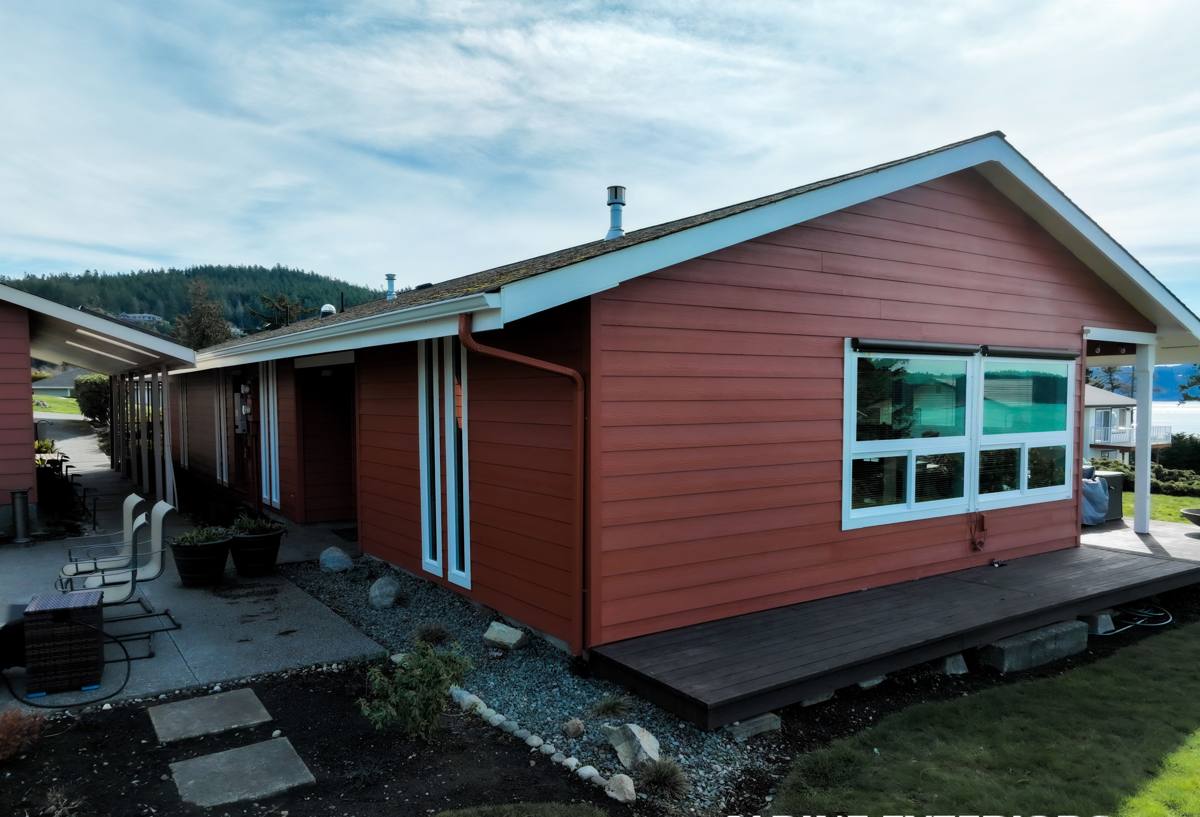
Homes in the Ellenton area run the gamut from older single-story ranch homes to newer two-story construction, and Hardie's lineup — lap siding, vertical panel siding, and shingle-style accents — covers most of what we see. We'll walk through profile and color options as part of the estimate, matched to your home's style and, where relevant, any HOA or community guidelines you need to work within.
Our Process, Start to Finish
- On-site assessment: We inspect your current siding, trim, and as much of the wall assembly as we can evaluate without demo, and talk through what we're seeing.
- Written estimate: A clear scope of work and price — what's included, what siding line and color, and a realistic timeline.
- Tear-off and sheathing check: Old siding comes off, and we inspect and repair any compromised sheathing before moving forward.
- Weather barrier and flashing: House wrap and flashing go in around every window, door, and penetration before a single piece of new siding is hung.
- Hardie installation: Siding is installed to manufacturer fastening and clearance specs, with attention to joints, corners, and trim details.
- Final walkthrough: We go over the finished work with you before calling the job done.
What Drives Cost on a Siding Replacement Project
Every home is different, so we won't quote a number without seeing the property, but a few factors consistently move the price up or down:
| Factor | How It Affects Cost |
|---|---|
| Extent of sheathing repair needed | Damaged wall sheathing found during tear-off adds material and labor |
| Home size and wall complexity | More corners, gables, and dormers mean more cutting and trim work |
| Siding profile chosen | Lap vs. panel vs. shingle-style accents vary in material and labor cost |
| Trim and accent work | Window trim, fascia, and soffit replacement often gets bundled in for a finished look |
| Number of stories | Multi-story homes require more scaffolding/staging and labor time |
| Access and site conditions | Tight lot lines, landscaping, or limited driveway access affect setup time |
Why Hiring a Crew That Already Works in the Ellenton Area Matters
Siding installation isn't a one-size-fits-all trade. A crew that mostly works dry, mild climates can install siding correctly by their own region's standards and still leave a home under-protected against what wind-driven rain and salt air do here over time. Working consistently in Sarasota-area homes means we're used to inspecting for the specific failure patterns this climate causes, sourcing the right HZ5-rated product line for coastal exposure, and building in the wind-resistant fastening and flashing details that matter in a hurricane-prone region — not applying a generic install and hoping it holds.
It also means we're not guessing at permitting requirements or local wind-load expectations. A contractor with local experience should be able to speak plainly about how they handle wind-load fastening, how they flash penetrations, and why they chose the specific siding product they're recommending for your home. If a contractor can't answer those questions clearly, that's worth noticing before you sign anything.
Questions Worth Asking Before You Hire Anyone
- Do you inspect and repair wall sheathing as part of the job, or only replace what's visible?
- What weather-resistive barrier and flashing details do you use, and why?
- What fastening pattern do you follow, and does it meet the manufacturer's wind-zone spec for this area?
- Is the siding warranty backed by the manufacturer, and does it transfer if I sell the home?
- Can you provide a clear, written scope before work begins — not just a verbal estimate?
If you're noticing warning signs on your home's siding, or you simply want an honest opinion on whether repair or replacement makes more sense, we're happy to take a look. We offer free, no-pressure estimates for homeowners in the Ellenton area — use the form below to get started.