 Sarasota Window
 Siding Installation in Venice: What the Coast Actually Demands
Venice sits on the Gulf Coast in Sarasota County, and that address comes with a specific set of demands on a home's exterior. Between hurricane-force wind events, salt-laden air moving in off the water, wind-driven rain that gets pushed sideways into wall assemblies, and sun exposure that runs hard nearly every month of the year, siding here works harder than siding almost anywhere inland. A product or installation method that performs fine in a drier, calmer climate can fail quietly in Venice — not all at once, but through years of moisture creeping behind panels, fasteners corroding, or finishes chalking and fading faster than they should.
We install exclusively James Hardie fiber cement siding, and we work Venice and the surrounding Sarasota area regularly enough to know how local homes are built, where the common trouble spots are, and what a correct installation needs to look like to actually hold up here — not just pass a rough inspection.
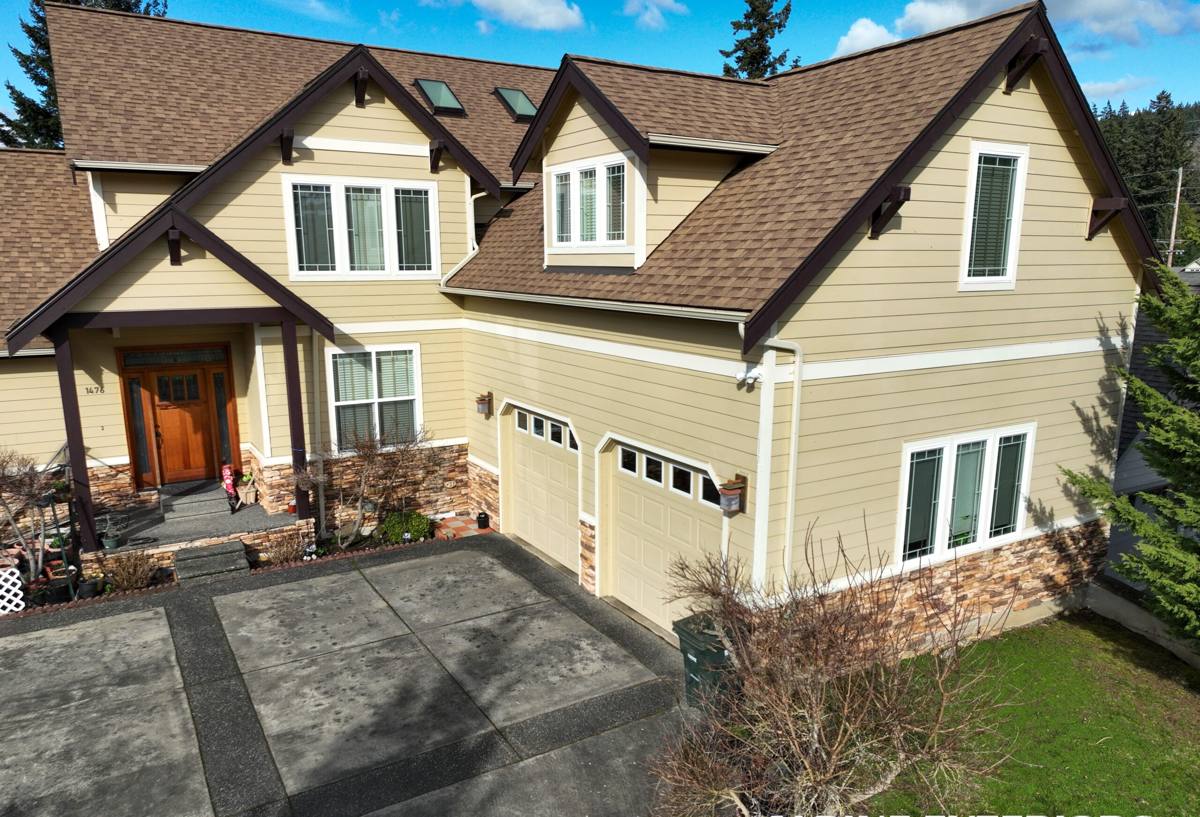
Why Venice's Climate Is Harder on Siding Than It Looks
Salt Air and Corrosion
Proximity to the Gulf means salt aerosol is a constant, low-level presence in the air, even a few miles inland. Salt accelerates corrosion on fasteners, flashing, and any metal trim components. Siding systems that rely on standard fasteners or thin-gauge trim tend to show rust streaking and early failure at those points well before the field material itself gives out.
Wind-Driven Rain
Florida rain doesn't fall straight down during a coastal storm — it drives horizontally into wall surfaces, seams, and penetrations. Siding that isn't detailed correctly at joints, window and door openings, and corners will let water track behind the cladding, where it can sit against sheathing and framing long after the rain stops.
UV and Heat Cycling
Venice gets intense, near year-round sun. UV breaks down pigments and surface coatings over time, which is why cheaper paint jobs and unstable finishes fade, chalk, or streak within a few years. Daily heat cycling also stresses joints and fasteners as materials expand and contract.
Wind Load
Sarasota County is in a wind-borne debris region for building code purposes. Siding attachment, fastener spacing, and edge details all need to account for uplift and lateral wind pressure, not just look right from the ground.
Why We Only Install James Hardie Fiber Cement
We made a standard for our own work: James Hardie fiber cement siding, installed to Hardie's published specifications, and nothing else. That's not a marketing position — it's a practical one, based on what actually holds up to the conditions described above.
- Non-combustible core — fiber cement doesn't contribute fuel to a fire the way wood-based products can.
- Engineered for humid, coastal climates — Hardie's HZ5 product line is formulated specifically for high-humidity zones like Florida's Gulf Coast, addressing moisture behavior differently than their northern-climate formulations.
- Factory-applied ColorPlus finish — baked on under controlled conditions, with UV-resistant formulation and a finish warranty backing it, rather than field-applied paint that depends entirely on weather conditions during installation.
- Dimensional stability — fiber cement doesn't swell, rot, or attract wood-destroying insects the way wood-based or wood-fiber composite sidings can.
- Strong transferable warranty — backed by a manufacturer with decades of track record, which matters when you're planning to be in the home for a while or eventually sell it.
We don't install vinyl, LP SmartSide, Cemplank, Allura, or primed wood species on Venice homes. Each of those products has legitimate uses elsewhere, but for this specific climate and our own installation standards, we've standardized on one system so we can back it consistently.
What a Correct Installation Involves
Fiber cement siding is only as good as the installation behind it. Hardie publishes detailed installation requirements, and skipping steps is the single biggest reason any siding job — Hardie or otherwise — fails early in a coastal environment.
Water-Resistive Barrier and Flashing First
Before a single piece of siding goes up, the wall needs a continuous water-resistive barrier, properly lapped and sealed, with flashing integrated at every window, door, and penetration. This layer is what actually keeps wind-driven rain out of the wall assembly — the siding is the second line of defense, not the first.
Proper Clearances
Siding needs clearance from roof lines, decks, and grade to avoid wicking moisture. Butt joints need to be flashed or sealed per spec, not just tight-fit and caulked over.
Fastener Selection and Placement
Given the salt-air exposure in Venice, fastener material and placement matter more than in a lot of markets. Corrosion-resistant fasteners, correctly spaced and set at the proper depth, are part of what keeps the siding attached through wind events and prevents surface staining down the road.
Correct Cutting and Sealing Practices
Fiber cement generates silica dust when cut improperly and needs correct blade and dust-control practices for safety, but it also needs cut edges primed or sealed per manufacturer specification — an exposed, unsealed cut edge is a common point of premature moisture absorption.
Trim and Corner Detailing
Inside and outside corners, especially on the wind-exposed sides of a home, need detailing that sheds water rather than trapping it. This is where a lot of shortcuts show up on lower-quality installs.
Our Process for a Venice Siding Installation
| Step | What Happens |
|---|---|
| Assessment | On-site evaluation of existing siding, sheathing condition, and any moisture or wind damage already present |
| Product and Color Selection | Walk through Hardie's HZ5 lines, textures, and ColorPlus palette suited to the home and neighborhood |
| Prep and Tear-Off | Removal of old siding, inspection of sheathing, repair of any compromised framing or sheathing before covering it back up |
| Water-Resistive Barrier and Flashing | Full barrier installation with correct window, door, and penetration flashing before any siding is hung |
| Installation | Fastening, clearances, and joint detailing per Hardie specification, accounting for local wind exposure |
| Trim and Final Detailing | Corners, fascia, and transition points sealed and finished |
| Walkthrough | Final review with the homeowner before we consider the job complete |
What to Check Before Hiring Any Siding Contractor in Venice
Whether you use us or someone else, a few basics separate a durable coastal installation from one that will cause problems in a few years:
- Do they follow manufacturer installation specifications, or their own shortcuts?
- Do they address the water-resistive barrier and flashing as part of the job, or just swap old siding for new over whatever is underneath?
- Are they familiar with wind-borne debris region requirements for this part of Sarasota County?
- Can they explain fastener and clearance choices specific to salt-air exposure?
- Do they carry manufacturer certification or documented experience with the specific product being installed?
- Is the warranty backed by the manufacturer, the installer, or both — and what does it actually cover?
Signs Your Current Siding Is Already Struggling
If you're not sure whether replacement is even necessary yet, a few signs are worth taking seriously in this climate:
- Soft spots or visible give when pressing on siding near the base of walls or under windows
- Persistent staining or rust streaks running down from fasteners or trim
- Paint or finish that's chalking, peeling, or fading unevenly
- Visible gaps, warping, or buckling panels, especially after storm seasons
- Musty odors or interior wall staining that suggest moisture intrusion behind the siding
Catching these early usually means a smaller, more contained repair. Waiting typically means the damage has reached the sheathing or framing, which turns a siding job into a larger structural repair.
Why Local Experience in Venice Matters
A crew that installs siding across a range of inland climates but only occasionally works the Gulf Coast doesn't build the same instincts as one that works Venice, Sarasota, and the surrounding coastal communities regularly. Knowing how a specific street's wind exposure behaves, which older homes in the area were built with sheathing that needs extra attention during tear-off, and how salt air actually shows up on fasteners and trim over a few years — that comes from repetition in this specific environment, not from a general contracting background.
We work in Venice and across the Sarasota County area consistently, which means our estimates, material recommendations, and installation details are shaped by what we've actually seen hold up here — and what hasn't.
Get a Straightforward Estimate
If you're weighing a siding replacement or repair on a Venice home, we're happy to take a look and walk you through what we see, what it would take to do the job right, and where James Hardie fits your specific situation. There's no pressure and no obligation — just a straight assessment from a crew that works this coastline regularly. Fill out the form below to get started.