 Sarasota Window
 Composite Decking Built for Laurel Park's Climate
Laurel Park sits close enough to Sarasota Bay and the Gulf that every outdoor structure on a property feels the coastal climate, whether the home is a block off the water or several streets back. A deck here isn't just outdoor furniture placement — it's a structure that has to survive year-round UV exposure, humid salt air, wind-driven rain, and the occasional direct hit from a tropical system. Composite decking, installed correctly, handles that environment far better than untreated wood, but "installed correctly" is doing a lot of work in that sentence. A deck that looks fine on day one can start showing problems within a season or two if the substructure, fastening, and drainage details weren't built for this specific climate.
This page covers what a composite deck actually needs to hold up in Laurel Park and the surrounding Sarasota County area, what our installation process looks like, and what to check before you hire anyone for the job.
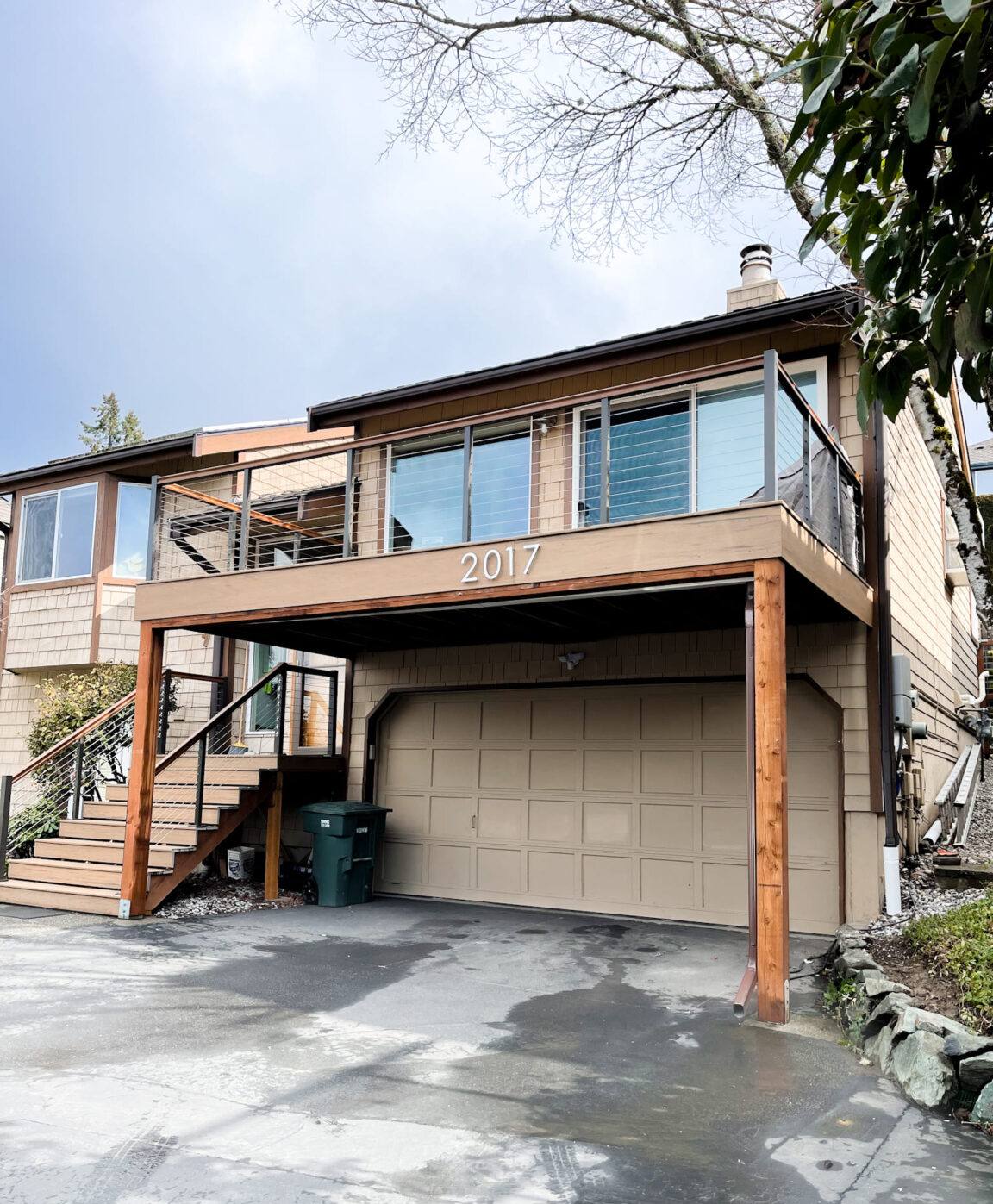
What Sarasota's Climate Does to a Deck
Composite decking was developed largely to solve wood's rot and warping problems, but the material still lives or dies based on how it's installed. In this part of Florida, four climate factors matter most:
Intense, Year-Round UV
Sarasota gets strong sun exposure nearly every month of the year, not just in summer. UV breaks down lesser-grade composite boards over time, causing fading and surface chalking. Capped composite boards with UV-stabilized shells hold their color and texture far longer than uncapped or budget composite products.
Salt Air and Humidity
Even properties not directly on the water get salt-laden air moving inland off Sarasota Bay and the Gulf. Salt air accelerates corrosion on any exposed metal — screws, joist hangers, railing brackets — long before it does anything to the decking boards themselves. Fastener and hardware choice matters as much as the decking brand.
Wind-Driven Rain
Florida rain rarely falls straight down. Wind pushes it sideways and underneath structures, which means drainage and ventilation under the deck are not optional details — they determine whether the substructure stays dry or starts trapping moisture against framing and fasteners.
Hurricane-Force Wind Loads
Decks, especially elevated ones, need to be attached and framed to resist uplift and lateral load, not just support foot traffic. This is a structural requirement, not a cosmetic one, and it's central to how Sarasota County code approaches deck permitting.
What a Correct Composite Deck Installation Involves
The decking boards themselves get most of the attention, but they're the last thing installed, not the most important part of the build. A deck that fails prematurely in this climate almost always fails at the substructure or the connections, not the composite boards.
- Ledger attachment: Where the deck connects to the house needs proper flashing to keep water from getting behind the band board — a common source of hidden rot on older homes.
- Framing material: Pressure-treated joists rated for ground contact where relevant, sized and spaced per the composite manufacturer's span tables (composite requires tighter joist spacing than wood in most cases).
- Fasteners and hardware: Stainless steel or coated, coastal-rated hardware — not standard galvanized — to resist salt-air corrosion over the deck's lifespan.
- Hidden fastening systems: Most composite boards are installed with hidden clip systems rather than face screws, which also allows for the slight thermal expansion composite boards go through in Florida heat.
- Ventilation and drainage: Adequate airflow under the deck and grading that moves water away from the foundation rather than pooling underneath it.
- Post and footing depth: Sized to local frost-free, wind-load, and soil requirements rather than a generic minimum.
Composite vs. Other Decking Materials in This Climate
Homeowners in Laurel Park often ask us to compare composite against wood or PVC before deciding. Here's an honest breakdown based on how each performs specifically in a hot, humid, salt-air, hurricane-exposed climate:
| Material | UV/Fade Resistance | Moisture Behavior | Maintenance | Typical Lifespan |
|---|---|---|---|---|
| Pressure-Treated Wood | Fades and grays without regular refinishing | Absorbs moisture; prone to warping, splintering, rot at fasteners | Annual sealing/staining recommended | 10-15 years with upkeep |
| Capped Composite | Strong, UV-stabilized cap resists fading | Does not absorb water or rot; shell protects the core | Occasional washing; no sealing/staining | 25-30+ years |
| Uncapped Composite | Moderate fading over time | Can absorb some moisture at cut edges if not sealed properly | Low, but more than capped | 15-25 years |
| PVC / Vinyl Decking | Very good, though can look less natural | Fully waterproof | Low | 25-30+ years |
We install capped composite as our standard recommendation for this area because it holds up to the UV and moisture combination Sarasota throws at it without the ongoing maintenance wood requires. We're upfront that composite costs more upfront than wood — the trade-off is fewer weekends spent refinishing and a structure that doesn't rot at the fastener points, which is where most Florida wood decks actually fail.
Our Process for a Laurel Park Deck Project
- Site visit and assessment: We look at drainage, sun exposure, existing structure (for replacements), and how the deck ties into the house before quoting anything.
- Design and material selection: Board color, railing style, and layout, matched to your budget and the home's exterior.
- Permitting: We handle the Sarasota County or City of Sarasota permit process, including engineering sign-off where required for elevated structures or wind-load compliance.
- Framing and flashing: Ledger flashing, joist layout, and hardware installed to coastal-grade standards before a single composite board goes down.
- Decking, railing, and trim installation: Hidden-fastener board installation, railing systems, and fascia/trim work.
- Final walkthrough: We inspect fastening, drainage, and finish quality with you before calling the job complete.
Permits and Code in Sarasota County
Most deck construction and many deck replacements in Sarasota County require a permit, and elevated decks or those attached to the home typically need engineering documentation to meet wind-load requirements. This isn't paperwork for its own sake — it's the mechanism that forces a deck to actually be built to withstand the wind events this area sees. A contractor who suggests skipping the permit process is asking you to take on liability that should sit with a licensed, inspected build. We pull permits as a standard part of the job, not an add-on.
Homeowners Associations
Some communities in and around Laurel Park have architectural review requirements for exterior changes, including decking material and color. We can work with HOA submission requirements as part of the design phase so there are no surprises after materials are ordered.
Maintaining a Composite Deck in a Coastal Climate
One of the appeals of composite decking is how little upkeep it needs compared to wood, but "low maintenance" doesn't mean "no maintenance" in a salt-air environment.
- Rinse the deck periodically to remove salt residue, pollen, and organic debris before it builds up in board grooves.
- Check railing hardware and fasteners annually for corrosion, especially on homes closer to the water.
- Keep gutters and downspouts clear so runoff isn't dumping extra water onto or under the deck.
- Trim back vegetation that keeps sections of the deck shaded and damp, which can encourage mildew on the board surface.
- After a major storm, do a quick visual check of railing posts and stair connections before heavy use resumes.
What to Ask Before Hiring a Decking Contractor
- Are you licensed and insured to do this work in Sarasota County?
- Will you pull the permit, and does the design meet current wind-load requirements?
- What fastener and hardware grade do you use, and is it rated for coastal/salt-air exposure?
- What's the manufacturer's warranty on the decking material, and what voids it?
- Can you provide a written scope covering framing material, fastener type, and joist spacing — not just "composite decking installed"?
Why a Crew That Knows This Area Matters
Building a deck that survives a Sarasota summer and a Sarasota hurricane season isn't the same job as building one in a drier, milder climate. It takes knowing which hardware corrodes here, how the county's wind-load and flood requirements apply to a given lot, and how to detail flashing and drainage so wind-driven rain doesn't quietly rot a structure from the inside. A crew that regularly works in and around Laurel Park has already worked through the permitting process with the county, already knows which fastening and framing choices hold up in this air, and isn't learning coastal-climate lessons on your project.
If you're planning a new composite deck or replacing an aging wood deck in Laurel Park, we're happy to walk the property with you and put together a straightforward, no-pressure estimate — just fill out the form below.