 Sarasota Window
 Why Downtown Sarasota's Climate Is Especially Hard on Siding
Downtown Sarasota sits close to the water, which means every exterior surface on a home here is doing double duty: looking good and standing up to a genuinely tough coastal climate. Between hurricane-force wind events, intense year-round UV exposure, wind-driven rain, and salt air drifting in off Sarasota Bay and the Gulf, siding in this neighborhood ages differently than siding fifty miles inland. A replacement job that doesn't account for all four of these stressors tends to fail early, and it usually fails in ways that aren't obvious until the damage is already inside the wall.
Hurricane-Force Wind Loads
Sarasota County sits in a high-velocity hurricane zone under the Florida Building Code, and downtown's mix of older bungalows and newer infill construction means wind exposure varies house to house depending on lot orientation, tree cover, and nearby structures. Siding that isn't fastened and lapped to the manufacturer's high-wind specification can lift, crack, or peel off in gusts well below what a named storm brings — sometimes in a routine summer squall.
Intense, Year-Round UV
Florida's subtropical sun is punishing on painted and vinyl surfaces alike. Without a UV-stable factory finish, siding color fades unevenly, panels can warp from heat cycling, and caulk joints dry out and crack years ahead of schedule.
Wind-Driven Rain
It's rarely straight-down rain that causes trouble here — it's rain pushed sideways by wind, which finds every gap in flashing, trim, and lap joints. Once moisture gets behind the siding, it doesn't dry out quickly in Florida's humidity, and that's when sheathing rot and mold set in.
Salt Air Corrosion
Being close to the bay means airborne salt settles on exterior surfaces continuously, not just during storms. Salt accelerates corrosion of fasteners and metal trim, and it degrades some siding finishes faster than manufacturers' general climate testing accounts for.
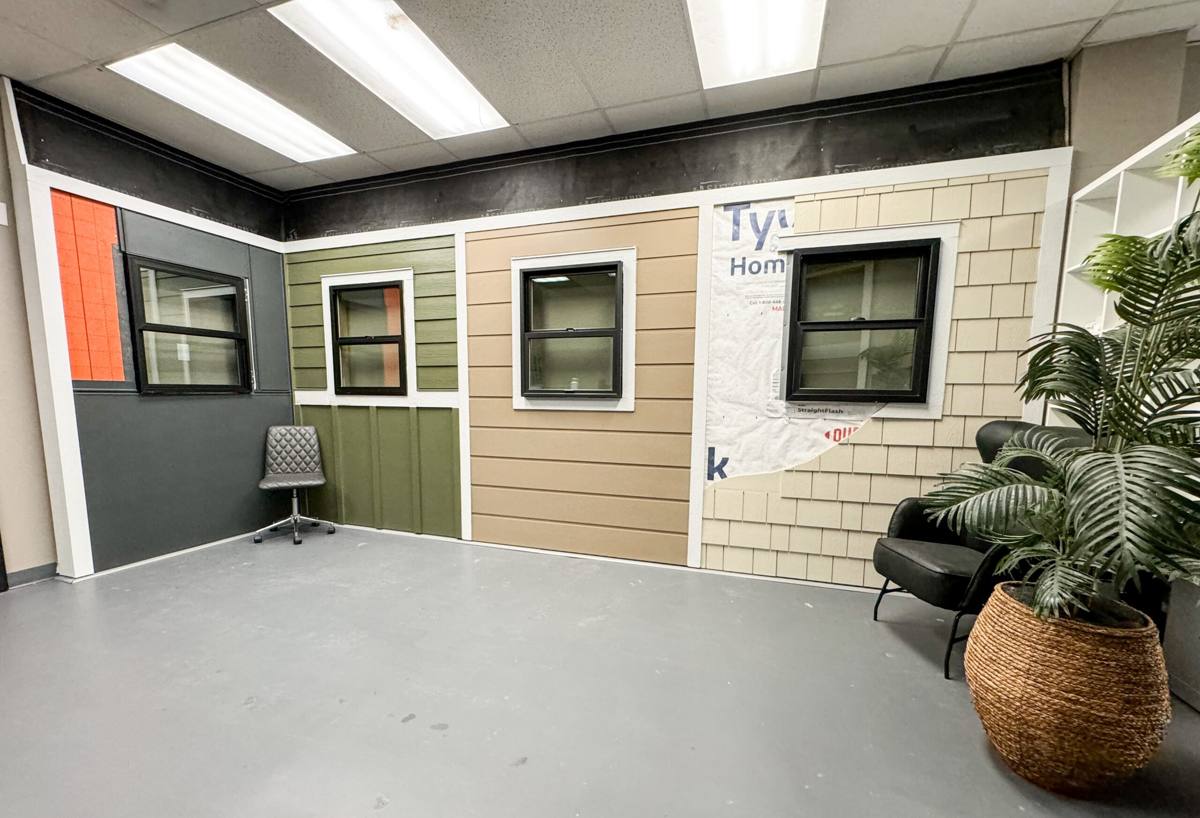
Signs Your Downtown Sarasota Home Needs Siding Replacement
Not every siding problem calls for a full replacement — but in this climate, waiting too long on the wrong issue turns a siding job into a framing and drywall job. Here's what to look for before scheduling an inspection:
- Visible warping, bowing, or buckling panels, especially on the sides of the house that take the most sun and wind
- Soft spots or a spongy feel when you press on siding near the bottom of walls or below windows
- Paint that's chalking, peeling, or fading unevenly panel to panel
- Persistent staining or dark streaking that doesn't clean off, which can indicate moisture trapped behind the siding
- Cracked or missing caulk at joints, corners, and window trim
- Visible fastener corrosion (rust streaks running down from nail or screw heads)
- A musty smell in interior rooms along an exterior wall, or unexplained interior humidity
- Siding that's original to a home built before current Florida wind-code standards were adopted
What a Correct Siding Replacement Job Actually Involves
Siding replacement is more than swapping old panels for new ones. In a coastal wind and moisture environment like downtown Sarasota, the parts you don't see matter as much as the finished look.
Tear-Off and Inspection
Every job should start with full removal of the old siding and a real inspection of the sheathing underneath — not a patch-and-cover approach. This is the only point where hidden rot, prior water intrusion, or undersized framing can be caught and fixed before it's sealed behind new material.
Moisture Barrier and Flashing
A continuous weather-resistive barrier, properly lapped and taped at seams, and correctly integrated flashing at windows, doors, and penetrations, is what actually keeps wind-driven rain out. This layer is invisible in the finished product but is the single biggest factor in whether a home stays dry through storm season.
Fastening to Florida Wind-Code Specification
Fastener type, spacing, and embedment have to match both the manufacturer's installation instructions and the wind-load requirements for the specific exposure category of the home's location. This is not a place to generalize — a downtown lot with open exposure to the bay may call for tighter fastener spacing than a similar house shielded by mature trees or neighboring buildings.
Finish and Trim Details
Corner boards, window and door trim, and caulking at every joint need to be sealed with products rated for continuous UV and salt exposure, not general-purpose caulk that will crack within a season or two.
Why We Install Only James Hardie Fiber Cement Siding
We standardized on James Hardie fiber cement siding and don't install vinyl, LP SmartSide, or other engineered wood or fiber cement alternatives. That's a deliberate call based on how these products actually perform in a Gulf Coast climate over time, not a sales preference.
| Material | How It Handles Sarasota's Climate |
|---|---|
| James Hardie fiber cement | Non-combustible, engineered moisture and climate-specific HZ product lines, factory ColorPlus finish holds color under intense UV, resists moisture-driven swelling |
| Vinyl siding | Can warp or distort in sustained high heat, more prone to wind uplift at panel edges in storm-force gusts, color is baked into thin material that can fade and become brittle over time |
| Engineered wood (e.g. LP-type products) | Wood-based core is more sensitive to sustained moisture exposure; performance depends heavily on unbroken factory coating and correct field sealing at every cut edge |
| Cedar or primed spruce | Natural wood requires ongoing repainting and sealing to resist humidity, salt air, and UV; higher long-term maintenance burden in this climate |
James Hardie's HZ5 line is engineered specifically for high-humidity, moisture-prone climates like Florida's, and the ColorPlus factory finish is formulated to resist the fading that intense, near-constant UV causes in field-painted or thinner factory finishes. Fiber cement is also non-combustible, which matters for a material that's going to sit in direct Florida sun and occasional lightning-driven brush fire risk for decades. None of this means other products are without merit — vinyl is inexpensive and low-maintenance in mild climates, and engineered wood can look good when perfectly maintained. But installed correctly, Hardie holds up to hurricane wind, UV, wind-driven rain, and salt air better over a 20-30 year horizon than the alternatives we chose not to carry, and it comes with a strong transferable warranty backing that performance.
Our Siding Replacement Process
- On-site inspection and estimate — we walk the home, check current siding condition, sheathing access points, and note any storm or moisture history
- Written scope and product selection — HZ5 panel or plank style, ColorPlus color, trim details, all specified in writing before work starts
- Permitting — we handle the Sarasota County/City of Sarasota permit and wind-load documentation the job requires
- Tear-off and sheathing inspection — old siding removed, sheathing checked and repaired if needed before anything new goes on
- Weather barrier and flashing installation — continuous barrier, properly lapped, flashed at every penetration
- Hardie installation to spec — fastener pattern and spacing set to the home's wind exposure, not a generic default
- Trim, caulking, and final inspection — sealed to coastal-grade standard, walked with the homeowner before we call it done
Cost Factors for Siding Replacement in Downtown Sarasota
Every home is different, so we don't publish flat pricing, but these are the variables that most affect what a job costs:
| Factor | Why It Matters |
|---|---|
| Home size and wall complexity | More corners, dormers, and trim details mean more labor and cut waste |
| Current siding condition | Hidden sheathing rot found at tear-off adds repair scope beyond siding alone |
| Sheathing and moisture barrier needs | Older downtown homes may need barrier or sheathing upgrades to meet current code |
| Panel style and color | Lap plank vs. panel siding, and standard vs. premium ColorPlus colors, price differently |
| Wind-exposure category of the lot | Fastener spacing requirements tighten with exposure, affecting labor time |
| Permitting and code requirements | Sarasota County's high-velocity hurricane zone rules add documentation and inspection steps |
Why Hiring a Crew That Already Works Downtown Sarasota Matters
Siding installation is one of those jobs where local knowledge shows up in details a homeowner never sees but definitely feels later. A crew that regularly works downtown Sarasota already knows the county's permitting process and wind-load documentation requirements, understands how exposure varies between a lot open to the bay and one tucked behind neighboring homes, and has already dealt with the mix of older framing and newer construction common to the area. That familiarity shortens the permitting timeline, reduces surprises at tear-off, and means the fastening and flashing details are set correctly the first time instead of adjusted after an inspection flag.
It also matters for warranty protection. James Hardie's transferable warranty depends on correct installation to their specification — a crew unfamiliar with Florida's wind-code requirements or coastal moisture detailing can unintentionally void warranty coverage even while using the right material.
What to Ask Before Hiring a Siding Contractor
- Are you licensed and insured to do exterior work in Sarasota County?
- Are you a certified James Hardie installer, and can you explain the fastening spec you'll use for my home's wind exposure?
- Will you pull the required permits, and who handles the wind-load documentation?
- What does your moisture barrier and flashing detail look like at windows and corners?
- Can I get the full scope of work, materials, and color selections in writing before the job starts?
- How do you handle sheathing repair if you find rot at tear-off?
Ready for a Straight Answer on Your Siding?
If your downtown Sarasota home's siding is showing its age or you're just planning ahead of the next storm season, we're happy to take a look and give you a clear, no-pressure assessment of what it actually needs. Fill out the form below for a free estimate.