 Sarasota Window
 Why Siding Choice Matters More in Ellenton Than Most Places
Ellenton sits in a stretch of Florida's Gulf Coast where the exterior of a house works harder than it does almost anywhere else in the country. Between hurricane-season wind loads, wind-driven rain that gets forced sideways into wall assemblies, months of intense subtropical UV exposure, and a steady drift of salt air off the coast, siding here doesn't get a break. Materials that hold up fine in a drier, milder climate can start showing problems within a few years of installation in this area. That's why the siding decision for an Ellenton home isn't just about appearance — it's a structural and moisture-management decision with real consequences if it's made poorly.
What the Local Climate Actually Does to Siding
Wind-driven rain is the biggest threat most homeowners underestimate. During tropical storms and the seasonal downpours common to this part of Florida, rain doesn't just fall — it's pushed horizontally against walls, seams, and penetrations. If the siding system behind the visible surface isn't properly built, water finds its way behind panels and into sheathing. Add in constant UV breakdown of surface finishes and the corrosive effect of salt air on fasteners and coatings, and it's easy to see why siding that isn't engineered for coastal conditions tends to fail early — fading, cupping, cracking, or holding moisture against the wall assembly long enough to cause rot.
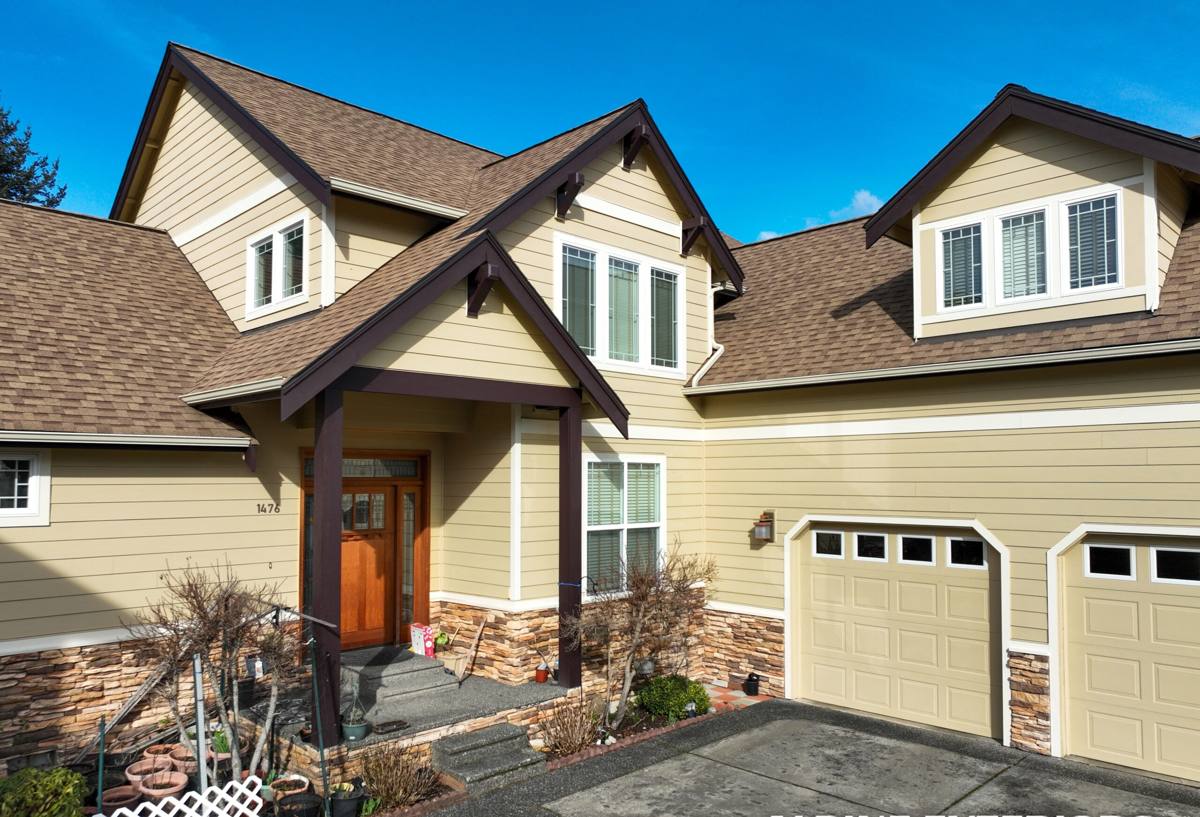
What a Correct Fiber Cement Siding Job Involves
Fiber cement siding — specifically James Hardie's engineered product lines — is built to resist moisture, hold paint, and stand up to wind in a way that other common siding materials struggle to match. But the material is only half the equation. A correct installation depends just as much on what happens underneath and around the panels.
The Details a Correct Installation Gets Right
- A continuous, properly lapped water-resistive barrier installed over the sheathing before any siding goes up
- Flashing at every window, door, and roof-wall intersection, including kick-out flashing where a roofline meets a wall
- Correct fastener type, spacing, and penetration depth so panels are secured to withstand regional wind loads without over-driving or under-driving nails
- Proper clearance between the bottom of the siding and grade, roofing, decks, or patios to keep the material out of standing water and splash-back
- Sealed and painted cut edges — factory-finished panels are engineered to resist moisture on the face, but a raw cut edge left unsealed is a weak point
- Correct joint treatment and caulking that matches the ColorPlus finish rather than a mismatched, ordinary exterior caulk
Skipping any one of these steps doesn't usually cause an immediate, visible problem. It shows up two or three years later as a soft spot near a window, a stain at a butt joint, or a section of siding that's absorbing moisture it was never supposed to see. That's the gap between a siding job that looks right on installation day and one that's actually built to perform through Ellenton's weather over the long run.
James Hardie Compared to Other Siding Materials
We install James Hardie fiber cement exclusively — not vinyl, not engineered wood products like LP SmartSide, not primed spruce or cedar. That's a deliberate standard, not a default. Here's an honest comparison of how these materials perform in a coastal, hurricane-exposed climate like Ellenton's.
| Material | Moisture Behavior | Wind/Impact Resistance | Long-Term Maintenance |
|---|---|---|---|
| James Hardie fiber cement | Non-combustible, engineered to resist moisture-related swelling and rot when installed to spec | Rated for high-wind installation per manufacturer specs | ColorPlus finish holds color for years; occasional caulk inspection |
| Vinyl siding | Doesn't rot, but can warp or buckle under heat and isn't a water barrier itself | Can crack or blow off in high wind, especially with age or brittleness from UV | Low maintenance but fades and becomes brittle over time in strong sun |
| Engineered wood (e.g. LP SmartSide) | Wood-based core is vulnerable to swelling and edge deterioration if moisture reaches it | Generally solid when new, but performance depends heavily on flawless installation and sealing | Requires diligent caulk and paint upkeep, especially at cut edges and joints |
| Primed spruce or cedar | Natural wood; absorbs moisture readily and is prone to rot in humid, salt-air climates without constant upkeep | Moderate; more susceptible to splitting and warping over time | Highest maintenance burden — regular repainting and moisture monitoring |
We're not saying these other products are junk — vinyl and engineered wood both have legitimate uses and loyal installers. But for a climate that combines hurricane wind exposure, relentless UV, and salt air, we've made the professional call that fiber cement gives Ellenton homeowners the best combination of durability, moisture resistance, and low long-term maintenance. That's why it's the only product we put our name behind.
Our Fiber Cement Siding Process for Ellenton Homes
- Inspection and moisture check. We look at the existing siding, sheathing, and trim to identify hidden rot, past water intrusion, or areas that need repair before new siding goes on. Covering up a compromised wall assembly with new siding just hides the problem.
- Scheduling around weather. Wall assemblies have to stay dry during the open phase of a siding job, so we plan the tear-off and dry-in sequence around Florida's rain patterns rather than rushing through it.
- Removal and sheathing repair. Old siding comes off, and any damaged sheathing or framing is repaired before anything new goes up.
- Water-resistive barrier and flashing. A continuous barrier and properly lapped flashing go in at every penetration — windows, doors, vents, and roof intersections — before a single piece of Hardie siding is installed.
- Panel and plank installation. James Hardie siding is installed per manufacturer specifications and fastening schedules appropriate for this region's wind exposure.
- Finish work. Cut edges are sealed and touched up, joints are caulked with a compatible product, and trim details are completed.
- Final walkthrough. We go over the finished job with the homeowner before calling it done.
Signs an Ellenton Home May Need New Siding
- Visible cracking, warping, or buckling in current siding panels
- Soft spots when pressing on siding near the base of the wall, around windows, or near roof-wall intersections
- Peeling paint or discoloration that keeps returning shortly after repainting
- Gaps or separation at seams and corner trim
- A musty smell or visible staining on interior walls that share an exterior wall
- Siding that's more than 20-25 years old, especially if it's a material not engineered for coastal wind and moisture exposure
Any one of these on its own might be minor. Several together usually mean the siding system — not just the surface — has been compromised.
What Drives the Cost of a Fiber Cement Siding Project
Every home is different, and we'd rather walk a property and give an honest number than throw out a generic price. That said, these are the main factors that move a fiber cement siding project up or down in cost:
| Factor | How It Affects Cost |
|---|---|
| Home size and number of stories | More square footage and multi-story access both increase labor and material needs |
| Condition of existing sheathing | Hidden rot or water damage found during removal adds repair work before new siding can go on |
| Siding profile and trim complexity | Lap siding, shingle-style panels, and detailed trim packages each involve different labor and material amounts |
| Removal of existing siding | Tear-off and disposal of old material adds time compared to installing over a bare or prepped wall |
| Color and finish selection | Factory ColorPlus finishes vs. field-painted siding carry different material costs |
Living With Fiber Cement Siding After Installation
One of the appeals of James Hardie siding is how little it asks of a homeowner once it's installed correctly. A rinse with a garden hose a couple of times a year removes salt residue and general grime — a real consideration this close to the coast. ColorPlus finishes are engineered to hold their color far longer than field-applied paint, so repainting isn't a recurring chore the way it is with wood siding. The main thing worth checking periodically is the caulking at joints and trim — caulk is the one component that wears out well before the siding itself, and catching a failed bead early prevents moisture from finding its way behind the panels.
Why It Matters to Hire a Crew That Already Works in Ellenton
Siding installation done to a national average standard isn't necessarily installation done right for this specific area. A crew that regularly works in and around Ellenton understands the wind exposure this stretch of the Gulf Coast sees, knows what fastening schedules and flashing details actually hold up here, and is familiar with the local permitting and inspection process. That local experience shows up in the details — the flashing at a roof-wall tie-in, the fastener pattern that accounts for storm-season wind, the clearance left at grade. It also means that if a warranty question or a post-storm concern comes up years down the road, you're not trying to track down a crew that installed a handful of jobs in the area and moved on.
If you're weighing your options for siding in Ellenton, we're happy to take a look at your home and talk through what it actually needs — no pressure, no sales script. Fill out the form below and we'll set up a free estimate.