 Sarasota Window
 Why University Park Siding Has to Work Harder
University Park sits inland from the immediate Gulf shoreline, but that doesn't mean the siding on its homes gets an easier climate to deal with. Sarasota County's Gulf Coast weather doesn't stop at the waterline — salt-laden air travels well inland on prevailing breezes, the sun here is among the most intense in the country nearly year-round, and any hurricane or tropical system that tracks through the area brings the same wind-driven rain and structural wind loads to University Park that it brings to homes closer to the water. Add in Florida's humidity, which sits high for most of the year, and you have a climate that tests siding constantly, not just during storm season.
That combination is exactly why generic siding, or siding installed to a generic standard, tends to underperform here. This page covers what University Park homes actually need from their siding, what a correct fiber cement installation involves in this climate, and why a crew that already works this community — rather than one learning the area on your project — matters for a job that's supposed to last decades.
What This Climate Actually Does to Siding
UV and Heat Exposure
Sarasota County gets sun exposure most of the year, and a home's siding takes that load directly, with no shade canopy protecting most of the wall surface for large parts of the day. Cheaper or poorly engineered siding materials chalk, fade, or degrade under that kind of sustained UV exposure. Paint finishes applied on-site are especially vulnerable, since a field-applied coating doesn't cure the same way a factory finish does, and it's usually the first thing to show wear.
Wind-Driven Rain
Straight-down rain is manageable for almost any siding product. Wind-driven rain, which Florida's storm systems produce regularly, pushes water sideways and upward into laps, seams, and any gap in the water-resistive barrier behind the siding. A siding system that isn't installed with the right overlaps, flashing, and moisture barrier will let that water find its way behind the wall, where it causes damage long before it's visible from the outside.
Hurricane-Force Wind
Wind load isn't a theoretical design factor here — it's a real condition the siding, fasteners, and underlying wall assembly need to be sized and installed for. Under-fastened siding or the wrong fastener pattern can pull loose or fail entirely in sustained high wind, and once one section fails, wind and rain get behind the rest of the wall.
Humidity and Moisture Cycling
Florida's humidity means siding is rarely fully dry, and materials that absorb moisture swell, warp, or begin breaking down from the inside. A siding product's ability to shed water and resist moisture absorption matters more here than it does in a drier climate, and it's a bigger factor in long-term performance than most homeowners realize when they're comparing options mainly on upfront price.
Why We Install Only James Hardie Fiber Cement
We install James Hardie fiber cement siding exclusively. We don't install vinyl, LP SmartSide, Cemplank, Allura, primed spruce, or cedar, and that's a deliberate standard, not a limitation in what we're capable of installing. Fiber cement is non-combustible, doesn't absorb moisture the way wood-based products do, and holds up to sustained UV exposure better than vinyl, which can warp, fade, or become brittle over years of Florida sun.
James Hardie's ColorPlus finish is baked on at the factory under controlled conditions, rather than painted on-site, which means better color consistency and adhesion than a field-applied finish typically achieves. James Hardie also engineers its HZ product lines by climate zone — the HZ5 formulation used in Florida is built specifically to resist the moisture and humidity conditions of this region, rather than using a one-size-fits-all product across the whole country. That climate-specific engineering, combined with a strong transferable warranty, is a meaningful part of why we standardized on this one product rather than offering several siding brands.
We're upfront that other products have real advantages in certain situations — vinyl is inexpensive and low-maintenance, for instance. But we've made a professional judgment, based on how these products perform over years in this exact climate, that fiber cement done correctly gives University Park homeowners the best combination of durability, appearance, and long-term value, and we'd rather install one product well than several products adequately.
What a Correct Fiber Cement Installation Involves
The siding boards themselves get most of the attention, but the details behind and around them are usually what determine whether a fiber cement job holds up in this climate or starts causing problems within a few years. A correct installation for University Park conditions includes:
- A continuous water-resistive barrier installed behind the siding, with all seams properly lapped and sealed
- Correct fastener type, length, and spacing, matched to James Hardie's published specifications for the wind zone and board profile being used
- Proper flashing at every window, door, and roofline penetration, since these transition points are where wind-driven rain most often finds a way in
- Correct board overlap and gapping, sized for Florida's humidity and thermal movement rather than a generic national spec
- Factory-cut and factory-primed edges wherever possible, with any field cuts sealed per manufacturer requirements
- Proper caulking at joints and trim, using a product rated for exterior use and UV exposure, not a generic caulk
- Ventilation detailing that allows any incidental moisture behind the siding to dry out rather than getting trapped
Skipping any one of these rarely causes a visible problem on move-in day. It shows up years later, as a soft spot behind a window, a stained seam, or siding that's pulled loose in a storm — the kind of failure that traces back to an installation shortcut, not the product itself.
How Our Process Works
We start with a walk of the home to assess the existing siding or sheathing condition, look at sun exposure and drainage around the foundation, and talk through which James Hardie product line and profile fits the home's style — lap siding, shingle-style panels, and vertical or board-and-batten options all read differently on different home styles, and University Park includes a range of architectural styles worth matching thoughtfully rather than defaulting to whatever's fastest to install.
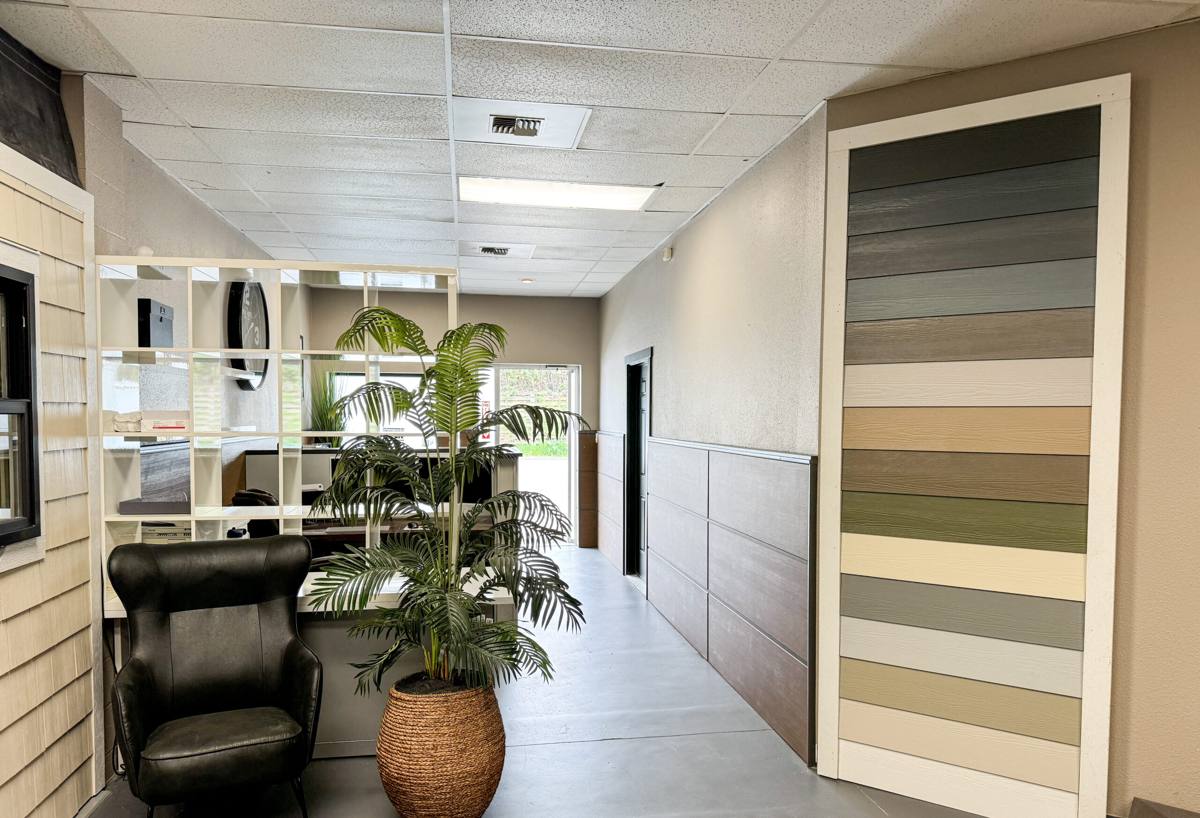
From there we handle the color selection from James Hardie's ColorPlus palette, confirm any permitting needed through Sarasota County, and schedule the tear-off and installation. If your home is part of a community with an HOA — as many planned communities in the University Park area are — we'll work with you to make sure the product, profile, and color selections fall within whatever exterior guidelines your association has in place, so approval isn't a last-minute scramble. Installation follows the sequence above: moisture barrier and flashing first, then the siding itself, then trim and caulking, with a final walkthrough so you know exactly what maintenance the finished product actually needs.
Fiber Cement Compared to Other Siding Materials
| Material | UV & Heat Resistance | Moisture Behavior | Wind Performance | Maintenance |
|---|---|---|---|---|
| James Hardie fiber cement | Strong — factory ColorPlus finish resists fading | Doesn't absorb moisture like wood-based products | Rated and installed to wind zone specs | Occasional washing; no repainting on ColorPlus finishes |
| Vinyl siding | Moderate — can fade, warp, or become brittle over time in intense sun | Doesn't absorb moisture, but seams can allow water intrusion | Can crack or blow off in high wind if under-fastened | Low; periodic washing |
| LP SmartSide (engineered wood) | Moderate with proper finish upkeep | Wood-based; more sensitive to sustained moisture exposure than fiber cement | Adequate when installed correctly | Periodic inspection and finish maintenance |
| Cedar siding | Fades and grays without regular finish upkeep | Absorbs moisture; prone to rot without diligent maintenance | Adequate when installed correctly | Regular staining or sealing required |
| Primed spruce/wood panels | Weak — prone to sun damage without a strong maintained finish | Absorbs moisture readily; most vulnerable to rot of the group | Adequate when installed correctly | Highest — frequent repainting and inspection |
Living With Fiber Cement Siding in University Park
One of the real advantages of fiber cement is how little it asks of you once it's installed correctly, but "low-maintenance" isn't "no-maintenance." A short seasonal routine keeps it performing the way it's designed to:
- Rinse the exterior periodically to clear pollen, dust, and any airborne residue before it builds up on the finish
- Inspect caulk lines at trim and joints once a year, and have any cracked or separated caulking redone before it becomes a water entry point
- Check for any siding that's come loose or shifted after a significant storm, since a small fastener issue is far cheaper to fix than the water damage it can lead to
- Keep sprinklers and irrigation heads aimed away from the siding, since repeated direct wetting can accelerate wear at that spot even on a moisture-resistant product
- Trim landscaping back from the walls so air can circulate and siding can dry fully after rain
Why Hiring a Crew That Already Works University Park Matters
A contractor who mostly works elsewhere in Sarasota County can still install fiber cement siding competently, but University Park has specifics that come up less often on a generic job — HOA design and color review processes, the particular mix of home styles across the community, and the fact that homes here, like the rest of the county, are subject to the same wind-load and moisture demands whether they're a mile from the water or several. Working this community regularly means we're not learning those requirements for the first time on your house. We know how to size fastening for local wind zones, what HardieZone HZ5 products actually need to hold up to Sarasota County humidity, and how to keep a job moving through an HOA approval process without unnecessary delays.
That familiarity also means straight answers: what your existing siding's condition actually tells us, what product and profile genuinely fits your home, and what a job like yours should reasonably cost, without the upsell.
Get a Straight Answer About Your Siding
Whether your current siding is showing its age, you're planning ahead for a full replacement, or you just want an honest assessment of what your University Park home needs, we're glad to walk the property with you and lay out the options plainly. Reach out below for a free, no-pressure estimate.