 Sarasota Window
 Building a Deck That Actually Holds Up in Fruitville
Fruitville sits inland from the coast but still lives under the same Gulf-influenced weather that defines Sarasota County: long stretches of intense UV exposure, heavy summer humidity, wind-driven rain that comes in sideways during storms, and the kind of hurricane-force gusts that put real load on anything attached to a house. A deck built with materials or fasteners meant for a milder climate will start showing problems fast here — cupped boards, rusted hardware, loose railings, ledger boards pulling away from the house. A deck built correctly for this area is a different thing entirely, and it starts with decisions most homeowners never see: what's under the boards, not just what's on top of them.
This page is about one job in one area: custom deck construction for Fruitville homes. Not a general overview of decks everywhere — what actually matters when you're building on Sarasota County soil, under Sarasota County code, in weather that doesn't give lumber or hardware any breaks.
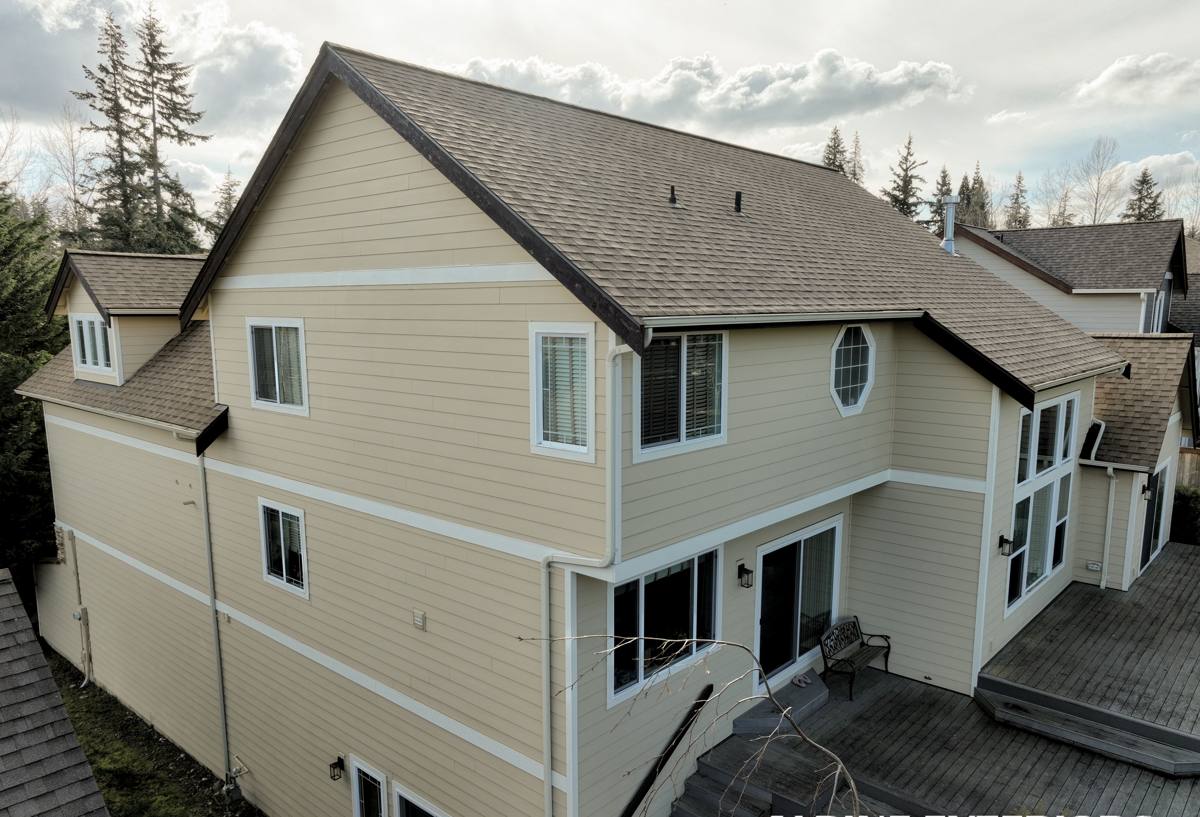
What a Correctly Built Custom Deck Involves
A deck is a structure, not a surface. The decking boards are the part you walk on and look at, but they're the last thing installed, not the most important thing. A deck that's going to last in this climate needs every layer done right:
- Footings sized for local soil and frost-free depth requirements — undersized or shallow footings are one of the most common causes of a deck that shifts or settles within a few years.
- A properly flashed ledger board where the deck attaches to the house, so wind-driven rain doesn't work its way behind the siding and rot the rim joist.
- Joists and beams sized to the actual span and load, not just "what's usually fine," with hardware rated for the fastener and wood combination being used.
- Corrosion-resistant structural connectors at every joist hanger, post base, and ledger bolt — humidity and salt-laden air degrade standard hardware faster than most homeowners expect.
- Railings and stair systems built to code, not just to look right, since these are the components most likely to be tested during an inspection or, worse, during actual use.
Skip or shortcut any one of these and the finished deck can still look great on day one. The failures show up later, usually after the first hard storm season or two, and by then the fix often means tearing into framing that should have been done right the first time.
Choosing Decking Material for Sarasota County's Climate
There's no single "best" decking material — there's a best material for how a specific homeowner wants to use and maintain the deck. Here's how the common options actually perform under Florida sun, humidity, and storm exposure:
| Material | UV / Heat Behavior | Moisture Resistance | Maintenance |
|---|---|---|---|
| Pressure-treated wood | Fades and can gray within a season without sealing; surface heats up but stays workable underfoot | Resists rot when properly treated and sealed, but end grain and fastener holes are vulnerable points | Needs re-sealing every 1–2 years in this climate to control cracking, splintering, and moisture intrusion |
| Capped composite | Color-stable in intense UV; some lighter colors stay noticeably cooler underfoot than dark composites or wood | Excellent — the cap layer resists moisture absorption, mildew, and salt-air staining | Occasional washing; no sealing or staining required |
| PVC / cellular decking | Very stable in sun and heat; some products can run hotter to the touch in direct afternoon sun | Fully impervious to moisture and rot — no wood content at all | Lowest maintenance of the three; periodic cleaning only |
We install all three, and we'll tell you honestly which one fits your budget, how much upkeep you actually want to commit to, and how the deck will be used. Wood costs less up front but asks more of you over time. Composite and PVC cost more initially but are built for exactly the conditions Sarasota County throws at an outdoor structure — that's a trade-off worth talking through before you decide, not after.
A Note on Fasteners and Trim, Not Just Decking
The decking material gets most of the attention, but the fasteners, trim boards, and railing components matter just as much for how the deck ages. Mixing a premium composite deck with standard-grade screws or trim is a common shortcut that undercuts the whole investment — the hardware corrodes or the trim fails long before the decking itself would have.
Framing, Fasteners, and Hardware: The Part Nobody Sees
Once the decking is down, the framing underneath is invisible — which is exactly why it's the part most likely to get cut corners on a lower-bid job. In a climate with wind-driven rain and salt-influenced humidity, we treat the substructure as the part that determines whether the deck is still solid in ten years, not just whether it passes inspection on day one:
- Stainless steel or heavy hot-dip galvanized fasteners throughout — standard coated screws corrode faster in humid, salt-influenced air than most homeowners realize.
- Joist tape or flashing over the top of every joist to keep moisture out of fastener penetrations, a detail that's easy to skip and impossible to fix later without pulling the decking.
- Hurricane ties and structural connectors at ledger and post connections, sized for the wind loads Sarasota County code actually requires.
- Post bases that keep structural wood off ground contact and standing water, rather than burying posts directly in concrete or soil.
None of this is visible once the project is finished. It's also exactly what separates a deck that needs re-decking in eight years from one that just needs a wash.
Permits, Wind Load, and Sarasota County Code
Decks attached to a house, or built above a certain height, require a permit in Sarasota County, and inspections happen at specific points in the build — typically footings, framing, and final. The structural requirements aren't arbitrary paperwork; they reflect the real wind loads a structure needs to survive in this part of Florida, including uplift forces on railings and ledger connections during high-wind events.
Skipping permits is sometimes offered as a way to save time or money. It's a bad trade. An unpermitted deck can complicate a home sale, create insurance issues, and in some cases has to be torn out or retrofitted to pass a later inspection. We pull permits, schedule inspections, and build to the load requirements Sarasota County actually enforces — not the minimum someone might be able to get away with.
Our Process, From Estimate to Finished Deck
- On-site visit. We walk your property, look at the house's structure where the deck will attach, discuss how you'll use the space, and talk through material options and budget honestly.
- Design and proposal. You get a clear layout, material selections, and a written scope — no vague allowances that turn into surprise costs mid-project.
- Permitting. We handle the permit application and engineering documentation where required, so you're not the one navigating county paperwork.
- Construction. Footings and framing first, inspected before decking goes down; then decking, railings, stairs, and trim.
- Final walkthrough. We go over the finished deck with you, including what maintenance (if any) the material you chose actually needs.
Keeping Your Deck in Shape Through Florida's Seasons
Even a well-built deck benefits from some regular attention in this climate. What that attention looks like depends heavily on the material you chose:
- Rinse the deck surface periodically to clear pollen, salt residue, and organic debris before it stains or feeds mildew growth.
- Check railing posts and stair connections once or twice a year for any looseness, especially after a named storm passes through.
- For wood decking, plan on re-sealing every 1–2 years — UV exposure here breaks down unsealed wood faster than in cooler, less sun-intensive climates.
- Keep gutters and downspouts near the deck clear so runoff isn't dumping directly onto footings or framing.
- Trim back landscaping that traps moisture against ledger boards or framing members.
- After any major storm, do a quick visual check of fasteners, railings, and the ledger connection before resuming normal use.
Why a Crew That Already Works in Fruitville Matters
Building codes, permitting timelines, and inspection expectations vary by jurisdiction, and Sarasota County has its own process. A crew that already works in and around Fruitville knows what the local permitting office expects, what inspectors actually check, and how to size a structure for the wind and moisture conditions specific to this area — not a generic national code minimum. That familiarity translates into fewer surprises, fewer inspection delays, and a deck that's built for the climate it actually has to survive, not a climate somewhere else.
It also means we're not guessing at soil conditions, typical lot layouts, or how houses in this area are typically framed where the ledger board attaches. That local knowledge shows up in the details — the ones that determine whether a deck is still solid a decade from now.
If you're planning a custom deck for your Fruitville home, we're glad to walk the site, talk through material and budget options honestly, and put together a clear estimate. There's no pressure and no obligation — just fill out the form below to get started.