 Sarasota Window
 Rosemary District Homes Face Sarasota's Toughest Elements Head-On
Rosemary District sits just north of downtown Sarasota, close enough to the bay that salt air is a daily fact of life, not an occasional one. The neighborhood's mix of century-old bungalows and newer infill homes and townhomes means we see a wide range of exterior conditions on every street — original wood siding that's been patched for decades, older replacement siding that never should have gone up in the first place, and newer builds already showing wear from a climate that doesn't give exterior materials any slack. Whatever the age of the home, the siding on it is doing the same job: standing between the house and a coastal Florida environment that is genuinely hard on building materials.
We install James Hardie fiber cement siding exclusively, and this page is about what that means specifically for homes in Rosemary District — not a generic pitch, but a straight look at what this neighborhood's climate demands, what a correct installation actually involves, and why the crew doing the work matters as much as the product itself.
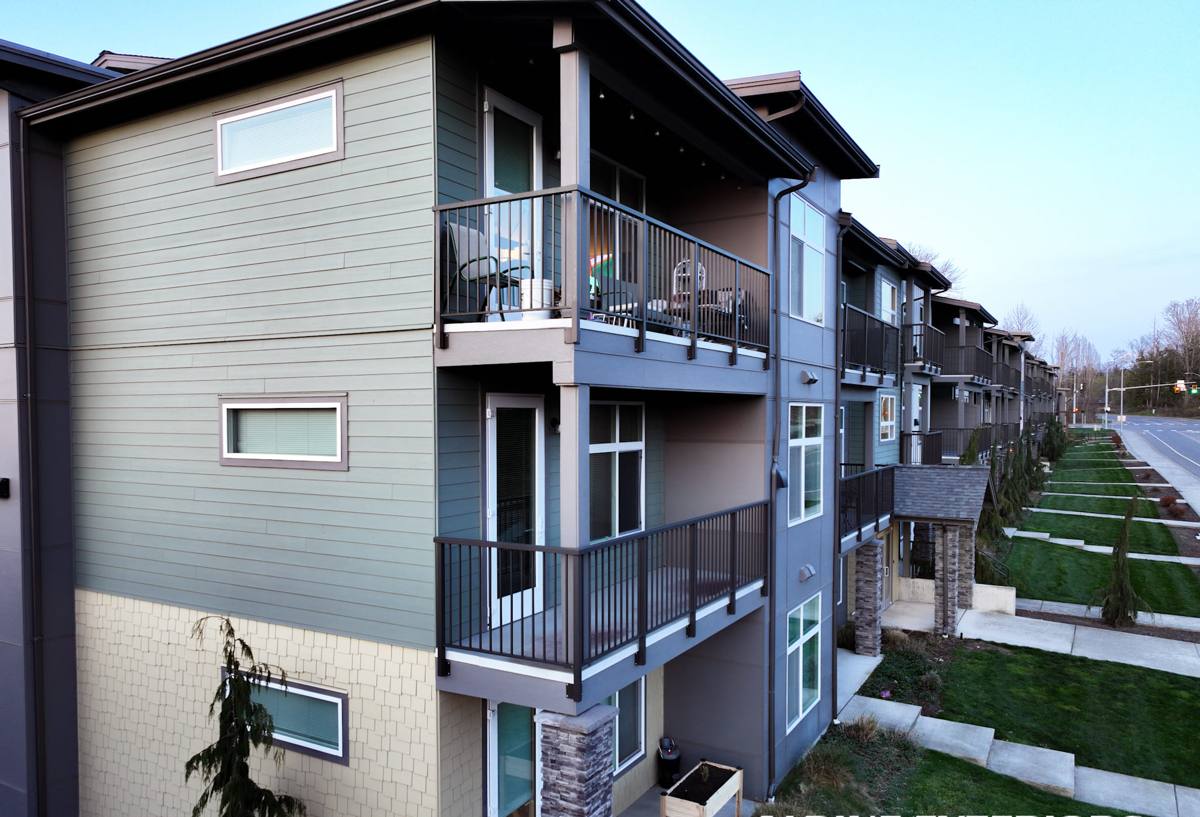
What Sarasota County's Climate Does to Exterior Siding
Southwest Florida doesn't have a mild season for siding. Every material on a Rosemary District home is dealing with several stresses at once, year-round, not just during storm season.
Hurricane-Force Wind Loads
Sarasota County sits in a high-wind coastal zone, and siding has to be fastened and rated to handle sustained hurricane-force gusts without lifting, cracking, or peeling away from the wall. This isn't a one-time event to plan around — it's a standing requirement that shapes fastener spacing, clearances, and which siding product goes on the house in the first place.
Year-Round UV Exposure
Florida's sun is intense in every month of the year, not just summer. Constant UV exposure breaks down pigments and surface coatings over time, which is why so many older or lower-grade siding products fade unevenly, chalk, or need repainting well before a homeowner expects to spend money on it again.
Wind-Driven Rain
It's rarely just rain here — it's rain pushed sideways by wind, driven into seams, laps, and trim joints that a calm-weather rainstorm would never reach. Siding and flashing details that work fine in most of the country can fail in this environment if they weren't designed and installed with wind-driven rain specifically in mind.
Salt Air Corrosion
Being close to Sarasota Bay means salt is in the air every day, settling on siding surfaces and working into fasteners, trim, and any exposed metal. Over years, that steady salt exposure accelerates corrosion and deterioration in materials and hardware that aren't rated for it.
Why James Hardie Is the Right Fit for This Neighborhood
James Hardie fiber cement siding was engineered specifically for climates like this one. It's non-combustible, doesn't rot or delaminate the way wood-based and wood-composite products can when they take on repeated moisture, and its ColorPlus factory finish is baked on and warranted against fading in a way that field-applied paint simply isn't. For a neighborhood like Rosemary District — where you've got historic-style bungalows sitting near modern new-construction homes — Hardie also offers the flexibility to match either look: traditional lap profiles that suit an older bungalow, and cleaner panel systems that suit a newer, more contemporary build. That range matters here in a way it wouldn't in a neighborhood of one architectural style.
James Hardie also builds climate-specific product lines, and homes in this part of Florida should be installed with the HZ5 line, engineered for higher humidity, more intense sun, and greater moisture exposure than Hardie's standard-climate products. Installing the wrong regional line — or installing the right product without following Hardie's spec — is one of the most common ways a siding job underperforms in a coastal environment, regardless of how good the material itself is.
What a Correct James Hardie Installation Actually Involves
The product is only half the equation. A James Hardie installation that will actually hold up in Sarasota County requires:
- Correct clearance between the bottom edge of the siding and grade, roofing, decks, and patios, so water doesn't wick up into the board
- Proper fastener type, length, and spacing, matched to the wind zone and substrate — not just "however many nails hold it up"
- Flashing installed at every window, door, and penetration, sequenced so water sheds outward instead of behind the siding
- A weather-resistant barrier behind the siding, installed and lapped correctly, not just present
- Correct joint and butt-seam treatment, including factory-recommended caulking or gapping, so panels can move without cracking the finish
- ColorPlus finish handled carefully during installation and cutting, since field-cut edges need to be treated to keep the factory warranty intact
Skip or shortcut any one of these, and you can end up with James Hardie material on the wall that still fails early — trapped moisture, cracked caulk lines, streaking, or fastener corrosion — none of which is the product's fault. It's an installation problem, and it's the single biggest reason Hardie siding jobs vary so much in how they hold up.
Our Process, Start to Finish
We approach every Rosemary District project the same methodical way:
- Assessment. We inspect the existing siding, sheathing, and any water damage or rot before quoting anything, so the estimate reflects the actual condition of your home, not a guess.
- Prep and tear-off. Old siding and trim come off, and we check the sheathing underneath for damage that needs to be addressed before anything new goes up.
- Weather barrier installation. A properly lapped moisture barrier goes on before any siding, giving the wall assembly a real second line of defense against wind-driven rain.
- Siding installation to Hardie's HZ5 spec. Clearances, fastening, and flashing are done to manufacturer specification, not shortcuts, because that's what keeps the product warranty valid and the wall dry.
- Trim, caulking, and finish detail. Joints, corners, and penetrations get finished correctly so the home looks clean and performs the way it's supposed to in heavy weather.
- Final walkthrough. We go over the finished job with you directly so you know what was done and why.
Why Hiring a Crew That Already Works in Rosemary District Matters
Installation quality is only part of the story — local familiarity matters too. A crew that regularly works in this part of Sarasota already understands the City of Sarasota's permitting and inspection expectations, knows how to work respectfully on tight urban lots near older homes and newer construction sitting side by side, and has already made the calls on wind-zone fastening and flashing details that this specific coastal exposure demands. That's a different starting point than a crew installing Hardie for the first time in an unfamiliar wind zone, learning the region's climate demands on your house instead of one from a past job.
What Correct Installation Costs — and Why
| Cost Factor | Why It Affects Price |
|---|---|
| Tear-off and disposal of existing siding | Older wood or damaged siding takes longer to remove and haul away than a clean, sound surface |
| Sheathing repair | Rot or water damage found underneath the old siding has to be repaired before new siding goes on |
| Siding profile and finish | Lap profiles, panel systems, and ColorPlus finish options are priced differently depending on look and coverage |
| Trim and flashing detail | Homes with more windows, corners, and architectural detail require more precise (and more time-intensive) flashing work |
| Home size and accessibility | Square footage, stories, and lot access all affect labor time |
We don't publish flat pricing because every home's condition is different, but these are the real factors that drive an honest quote — not vague markups.
Comparison: How Hardie Holds Up Against Other Siding Options in This Climate
| Factor | James Hardie Fiber Cement | Vinyl Siding | Wood-Based Composite Siding |
|---|---|---|---|
| Hurricane-force wind resistance | Engineered for high-wind coastal zones when installed to spec | Can crack or blow off in sustained high winds | Depends heavily on substrate integrity and fastening |
| UV / color retention | ColorPlus factory finish resists fading | Can fade and become brittle under constant sun | Relies on field-applied paint, which fades faster |
| Moisture and rot resistance | Non-combustible, doesn't rot | Doesn't rot, but can trap moisture behind panels | Vulnerable to swelling, rot, and delamination if moisture gets in |
| Salt air durability | Performs well in coastal exposure | Generally stable, but can become brittle over time | More vulnerable to moisture-driven breakdown near the coast |
| Long-term maintenance | Low, with a strong transferable warranty | Low, but limited lifespan in intense sun | Higher — repainting and moisture monitoring needed |
Questions to Ask Before You Hire a Siding Contractor
- Are they installing the climate-appropriate HZ5 product line, or a standard-climate version that isn't rated for this exposure?
- Can they explain their flashing and clearance details, or do they wave off the question?
- Do they carry proper licensing and insurance for exterior work in Sarasota County?
- Will the installation keep the manufacturer's warranty intact, or does their method void it?
- Have they worked on homes in your specific neighborhood, with its mix of older and newer construction?
If your Rosemary District home needs new siding, or you're not sure whether what's on it now is doing its job, we're happy to take a look and give you a straightforward, no-pressure assessment and estimate. There's a form below to get started.