 Sarasota Window
 Siding Installation in Fruitville: A Different Kind of Job Than It Looks Like
Fruitville sits inland from the barrier islands, but "inland" in Sarasota County still means hurricane-force wind exposure, some of the most intense year-round UV in the country, wind-driven rain that gets pushed sideways during storms, and salt air that travels further inland than most homeowners assume. Siding here isn't just a cosmetic layer on a wall — it's the first line of defense between that weather and the wood framing, insulation, and interior of the house. A siding installation done right accounts for all of that from the first panel. One done to a lower standard tends to look fine for a year or two and then start showing problems right where they're hardest to catch early.
This page is specifically about siding installation for homes in and around Fruitville — not a general overview of siding as a category. We'll cover what the local climate actually does to a wall assembly, what a correct installation involves step by step, why we install exclusively James Hardie fiber cement siding rather than the alternatives, and why hiring a crew that already works this part of Sarasota County matters more than it might seem.
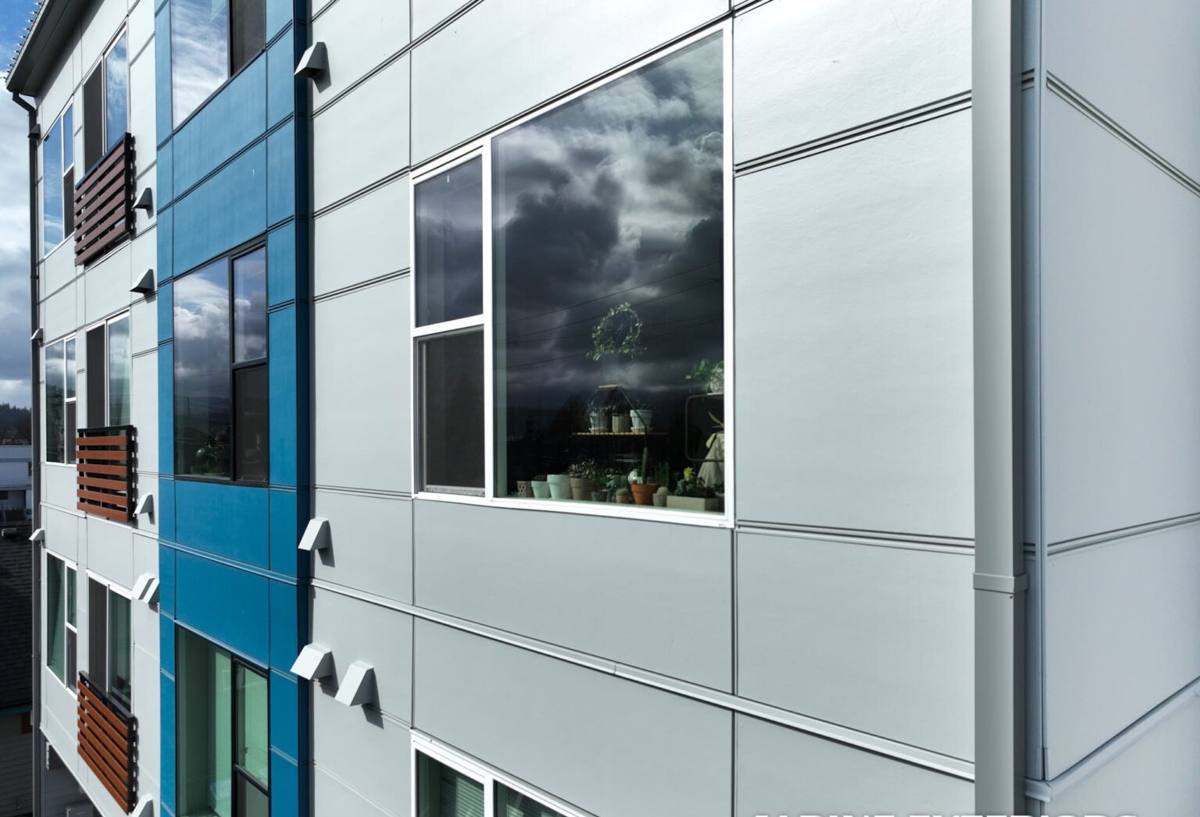
What Sarasota County's Climate Actually Does to Siding
Hurricane-Force Wind
Sarasota County sits squarely in a wind zone where storm-force gusts are a real design condition, not a rare event to plan around loosely. Wind doesn't just push on a wall — it creates pressure differentials that can pull panels away from fasteners, especially at corners and edges where uplift forces concentrate. Siding that's fastened correctly, with the right nail placement and spacing called out in the manufacturer's installation manual, stays put through those events. Siding fastened loosely or with the wrong hardware is often the first thing to go.
Intense, Near Year-Round UV
Florida's UV load is among the highest in the continental United States, and Fruitville gets the full dose most of the year. UV breaks down pigments and resins in lower-quality finishes, which is why some siding products fade unevenly, chalk, or need repainting well before a homeowner expects to spend that money again. A wall that faces south or west takes the worst of it, and that exposure adds up year after year, not just during the hottest months.
Wind-Driven Rain
Rain in this part of Florida rarely falls straight down during a real storm — it comes in sideways, driven by wind, and finds every gap, unsealed joint, and poorly flashed penetration a wall assembly has. Once water gets behind siding, it can sit against the sheathing and framing for a long time before anyone notices, because the siding itself hides the problem until it's already significant. Correct flashing and a properly lapped water-resistive barrier behind the siding matter as much as the siding material itself.
Salt Air
Fruitville isn't beachfront, but Sarasota County's salt air doesn't stop at the coastline — it travels inland on prevailing winds and settles on exposed surfaces continuously, not just during storms. Salt exposure accelerates corrosion in exposed metal fasteners and trim hardware, and it can affect how well a finish holds up over time. It's a slower, quieter threat than wind or rain, but it's part of what "correct" installation has to account for here, even a few miles from open water.
What "Correct" Siding Installation Actually Involves
The finished panels get most of the attention, but what's happening behind and around them is what actually determines how long a siding job lasts in this climate. A correct installation for a Fruitville home includes:
- A continuous, properly lapped water-resistive barrier installed over the sheathing before any siding goes up
- Correct flashing at every window, door, and penetration, so wind-driven rain has nowhere to collect
- Manufacturer-specified fastener type, size, and spacing — not a generic nailing pattern applied across every product
- Proper clearance from grade, roofing, and other transitions, so moisture and debris don't sit against the bottom edge of the siding
- Correctly sealed and backed butt joints, rather than joints simply caulked and left unsupported
- Attention to corners, trim, and edges — the areas that see the highest wind uplift pressure during a storm
- A finish system rated for the UV load this region actually sees, not a general-purpose coating
Skip any one of these and the wall usually still looks fine on installation day. The gaps show up months or years later, as a soft spot near a window, a corner that's started to lift, or a finish that's fading faster than it should.
Why We Install Only James Hardie Fiber Cement Siding
We don't install vinyl, LP SmartSide, Cemplank, Allura, primed spruce, or cedar. That's not a marketing position — it's a standard we hold because we'd rather install one product exceptionally well, with a crew that knows its installation manual in detail, than spread that expertise across several materials and dilute it. Each of the alternatives has real strengths and a legitimate place in the market. But when we weighed how those products actually perform against Sarasota County's specific combination of wind, UV, wind-driven rain, and salt air against what James Hardie fiber cement delivers, Hardie is what we've chosen to stand behind on every siding job we take on.
Non-Combustible Material
James Hardie siding is made from cement, sand, and cellulose fibers, pressed and cured into a dense, stable board. It's non-combustible, which is a meaningful difference from vinyl siding, which can melt or deform under heat exposure, and it doesn't carry the same fire-related considerations that some engineered wood products do.
Dimensional Stability
Fiber cement doesn't expand and contract with heat the way vinyl does, and it doesn't absorb and release moisture the way wood-based products can. That stability matters directly in a climate with intense daily heat cycling and humidity swings — it's part of why Hardie boards tend to hold a flat, consistent wall plane over decades rather than warping or buckling.
ColorPlus Factory Finish
Most of the Hardie siding we install carries the ColorPlus finish — a factory-baked, multi-coat finish applied under controlled conditions no jobsite can replicate. It resists fading and chipping considerably better than typical field-applied paint, which matters directly given how much UV exposure Sarasota-area walls take on, and it comes with its own finish warranty separate from the substrate warranty on the board itself.
Climate-Engineered Product Lines
James Hardie engineers its HZ product lines for specific climate zones, including humid, storm-prone regions like Florida. That's a different approach than a one-size-fits-all board, and it's a meaningful reason the material holds up as well as it does once it's on a wall in Sarasota County.
A Strong, Transferable Warranty
Hardie's warranty structure is long-term and transferable to a subsequent owner, which matters for resale and gives homeowners a real backstop if a manufacturing defect ever surfaces, rather than a warranty that becomes worthless the moment the house changes hands.
Choosing the Right Hardie Line and Finish for Fruitville
James Hardie offers several siding profiles and product lines, and the right choice depends on the home's architecture, sun exposure, and the homeowner's maintenance preferences, not just personal taste. HardiePlank lap siding is the most common choice for traditional Florida homes and comes in multiple exposure widths and textures. HardiePanel vertical siding suits modern or mixed-material designs, often paired with lap siding as an accent. HardieShingle gives a shingle-style look without the maintenance burden of real wood shingles in a humid climate. All of these are engineered for the same climate zone, so the decision usually comes down to look and budget rather than one line being better suited to Sarasota's weather than another.
Color selection matters more here than in milder climates. Darker colors absorb more heat and, on unshaded south- and west-facing walls, can show UV wear sooner than lighter tones — something worth discussing honestly before committing to a color, rather than finding out years in.
Our Installation Process, Step by Step
1. Site Assessment and Measurement
We walk the property, assess the existing wall assembly, identify problem areas like prior water intrusion or damaged sheathing, and take precise measurements to plan material needs and layout.
2. Tear-Off and Substrate Inspection
Old siding comes off, and we inspect the sheathing and framing underneath for rot, moisture damage, or pest issues before anything new goes up. Problems found here get addressed before the wall is closed back up — covering damaged substrate with new siding just hides the same problem for later.
3. Water-Resistive Barrier and Flashing
A continuous water-resistive barrier goes over the sheathing, correctly lapped from the bottom up so water always sheds outward. Flashing gets installed at every window, door, and penetration before the siding covers it.
4. Siding Installation to Manufacturer Specification
Panels or planks go up following James Hardie's published installation manual — correct fastener type and spacing, proper clearances, backed and sealed butt joints, and careful attention to corners and edges given the wind loads this area sees.
5. Trim, Caulking, and Finish Detail
Trim gets installed and sealed, touch-up work on factory finish edges is completed where needed, and the full installation is checked against spec before we consider the job done.
6. Final Walkthrough
We walk the finished job with the homeowner, point out what was done and why, and address any questions before wrapping up.
What Drives the Cost of a Siding Installation
| Factor | Why It Affects Cost |
|---|---|
| Home size and wall complexity | More square footage, corners, and architectural detail means more material and labor time |
| Substrate condition | Rot or moisture damage found during tear-off needs repair before new siding goes up |
| Siding profile and line | Lap, panel, and shingle-style Hardie products carry different material and labor costs |
| Finish choice | Factory ColorPlus finish versus field-applied paint affects both material cost and long-term maintenance |
| Trim and detail work | Homes with more windows, dormers, or architectural trim require more precise, time-intensive work |
| Access and site conditions | Multi-story sections, tight lot access, or existing landscaping can add labor time |
| Permitting requirements | Sarasota County permitting and wind-load review add administrative time but protect the homeowner |
Signs Your Current Siding Is Already Behind
Some warning signs are worth acting on before they turn into a bigger repair. Watch for:
- Visible warping, buckling, or wavy sections along the wall plane
- Soft spots when you press gently on the siding near the bottom edge or around windows
- Paint or finish that's peeling, bubbling, or fading unevenly, especially on south- or west-facing walls
- Cracked or chipped panels, particularly after a storm season
- Staining or streaking that suggests water is running behind the siding rather than off of it
- Gaps opening up at corners, trim, or butt joints
- A musty smell or visible mold near exterior walls on the inside of the home
Any one of these on its own might be minor. Several together, or any sign of soft substrate underneath, usually means it's time for a real inspection rather than a patch.
Why It Matters That We Already Work Fruitville
A contractor who occasionally works this part of Sarasota County can still install siding competently, but there's a real difference between that and a crew that installs here regularly. Sarasota County's permitting process and wind-load requirements are specific, and a crew that's pulled those permits before isn't learning the process on your project. Local familiarity also means knowing which Hardie colors and finishes actually hold up against this area's UV load over years rather than months, and being upfront about what a home genuinely needs versus what's just an upsell. It also means faster response if something needs a follow-up look after a storm, rather than waiting on a crew that has to travel in from well outside the area.
Living With New Siding: What Upkeep Actually Looks Like
James Hardie siding is low-maintenance compared to the alternatives, not maintenance-free. A simple annual routine goes a long way in this climate: rinse the surface periodically to clear salt residue, pollen, and organic buildup before it affects the finish; keep sprinklers from hitting the wall directly, since repeated wetting in one spot accelerates wear; trim back landscaping that holds moisture against the siding or blocks airflow; and have any caulking or trim checked periodically, since sealant is the one component that does wear out over time and needs occasional renewal. None of this is a heavy burden — it's the difference between siding that reaches the top of its expected lifespan and siding that falls short of it.
If you're weighing a siding replacement or new installation for a home in Fruitville, we're glad to walk the property with you, explain what we see, and lay out the options honestly. Reach out below for a free, no-pressure estimate.