 Sarasota Window
 Why Siding Choice Matters More in Downtown Sarasota
Downtown Sarasota sits close enough to the Gulf that salt-laden air, wind-driven rain, and intense year-round UV are simply part of owning a home here. Add the threat of hurricane-force winds during storm season, and it's clear why exterior cladding in this part of Sarasota County works harder than it would almost anywhere inland. Siding here isn't just a cosmetic layer — it's the first line of defense against moisture intrusion, sun degradation, and wind pressure, year after year.
A lot of the housing stock in and around Downtown Sarasota mixes older frame construction with newer infill homes and townhomes built to more current wind codes. Whatever the vintage, the siding on each has to handle the same combination of heat, humidity, and salt exposure. That's the lens we use when we talk about James Hardie fiber cement siding for this specific neighborhood — not as a generic product pitch, but as a material decision that has to hold up to Sarasota's particular climate.
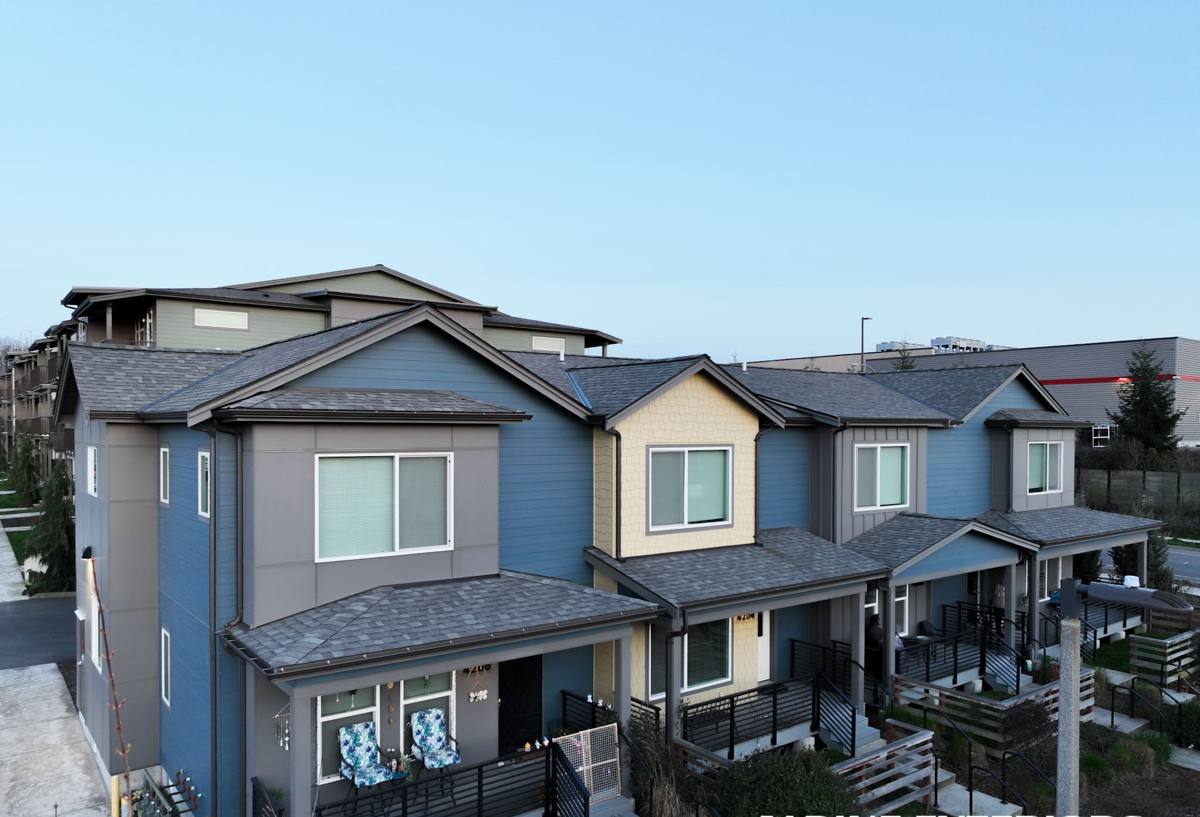
What Downtown Sarasota's Climate Does to Siding Over Time
It helps to understand the specific failure modes before talking about the fix:
- UV exposure breaks down pigments and resins in lower-grade siding and paint, leading to fading, chalking, and brittleness well before a homeowner expects a repaint.
- Wind-driven rain pushes water sideways into laps, joints, and fastener penetrations that a product not designed for coastal exposure may not shed properly.
- Salt air accelerates corrosion of fasteners and trim hardware, and it can leave a fine residue that traps moisture against a wall surface.
- Humidity swings keep wood-based and composite products damp longer between rain events, which is where rot, swelling, and mold get their foothold.
- Wind pressure from tropical storms and hurricanes tests every fastener, joint, and piece of flashing on a home's exterior — the installation is only as good as its weakest connection point.
None of this means Downtown Sarasota homes need something exotic. It means they need a siding system engineered for exactly these conditions, installed by people who understand why each detail matters.
Why We Install Only James Hardie Fiber Cement
We made a deliberate decision to install James Hardie siding exclusively — not LP SmartSide, not vinyl, not Cemplank or Allura, not primed spruce or cedar. That's a standard, not a sales pitch, and it's worth explaining honestly.
Wood-based and engineered-wood products can perform well in drier, more temperate climates, but Sarasota's humidity and salt exposure shorten their service life and raise their maintenance burden — recoating, caulk touch-ups, and edge sealing become a recurring cost. Vinyl siding is affordable and easy to install, but it can soften, warp, or become brittle under sustained high heat and intense coastal UV, and it offers little resistance in a wind event compared to a heavier, mechanically fastened product. Other fiber cement brands compete on price, but James Hardie's ColorPlus factory-applied finish, its HZ5 climate-specific formulation for humid zones, and its long, transferable warranty are the combination we've found gives Downtown Sarasota homeowners the best balance of durability, appearance, and long-term value. Non-combustible, dimensionally stable, and resistant to moisture-driven swelling, it holds up to salt air and sun without the upkeep cycle that other materials demand.
What a Correct James Hardie Installation Actually Involves
The material is only half the equation. Most siding failures we see in coastal Florida trace back to installation shortcuts, not the product itself. A correct job on a Downtown Sarasota home includes:
Moisture Management Behind the Siding
A weather-resistive barrier goes on first, lapped correctly from the bottom up so water is directed outward, not trapped behind the cladding. Every window, door, and penetration gets properly integrated flashing — this is the detail that matters most in wind-driven rain, and it's invisible once the siding goes up, which is exactly why it's the step some crews rush.
Fastening and Clearances
James Hardie specifies fastener type, spacing, and embedment depth for a reason — under-driven or over-driven nails and screws are a leading cause of premature siding failure. We also hold the manufacturer's required clearances above rooflines, decks, and grade so water has somewhere to go instead of wicking into the bottom edge of the boards.
Joints, Caulking, and the ColorPlus Finish
Butt joints get treated with the manufacturer-approved sealant or joint flashing, not just caulk alone. Because ColorPlus is a factory-applied, baked-on finish, field-cut edges get sealed with the matching touch-up product so the cut ends don't become the weak point in an otherwise UV- and salt-resistant finish.
Choosing the Right Hardie Product Line
James Hardie makes several siding profiles and formulations, and the right pick depends on the home's style and exposure, not just personal preference. For this climate zone, we default to the HZ5 formulation, which is engineered specifically for high-humidity, high-moisture regions like the Gulf Coast.
| Product Line | Best Fit For | Key Consideration in Sarasota |
|---|---|---|
| HardiePlank Lap Siding | Traditional and craftsman-style homes | Most common choice; wide range of exposures and textures |
| HardiePanel Vertical Siding | Modern, mixed-material, or accent facades | Popular for gable accents and contemporary infill homes downtown |
| HardieShingle | Coastal cottage or accent detailing | Used selectively for architectural interest, not full-home coverage |
| HardieTrim | Fascia, corners, and window/door surrounds | Pairs with any line above for a fully non-combustible exterior system |
All of these are available in the HZ5 formulation for this climate, and all carry the factory ColorPlus finish options, so color consistency and fade resistance aren't a trade-off based on which profile a home needs.
Our Installation Process
Every job follows the same sequence, whether it's a full re-side or a partial repair after storm damage:
- On-site assessment — we evaluate the existing substrate, look for hidden moisture or rot, and measure for the correct product line and quantities.
- Tear-off and substrate repair — old siding comes off, and any damaged sheathing or framing gets addressed before anything new goes on. Covering up a compromised substrate is how small problems become expensive ones.
- Weather barrier and flashing — installed and inspected before a single piece of siding is hung.
- Siding installation — to manufacturer fastening specs, with attention to clearances, joints, and factory-finish integrity at every cut.
- Trim, caulking, and touch-up — finishing details that determine how well the system sheds water for the next several decades.
- Final walkthrough — we review the completed work with the homeowner before calling the job done.
Why a Crew That Already Works Downtown Sarasota Matters
Downtown Sarasota has its own practical realities that a crew unfamiliar with the area can miss. Lots are often tighter than suburban parcels, which affects how material staging, scaffolding, and dumpster placement have to be planned. Homes closer to the water face stricter wind-load and impact requirements under Florida and Sarasota County building code, and permitting expectations can differ block to block depending on the home's age and any applicable overlay district. A crew that regularly pulls permits and works jobs in this specific part of Sarasota already knows how to navigate that — which means fewer surprises, fewer delays, and an installation that's actually built to the code that applies to your address, not a generic assumption.
Local experience also means we've seen how salt air and coastal sun specifically affect installations in this neighborhood over time, which shapes decisions as small as fastener selection and as significant as which Hardie product line and finish we recommend.
What Siding Replacement Typically Costs to Consider
We don't quote blind — every home is different — but these are the main factors that move the number up or down on a Downtown Sarasota project:
| Factor | Why It Matters |
|---|---|
| Home size and complexity | More corners, gables, and dormers mean more cutting, flashing, and labor time |
| Substrate condition | Rot or moisture damage found during tear-off adds repair scope before siding can go on |
| Product line and finish | Lap vs. panel vs. shingle accents, and ColorPlus color selection, affect material cost |
| Access and staging | Tight downtown lots or multi-story homes can require more equipment and time |
| Permitting requirements | Wind-zone and code requirements specific to the property can affect fastening and detailing scope |
A Homeowner's Checklist Before Hiring
Whether you hire us or someone else, these are the questions worth asking before signing a contract for siding work in this area:
- Is the crew installing manufacturer-specified fasteners, clearances, and flashing — not just "similar" materials?
- Are they using the HZ5 formulation appropriate for this humidity zone, not a generic interior-climate product?
- Do they pull the required permits for Sarasota County rather than skipping the paperwork?
- Will they address substrate condition (rot, moisture, damaged sheathing) before installing new siding over it?
- Can they explain their fastening and joint-sealing approach in specific terms, not just "we do it right"?
- Do they carry a factory-backed warranty that transfers if you sell the home?
If you're weighing a siding project for a Downtown Sarasota home, we're happy to take a look and walk you through what your specific house needs — no pressure, no obligation. Fill out the form below to request a free estimate.