 Sarasota Window
 Why Osprey Roofs Take a Beating
Osprey sits along Sarasota County's coastal corridor, tucked between the Gulf of Mexico and the Intracoastal Waterway. That location is part of why people love living here, but it's also why roofs in this area age differently than roofs inland. A roof over an Osprey home deals with hurricane-force wind gusts during tropical systems, near-constant wind-driven rain off the Gulf, intense year-round UV exposure that most of the country never sees, and a steady drift of salt air that slowly works on metal fasteners, flashing, and exposed edges. None of these forces act alone — they compound each other. UV breaks down shingle oils and makes materials brittle, salt air accelerates corrosion on nails and flashing, and then a storm's wind and rain finds every weak point that sun and salt have already softened up.
That combination is exactly why storm damage repair here isn't just about patching a hole after a bad afternoon. It's about understanding how a roof that's already been stressed by a Sarasota County summer responds when a storm hits it, and repairing it in a way that holds up through the next one.
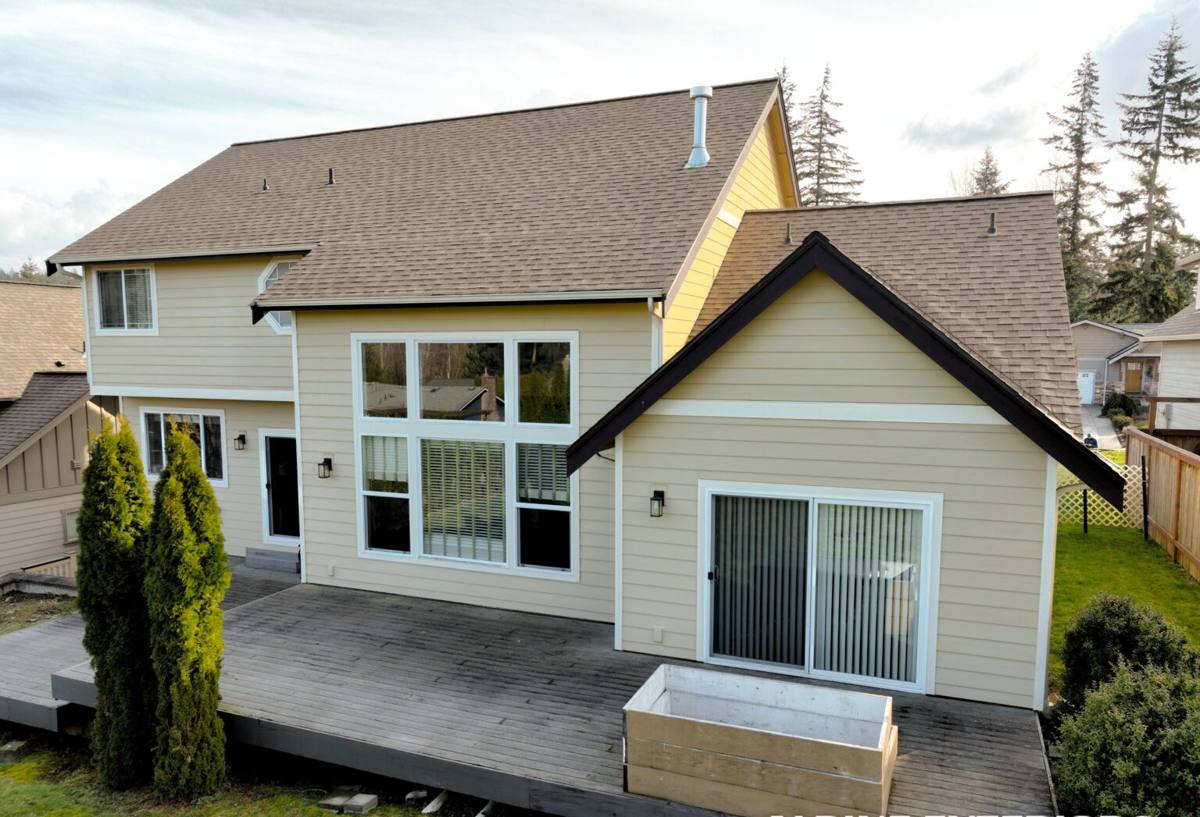
Recognizing Storm Damage: What to Look For (and What Hides From View)
Some storm damage is obvious. Missing shingles, a torn-off ridge cap, or a visibly bent piece of flashing don't require a trained eye. But a lot of what actually causes long-term problems is much harder to spot from the ground, which is why so many storm-damaged roofs in this area leak months after the storm that caused the damage.
Visible Signs
- Missing, cracked, or curled shingles, especially near roof edges and ridges
- Granule loss showing up in gutters or around downspouts
- Bent, lifted, or missing flashing around chimneys, vents, and skylights
- Dented or separated gutters and soffit panels
- Debris strikes or punctures from wind-blown branches and yard items
Hidden Damage
Wind can lift a shingle just enough to break its seal without tearing it off completely, so the roof looks intact but no longer sheds water the way it should. Wind-driven rain can also push moisture sideways under shingles and flashing during a storm, saturating underlayment or decking that then dries out and shows no obvious sign of a problem — until the next heavy rain finds the same weak spot. This is the type of damage that turns into a slow ceiling stain weeks or months after everyone assumes the roof "made it through fine."
How We Approach a Storm Damage Roof Repair in Osprey
A Full Roof Inspection, Not Just a Patch
When we're called out for storm damage, we don't just walk up to the obvious problem area and fix it. A wind event that's strong enough to damage one section of roof has typically stressed the whole roof system. We inspect the full roof surface, the flashing details, the vents, and the attic or roof deck from the inside where accessible, so a repair addresses everything the storm actually affected — not just the part that's visible from the driveway.
Photo Documentation Before We Touch Anything
Before any repair work begins, we document the damage thoroughly with photos. This protects you if you're filing an insurance claim, and it gives us a clear record to compare against once repairs are complete. Skipping this step is one of the most common reasons homeowners end up in a drawn-out dispute with an insurance adjuster later.
An Honest Repair-vs-Replace Assessment
Not every storm-damaged roof needs a full replacement, and not every roof can be safely and permanently fixed with a patch. We'll tell you plainly which category your roof falls into based on its age, the extent of the damage, and how much of the roof's remaining service life is left. If a targeted repair will genuinely hold up, that's what we recommend — a full replacement isn't the right answer just because it's more profitable for a contractor.
The Repair Itself
Once we know what we're dealing with, repairs typically involve replacing damaged shingles or roofing material in matching profile and color where possible, restoring underlayment in any area that got wet, and rebuilding flashing details correctly rather than just resealing them with caulk. Fasteners and flashing exposed to salt air get upgraded to corrosion-resistant hardware where the original materials weren't up to the job. We finish with a check of gutters, downspouts, and drainage paths, since a roof that sheds water properly is a big part of what keeps a repair from becoming a repeat repair.
Materials and Methods We Rely On for Storm Repairs
The right repair approach depends on what's damaged and how the original roof was built. Here's how we think through the most common scenarios we see on storm-damaged roofs in this part of Sarasota County.
| Damage Type | Typical Repair Approach | Why It Matters Here |
|---|---|---|
| Isolated missing or lifted shingles | Remove and replace affected shingles with matching material, resecure seal | Prevents a small vulnerability from becoming a leak point in the next storm |
| Flashing failure at chimneys, vents, skylights | Remove and rebuild flashing rather than caulk-and-seal | Caulk fails fast under UV and salt exposure; proper flashing doesn't rely on sealant alone |
| Wet or compromised underlayment | Cut back to sound decking, dry it out, replace underlayment before re-shingling | Trapped moisture under a "good looking" repair leads to rot and mold you won't see coming |
| Corroded fasteners or metal edges | Replace with corrosion-resistant fasteners and edge metal | Salt air accelerates standard fastener corrosion well beyond what inland roofs experience |
| Widespread granule loss / storm-aged shingles | Section replacement or recommend full roof evaluation | UV-brittle shingles with storm damage often aren't worth patching indefinitely |
Working With Your Insurance Company
Storm damage repairs often involve an insurance claim, and the process goes smoother when you understand what to expect. Your insurer will typically send an adjuster to assess the damage, and their scope of work becomes the basis for what's covered. This is exactly why our photo documentation matters — if our inspection finds damage the adjuster's report missed, having clear before-repair photos gives you something concrete to bring back to the insurance company.
It's also worth knowing that Florida's building code requires certain upgrades when a roof is significantly repaired or replaced, such as improved roof-to-wall connections or updated flashing details in some cases. These code-required upgrades may be a separate coverage item on your policy, so it's worth asking your adjuster directly whether they're included. We can walk you through what our proposed repair involves so you're asking informed questions rather than guessing.
Why Hire a Crew That Already Works Osprey
Storm repair work isn't the place to learn on the job. A crew that regularly works roofs in Osprey and the surrounding Sarasota County area already knows how salt air behaves on this coastline, which roofing details tend to fail first in this climate, and how local permitting and inspection requirements apply to repair work. That familiarity shows up in small but important decisions — which fastener grade to use, how a flashing detail needs to be built to actually shed wind-driven rain, and when a "good enough" patch will fail within a year versus when it will hold.
It also means we're not guessing at how the Sarasota County permitting and inspection process works when a repair requires it. We handle that as part of the job, not as an afterthought.
What To Do Right After Storm Damage
How you handle the first few days after a storm can affect both the extent of the damage and how smoothly your insurance claim goes. If your roof has been hit by a storm, here's a practical checklist:
- Photograph visible damage from the ground before doing anything else — don't get on the roof yourself
- Check attic spaces and ceilings for water stains, even if the roof looks fine from outside
- Place buckets or tarps over active interior leaks to limit further water damage
- Avoid DIY roof tarping in high winds or on a wet, sloped surface — it's not worth the fall risk
- Contact your insurance company to open a claim and note the date and time you reported it
- Get a professional inspection before signing anything or agreeing to a repair scope
- Keep all receipts related to emergency measures like tarping or water mitigation
What Affects the Cost of a Storm Damage Roof Repair
Every roof and every storm event is different, so we won't quote a number without seeing the actual damage. But these are the main factors that tend to move the price up or down:
| Factor | How It Affects Cost |
|---|---|
| Extent of damage | A few shingles versus a full section or multiple roof planes changes labor and material scope significantly |
| Underlying decking condition | Rotted or saturated decking under the damaged area adds material and labor beyond the surface repair |
| Roof material and age | Matching older or discontinued shingle profiles and colors can take more time to source |
| Roof pitch and accessibility | Steeper roofs or difficult access points require more setup time and safety equipment |
| Flashing complexity | Roofs with multiple penetrations — chimneys, skylights, vents — need more detailed flashing work |
Because so much depends on what an inspection actually finds, we treat every estimate as specific to your roof rather than a one-size-fits-all number.
Get an Honest Look at Your Roof
If your Osprey home has taken storm damage — or you're just not sure whether recent wind and rain left something behind that needs attention — it's worth having it looked at before it turns into a bigger repair. We offer free, no-pressure estimates using the form below, and we'll give you a straight answer about what your roof actually needs, not an inflated scope of work.