 Sarasota Window
 Board & Batten Siding Built for Lakewood Ranch's Climate
Lakewood Ranch homes carry a distinct look — clean vertical lines, deep shadow lines, and a craftsman or coastal-modern feel that board and batten siding delivers better than almost any other profile. But in this part of Sarasota County, that look has to survive more than just a design review. Homes here take on hurricane-force wind gusts, near-constant UV exposure, wind-driven rain that gets pushed sideways into wall assemblies, and salt-laden air drifting inland from the Gulf. Board and batten siding that isn't built and installed for those conditions can trap moisture behind the battens, crack under UV load, or fail at the fasteners long before a homeowner expects to think about siding again.
We install board and batten siding in Lakewood Ranch as a system, not just a look. That means the right substrate, the right water management behind the panels, and installation details that account for Florida's wind and moisture — not a generic install lifted from a milder climate.
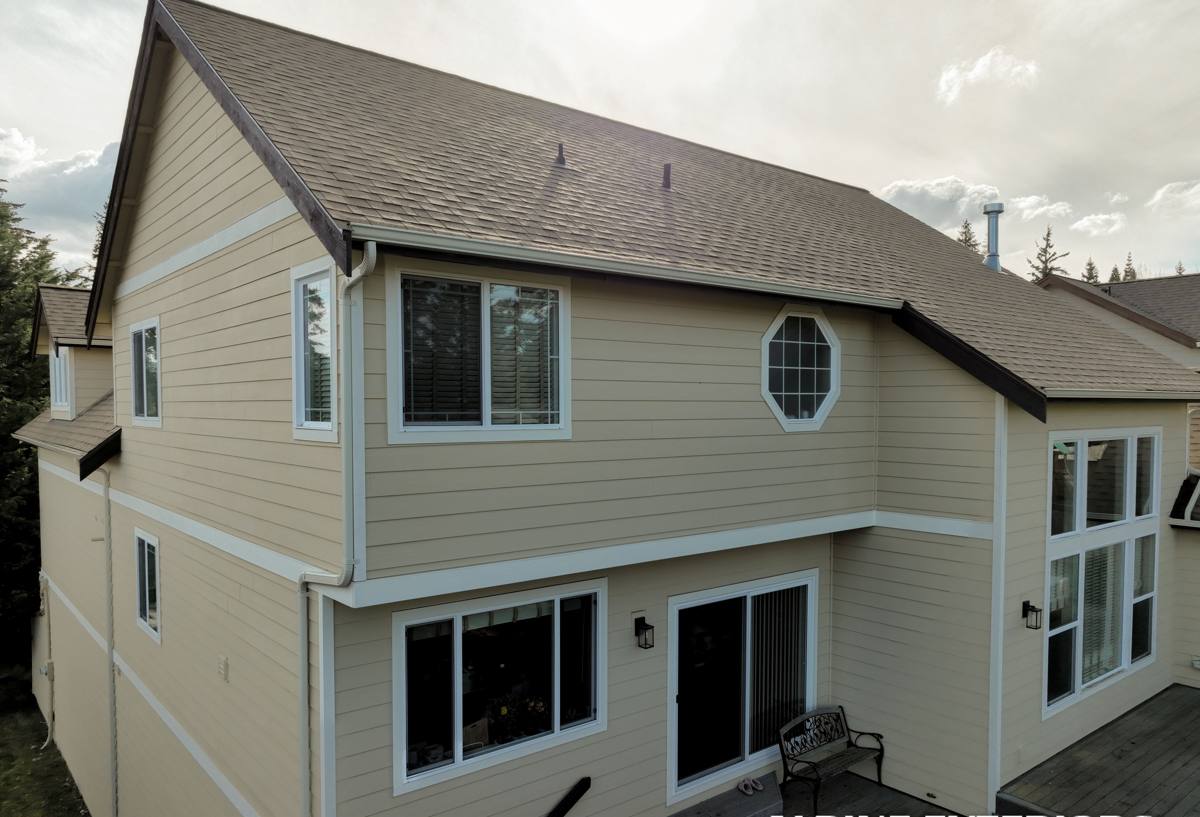
Why Board & Batten Is a Good Fit for Lakewood Ranch — When It's Done Right
Board and batten is popular across Lakewood Ranch's newer developments because it reads as upscale and architecturally clean, and it pairs well with the Florida vernacular, coastal, and modern-farmhouse styles common in the area's planned communities. The vertical panel-and-batten pattern also does something practical: it creates a rain-screen-like shadow effect that sheds water down the face of the wall rather than pooling on flat horizontal laps.
The catch is that board and batten has less forgiveness for installation error than traditional lap siding. Every batten seam, every panel joint, and every fastener point is a potential water entry path if it isn't detailed correctly. In a climate that delivers sideways rain during tropical storms and near-daily UV punishment the rest of the year, sloppy board and batten work shows its flaws faster than it would in a drier, calmer climate.
What Local Homes Are Up Against
- Wind: Sarasota County building code requires siding and fastening rated for high-velocity wind zones, and board and batten's larger panel faces catch more wind load than narrow lap boards.
- UV: Year-round sun bleaches and degrades unprotected paint finishes and lower-grade composite materials faster than in northern climates.
- Wind-driven rain: Storms don't just drop rain — they push it horizontally into wall assemblies, which means flashing and drainage details matter as much as the siding material itself.
- Salt air: Even well inland from the coast, salt-laden air accelerates corrosion on fasteners, trim, and any metal components in the wall assembly.
What a Correct Board & Batten Installation Actually Involves
Board and batten looks simple from the street — vertical panels with battens covering the seams — but a correct installation is built in layers most homeowners never see. Skipping or shortcutting any one of these layers is where premature failures start.
The Layers That Matter
- Substrate inspection and prep: Any existing rot, moisture damage, or compromised sheathing gets addressed before new siding goes on — covering a bad substrate just hides the problem.
- Weather-resistive barrier: A continuous, properly lapped water barrier behind the siding is the actual line of defense against wind-driven rain — the siding itself is the second line, not the first.
- Furring or drainage plane: Proper board and batten installation typically includes a gap behind the panels so any moisture that does get past the outer layer can drain and dry instead of sitting against the wall.
- Fastening pattern: Nail or screw placement, spacing, and penetration depth are engineered around the local wind zone rating — not a generic pattern pulled from the manufacturer's mildest-climate instructions.
- Batten and joint detailing: Seams are treated so they shed water rather than wick it, and expansion gaps are respected so the material isn't fighting itself as it moves with heat and humidity.
- Trim, corners, and penetrations: Every window, door, vent, and corner is a place where two building elements meet — and where the majority of real-world leaks actually start.
Miss any one of these and the siding can look perfect for a year or two while moisture quietly does damage behind it. This is the core reason we don't treat board and batten as a quick facelift product — it's a full exterior water-management system with a specific look on the outside.
Why We Install Only James Hardie for Board & Batten Projects
For board and batten specifically, we use James Hardie fiber cement — primarily HardiePanel vertical siding paired with Hardie trim battens — and we don't install vinyl board and batten, engineered wood board and batten, or primed wood alternatives on Lakewood Ranch homes. That's a deliberate standard, not a sales preference, and it comes down to how each material actually performs here.
Fiber cement doesn't expand and contract with heat the way vinyl does, which matters on a material with long, continuous vertical panel runs — vinyl board and batten can visibly warp or buckle under direct Florida sun. It's also non-combustible, which is a real consideration on a peninsula where wildfire risk and insurance underwriting increasingly factor into exterior material choices. And because Hardie's ColorPlus finish is baked on at the factory under controlled conditions, it holds color and resists UV fade far better than field-applied paint on wood or composite alternatives — which matters enormously under Sarasota's sun load.
Built for This Specific Climate
James Hardie engineers its siding by climate zone under what it calls the HardieZone system, and homes in this part of Florida fall into the warmer, more humid HZ10 zone rather than the cooler, wetter HZ5 zone used farther north. That distinction affects the formulation of the product itself — it's built to resist the humidity, moisture cycling, and pest pressure that come with a subtropical climate, rather than being a one-size-fits-all product shipped to every region the same way.
Comparing Board & Batten Material Options for This Climate
| Material | UV / Fade Resistance | Moisture Behavior | Wind Zone Suitability | Long-Term Maintenance |
|---|---|---|---|---|
| James Hardie fiber cement | Strong — factory ColorPlus finish, engineered for HZ10 climates | Dimensionally stable, resists moisture-driven warping | Rated for high-velocity wind zones with proper fastening | Low — no repainting cycle needed for years with ColorPlus |
| Vinyl board and batten | Fades and chalks under sustained UV | Can trap moisture behind panels; expands/contracts with heat | Lower wind resistance; can crack or blow off in storms | Low upfront, but shorter lifespan in intense sun |
| Engineered wood (LP SmartSide type) | Moderate — depends on coating maintenance | Vulnerable to moisture wicking at cut edges and seams if not sealed | Adequate when installed to spec | Higher — edge sealing and coating upkeep required |
| Primed wood or cedar | Weak without regular repainting | Prone to swelling, splitting, and rot in humid, wet climates | Depends heavily on installation quality | Highest — recurring paint and sealant maintenance |
None of these alternative materials are inherently "bad" — they each have a place in some climate or budget. Our position is simply that for the wind, UV, and moisture conditions Lakewood Ranch homes face, fiber cement is the material we're willing to put our name behind.
Our Installation Process for Lakewood Ranch Homes
Because board and batten is less forgiving than lap siding if any step is skipped, we run every project through the same sequence:
- On-site assessment: We inspect the existing exterior, check for hidden moisture or substrate damage, and confirm the wind zone and code requirements that apply to the property.
- Detailed proposal: Panel layout, batten spacing, color selection, and trim details are worked out before any material is ordered.
- Substrate and barrier work: Any needed repairs are made first, then a continuous weather-resistive barrier is installed and properly lapped.
- Siding installation: Panels and battens go on following James Hardie's fastening specifications for this wind zone, with attention to every seam, corner, and penetration.
- Final inspection and walkthrough: We check fastening, caulking, and finish quality against the standard we hold ourselves to before calling the job complete.
Why It Matters That We Already Work in Lakewood Ranch
Board and batten siding decisions in a planned community like Lakewood Ranch aren't just a technical exercise — they often run through an HOA architectural review process with specific rules on colors, panel widths, and trim profiles. A crew that hasn't worked in the neighborhood before is learning that process on your project. A crew that already installs here knows what documentation is typically expected and how to plan a project timeline around it.
There's also a permitting and code layer that's specific to Sarasota County's wind zone requirements. A contractor unfamiliar with local wind load standards may default to manufacturer minimums meant for a milder climate, which can leave a board and batten installation under-fastened for what this area actually experiences during hurricane season.
What to Ask Any Contractor Before You Hire Them
- Are you familiar with Lakewood Ranch's HOA architectural review requirements for exterior changes?
- What wind zone fastening schedule will you use, and is it documented for this specific property?
- Will you provide a written scope covering the weather-resistive barrier, drainage plane, and flashing details — not just the visible siding?
- What manufacturer warranty applies, and is it a transferable warranty if the home sells?
- Can you walk me through how seams, corners, and penetrations will be detailed against wind-driven rain?
Maintenance and Longevity Once Your Siding Is Installed
James Hardie board and batten siding installed correctly is a low-maintenance system, not a no-maintenance one. A simple annual rinse-down helps clear salt residue and organic buildup before it can dull the finish. It's worth periodically checking caulked joints around windows, doors, and trim penetrations for cracking, since sealant is the one component in the system that does age faster than the fiber cement itself. Keeping irrigation heads and sprinklers from constantly wetting the base of the siding also goes a long way toward protecting the bottom courses over time.
Beyond that, the ColorPlus finish is designed to go years without repainting, which is one of the bigger practical advantages over wood or field-painted alternatives in a climate where repainting an entire exterior is genuinely disruptive and not something anyone wants to redo every few years.
Get a Straight Answer About Your Lakewood Ranch Project
If you're weighing board and batten siding for a Lakewood Ranch home, we're happy to walk the property, talk through what your specific elevation and HOA requirements call for, and give you a clear, no-pressure estimate — no generic pricing, no pressure to decide on the spot. Fill out the form below and we'll set up a time to take a look.