 Sarasota Window
 Building Decks for Laurel Park's Sarasota Climate
Laurel Park sits close to downtown Sarasota, with a mix of older bungalow-style homes, mature tree canopy, and lots close enough together that drainage and setback details matter more than they would out in a newer subdivision. A deck built here has to handle the same climate load as anywhere else in Sarasota County — hurricane-force wind gusts, intense year-round UV, wind-driven rain that gets pushed sideways under railings and into ledger connections, and a steady dose of salt air carried in off the Gulf. None of that is unique to Laurel Park, but the combination of older housing stock, established landscaping, and tighter lots means the details of a correct install matter more here than on a bare new-construction lot.
A deck that looks fine for the first year or two but was built with the wrong fasteners, the wrong ledger attachment, or decking that wasn't rated for constant sun and moisture cycling will start showing problems well before it should. We build decks in this neighborhood specifically for that long-term reality, not just for how they look on the day they're finished.
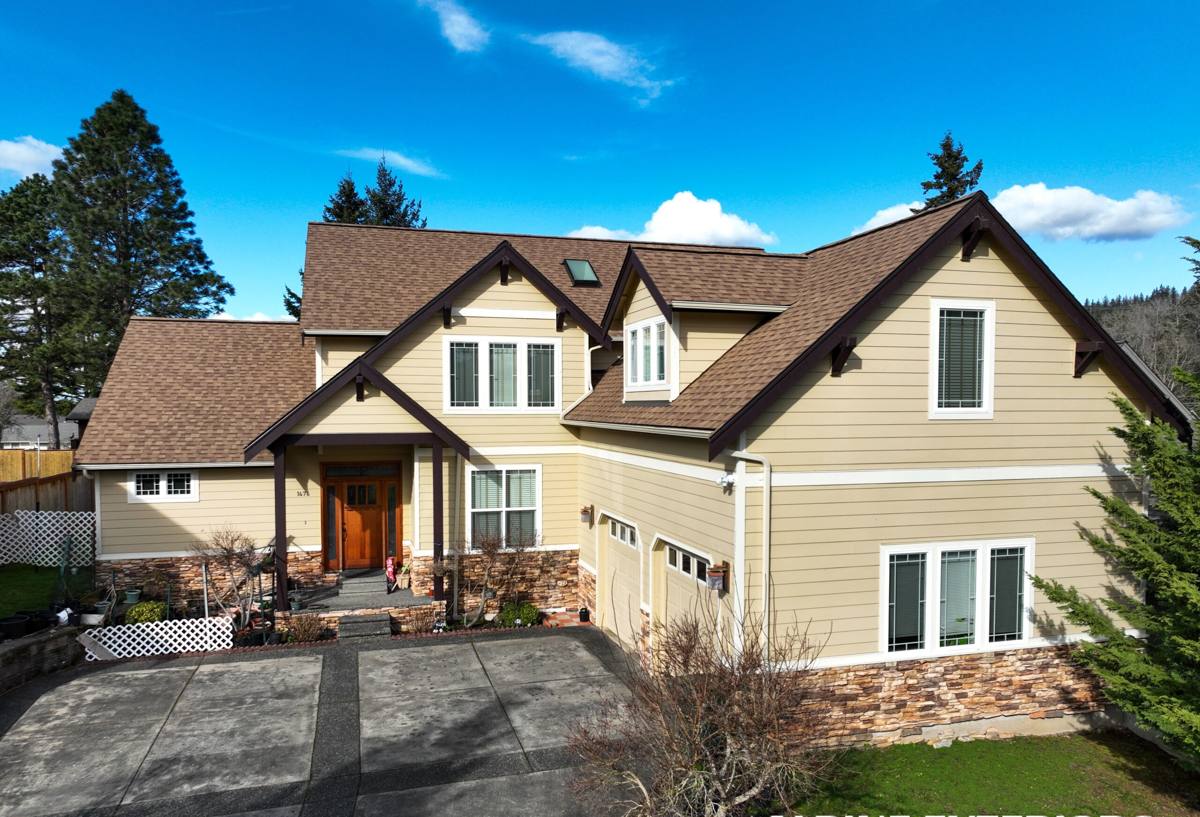
What Laurel Park Homes Need From a Deck
Several things come up again and again on deck projects in this part of Sarasota:
Older Framing and Ledger Connections
Many homes in this area were built well before current Florida Building Code wind provisions existed. Attaching a new deck ledger to an older house means checking what's actually behind the siding or fascia — sometimes it's solid framing, sometimes it isn't — before any lag bolts or through-bolts go in. Skipping this step is one of the most common ways a deck fails at the house connection during a storm, not out at the posts.
Tree Canopy and Moisture
Mature trees are part of what gives this neighborhood its character, but shade and leaf litter also mean decks here stay damp longer after rain than a deck out in full sun. That changes which materials make sense and how often gaps between boards need to stay clear for airflow and drainage.
Tight Lots and Drainage
Closer lot spacing often means less room to grade water away from the house. Deck footings and ledger flashing need to account for water that may sit near the foundation longer than it would on a larger property.
Historic Character
Homeowners in this neighborhood are often trying to match a deck's look to an older home's style — railing profiles, board orientation, and skirting that don't look like they were bolted on as an afterthought.
Choosing Decking Material for a Coastal, Sun-Heavy Climate
There's no single "best" decking material — every option is a trade-off between upfront cost, maintenance, heat underfoot, and how it handles Sarasota's UV and moisture cycle. Here's how the common options actually compare in this climate:
| Material | UV / Fade Resistance | Moisture Behavior | Maintenance | Typical Lifespan Here |
|---|---|---|---|---|
| Pressure-treated pine | Fades and grays without upkeep | Absorbs moisture; prone to cupping/splitting if not sealed | Re-seal or re-stain every 1-2 years | 10-15 years with upkeep |
| Tropical hardwood (e.g., ipe-type) | Very good, grays gracefully | Dense, low absorption, but needs oiling to hold color | Periodic oiling if color retention matters | 20-25+ years |
| Capped composite | Good to very good depending on product | Resists rot, doesn't absorb water like wood | Occasional cleaning, no sealing | 20-30 years |
| PVC / cellular decking | Very good | Fully moisture-resistant, won't rot or splinter | Lowest — mostly just cleaning | 25-30+ years |
| Aluminum decking | Excellent, doesn't fade | Immune to rot, handles standing water well | Very low | 30+ years |
We don't push one material on every homeowner. Real wood still has its place for people who want that specific look and are willing to maintain it, but for most Laurel Park decks under tree cover and salt-air exposure, capped composite or PVC decking earns its higher upfront cost back in avoided maintenance and a longer service life before replacement.
Framing and Fasteners: Where Decks Actually Fail First
The decking boards are the part everyone notices, but the framing, connectors, and fasteners underneath are what determine whether a deck survives a hurricane season or comes apart at the joints. This is the part of the job that's invisible once the deck is finished — and the part that's most often done wrong on lower-quality builds.
Fasteners and Hardware
- Stainless steel or heavy hot-dip galvanized fasteners rated for coastal/salt-air exposure — standard exterior screws corrode faster here than inland
- Corrosion-resistant joist hangers and structural connectors at every joist-to-beam and beam-to-post connection, not just at the ends
- Hurricane ties or equivalent uplift connectors between posts and framing, sized to current Florida Building Code wind requirements for this zone
- Proper ledger flashing so wind-driven rain can't work its way behind the house attachment over time
- Post bases that keep wood off standing water, rather than posts set directly into concrete or damp soil
Why This Matters More Here
Salt air accelerates corrosion on any fastener that isn't rated for it, and a corroded hanger or bolt doesn't announce itself — it just quietly loses strength until a high-wind event finds the weak point. Building the hidden structure correctly the first time is far cheaper than any repair after storm damage.
Permits, Codes, and Wind Load in Sarasota County
Deck construction in Sarasota County requires a building permit in nearly every case, and the structural requirements are tied to the Florida Building Code's wind load provisions for this region. That means footing depth, post spacing, beam sizing, guard rail height, and baluster spacing all have to meet code — not just look right. For homes near the historic parts of Laurel Park, there can also be additional review depending on the property and any applicable neighborhood or setback guidelines, which is worth checking before design work goes too far.
A permitted, inspected deck also matters for resale and insurance. An unpermitted deck can become a disclosure issue at sale time, and in the worst case, an insurer can decline a storm-damage claim tied to unpermitted work. We pull permits and coordinate inspections as a standard part of the job — it's not an upsell, it's how the work should be done.
Our Deck Building Process
- On-site assessment: we look at the existing structure (if replacing a deck), the house's ledger attachment point, drainage, tree root proximity, and sun/shade exposure.
- Design and material selection: we walk through decking, railing, and fastener options honestly, including trade-offs in cost, maintenance, and lifespan for your specific lot.
- Permitting: we handle the Sarasota County permit application and any required documentation before construction starts.
- Demolition (if applicable): old decking and framing removed, with the ledger and house connection inspected for hidden rot or damage before rebuilding.
- Framing: footings, posts, beams, and joists built to current wind-load requirements with corrosion-rated hardware throughout.
- Decking and railing installation: boards and railing installed per manufacturer spacing and fastening specs, which affects both appearance and warranty.
- Final inspection and walkthrough: county inspection completed, then a walkthrough with you covering how the specific materials you chose should be cared for.
Maintenance Checklist for a Sarasota Deck
Whatever material you choose, a few habits make a real difference in how long it lasts in this climate:
- Sweep leaves and organic debris out from between boards regularly, especially under tree canopy — trapped debris holds moisture against the deck surface
- Check fastener heads and railing connections once or twice a year for rust staining or looseness
- Rinse salt residue off the deck surface periodically, particularly after windy weather off the coast
- Re-seal or re-stain wood decking on the schedule the product actually requires — skipping a cycle accelerates UV and moisture damage
- Keep gutters and downspouts near the deck clear so runoff isn't dumping extra water onto or under the structure
- After any major storm, walk the deck and check post bases, stairs, and railings before assuming everything is fine
Why a Local Laurel Park Crew Matters
Deck problems in this neighborhood tend to come from the same few sources: ledger connections into older framing that weren't checked properly, fasteners that weren't rated for salt air, and drainage that wasn't planned around tight lot lines and tree roots. A crew that already works in and around Laurel Park has already run into these conditions and builds around them from the start, instead of learning it the hard way on your project.
Being local also means we're not disappearing after the invoice is paid. If a fastener starts showing early corrosion or a board needs attention, we're a short drive away — not a call center for a company based somewhere else in the state.
Get an Honest Look at Your Project
If you're planning a new deck or need to replace one that's showing its age, we're happy to come take a look and give you a straightforward assessment — what your home's specific setup needs, which materials make sense for your budget and shade conditions, and what it will actually take to build it right. Use the form below to request a free, no-pressure estimate.