 Sarasota Window
 Palmer Ranch is one of Sarasota County's larger master-planned communities, built out over several decades with a mix of villas, single-family homes, and HOA-governed neighborhoods. That range of construction eras means the siding on Palmer Ranch homes is just as varied — some houses still carry older cement-fiber or wood-composite products, others have vinyl or engineered wood installed during a past renovation, and a growing number have been converted to James Hardie fiber cement. Whatever is currently on the wall, siding repair here isn't a generic job. It has to account for what Sarasota's climate does to exterior materials over time, and what was actually installed correctly (or wasn't) in the first place.
What Palmer Ranch's Climate Does to Siding
Sarasota County sits in a hurricane-exposed part of the Gulf Coast, and Palmer Ranch, while set back from the immediate waterfront, still takes the full brunt of the region's weather cycle. Four conditions do most of the damage over a siding system's life.
Hurricane-Force Wind
Wind doesn't just rip panels off in a named storm — sustained gusts work fasteners loose, flex panels at their edges, and stress seams and trim joints over repeated events. A siding system that was installed with the correct nailing pattern and clearances handles this far better than one that was rushed or under-fastened, which is why storm damage often shows up worse on some homes than on their next-door neighbors that saw the identical wind event.
Intense, Year-Round UV
Sarasota gets strong sun exposure essentially every month of the year, not just in summer. Lower-grade paint finishes chalk, fade, and lose adhesion under that kind of constant UV load, and the problem compounds on south- and west-facing elevations. Factory-applied finishes rated for this kind of exposure hold color and integrity far longer than field-applied paint touched up over the years.
Wind-Driven Rain
Even outside of a hurricane, Sarasota's regular thunderstorm pattern pushes rain sideways into wall assemblies, not just straight down. Siding and trim that weren't lapped, caulked, or flashed correctly at the original install will leak long before the material itself wears out — the failure is in the water management detail, not the siding itself.
Salt Air
Palmer Ranch isn't beachfront, but it's close enough to the Gulf that airborne salt still reaches it, especially on breezy days. Salt accelerates corrosion on fasteners, flashing, and any exposed metal trim, and it can degrade lower-quality caulks and sealants faster than inland conditions would.
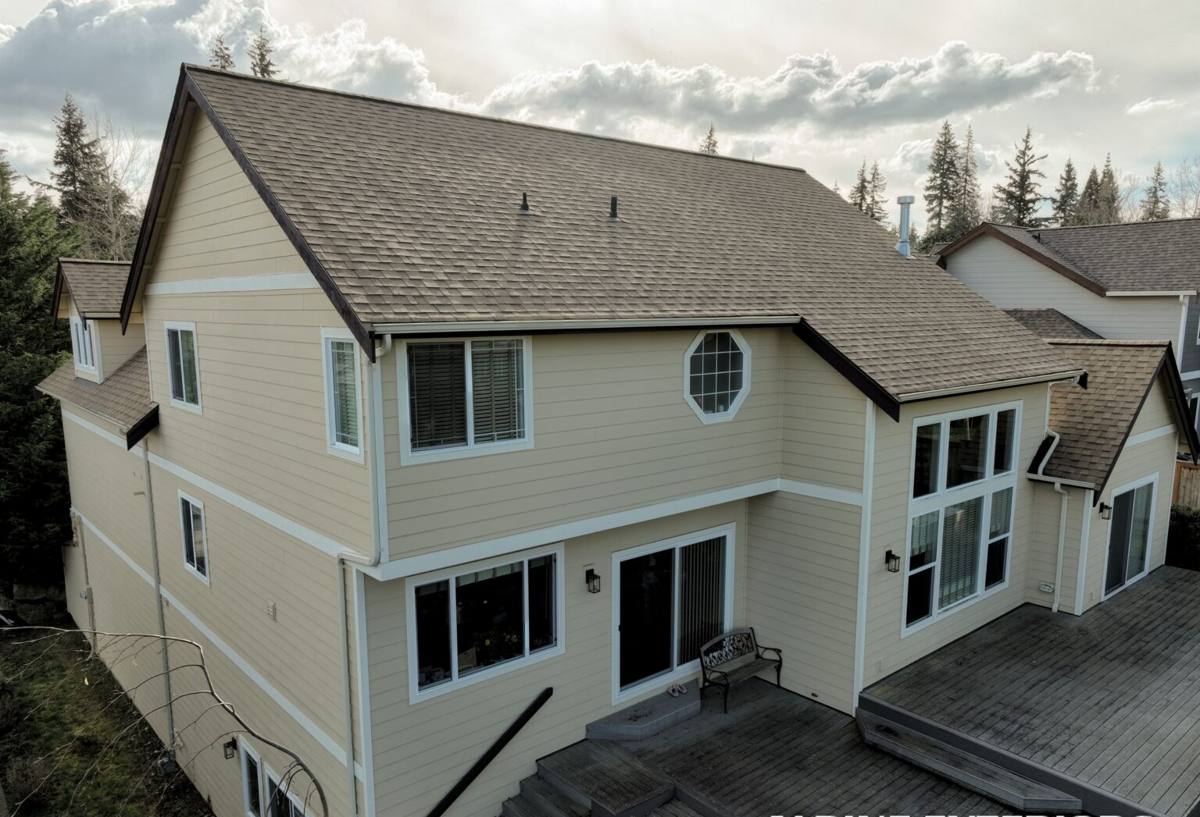
Common Siding Repair Issues We See in Palmer Ranch
Most repair calls in this community fall into a handful of categories, and knowing which one you're dealing with changes how the repair should be done.
- Impact damage — cracked or dented panels from wind-thrown debris during storms, or from lawn equipment and everyday contact
- Seam and joint failures — gaps opening up at butt joints or trim intersections where caulking has dried out or was never detailed correctly
- Fastener and flashing corrosion — rust streaking or loose panels where salt-exposed hardware has started to fail
- Moisture intrusion behind panels — soft spots, staining, or bubbling paint that signal water has been getting behind the siding, often for a while before it's visible
- Faded or chalking finish — especially on older wood-composite or field-painted siding that wasn't built for constant UV exposure
- Warped or delaminating panels — common on lower-grade composite products that have absorbed moisture over repeated wet-dry cycles
Repair vs. Replace: How We Make the Call
Not every damaged section needs a full re-side, and not every "repair" candidate is actually worth patching. We look at the extent of the damage, what's underneath it, and how much of the wall is affected before recommending either path.
| Factor | Leans Toward Repair | Leans Toward Replacement |
|---|---|---|
| Extent of damage | Isolated panels or a single elevation | Damage spread across multiple walls or the full house |
| Underlying moisture | Sheathing and framing test dry once panels are opened up | Rot or sustained water intrusion found behind the siding |
| Product match | Matching material or color is available for a clean patch | Original product is discontinued or a color match isn't achievable |
| Age of existing siding | Siding is well within its expected service life | Siding is near or past the point where more failures are likely soon |
| Original installation quality | Rest of the house was installed correctly | Recurring failures suggest a systemic installation problem |
When the underlying sheathing has stayed dry and the damage is contained, a targeted repair is the honest recommendation — there's no reason to replace sound siding. When we find moisture has been working behind the panels for a while, or the same failures keep showing up in different spots, that's usually a sign the whole system needs to come off and go back on correctly rather than getting patched again next storm season.
What a Correct Siding Repair Actually Involves
Diagnosis Before Demo
Before we pull a single panel, we find out why it failed. Cracked siding from a one-time impact is a different repair than the same crack caused by a fastening or flashing problem that will just crack the replacement panel again. Skipping this step is how homeowners end up paying for the same repair twice.
Checking What's Behind the Panel
Any time siding comes off, we look at the house wrap, flashing, and sheathing underneath. This is where hidden moisture problems get caught — and where they get fixed, rather than sealed back up behind a fresh panel and left to keep working on the structure.
Matching Material and Reveal
A patch that doesn't match the existing panel's profile, reveal, or color reads as an obvious repair from the street. We match the plank width and exposure to the surrounding siding so the repaired section blends in rather than standing out.
Fastening and Flashing to Spec
This is the step that decides whether a repair holds through the next hurricane season or fails again. Correct nailing patterns, proper clearances, and flashing lapped the right direction all matter more in a wind- and rain-exposed climate like Sarasota's than they would somewhere calmer.
Sealing and Finish Work
Joints get sealed with a sealant rated for exterior, UV-heavy exposure, and any factory-finished product is color-matched or refinished so the repaired area isn't the one spot on the house that ages differently than the rest.
Why We Work Exclusively in James Hardie Fiber Cement
When a repair calls for new material, or when repeated failures point toward a full re-side, we install James Hardie fiber cement — and only James Hardie. We don't install vinyl, LP SmartSide, Cemplank, Allura, or primed wood siding, and that's a deliberate standard, not a matter of availability.
Each of those alternatives has real strengths, but each also comes with a trade-off that matters in a climate like Sarasota's: vinyl can warp and fade faster under sustained heat and UV; engineered wood products are more sensitive to moisture intrusion if a seam or fastener fails; and several of these products carry warranty structures or installation tolerances that don't hold up as well to hurricane-force wind and wind-driven rain over the long run. James Hardie's fiber cement is non-combustible, engineered in HZ product lines built for high-humidity, high-wind climates, and finished with a factory ColorPlus coating designed to resist the fading and chalking that plain field-painted siding suffers under constant Florida sun. It's also backed by a strong transferable warranty when installed to spec — which is the other half of the equation, since even the best siding product underperforms if it isn't fastened, flashed, and sealed correctly.
Standardizing on one product means our crews aren't relearning installation details for five different manufacturers. We know Hardie's fastening schedules, clearances, and finish requirements cold, which is exactly the kind of consistency that prevents the installation-quality failures we see on repair calls for other products.
Our Repair Process for Palmer Ranch Homeowners
- On-site assessment — we inspect the visible damage and check surrounding areas for related issues before quoting anything
- Moisture and substrate check — where panels need to come off, we look at what's underneath before closing it back up
- Honest recommendation — targeted repair, larger section replacement, or full re-side, explained in plain terms with the reasoning behind it
- Material sourcing — matching existing James Hardie product where possible, or discussing options if the original product is being phased out
- Repair execution — correct fastening, flashing, and sealing, done to the same standard as new installation, not a shortcut version of it
- Final walkthrough — we point out exactly what was done and why, so you know what you're looking at going forward
HOA and Community Considerations in Palmer Ranch
Many neighborhoods within Palmer Ranch operate under homeowners' association guidelines that govern exterior colors, materials, and sometimes even repair timelines after storm damage. Before starting repair work, it's worth confirming what your specific HOA requires for approval — color matching is usually straightforward with James Hardie's ColorPlus palette, but submission and approval timelines vary by community. We're happy to provide documentation homeowners need for HOA submittals, and we'll flag if a proposed repair might raise a color-match or material question worth clearing with your association first.
Signs You Should Have Your Siding Checked
- Visible cracks, holes, or missing sections after a storm
- Soft or spongy spots when you press on the siding near the bottom of walls or under windows
- Paint or finish that's bubbling, peeling, or noticeably faded compared to the rest of the house
- Gaps opening up at seams, corners, or trim that weren't there before
- Rust streaking below fasteners or trim pieces
- A musty smell or interior staining on a wall that backs up to damaged exterior siding
Let's Take a Look
If storm damage, aging seams, or a section of siding that just doesn't look right anymore has you wondering whether it's a quick fix or something bigger, we're glad to come take a look. We offer free, no-pressure estimates for Palmer Ranch homeowners — use the form below to get a time on the schedule.