 Sarasota Window
 Why Rosemary District Decks Take More Punishment Than Most
Rosemary District sits close enough to downtown Sarasota and the bay that every outdoor structure on a home here deals with the same combination of stressors: intense sun almost year-round, salt-laden air drifting in off the water, sudden wind-driven rain, and the occasional direct hit from a tropical system. A deck built with the wrong materials, or built correctly but assembled the wrong way, shows the damage fast — fading, cupping, soft spots, and corroded hardware within just a few seasons instead of a couple of decades.
Because the neighborhood mixes older homes with newer construction, we see everything from decks bolted onto original framing that's decades old to brand-new builds where the deck was clearly an afterthought in the original plans. Either way, the climate doesn't care about the age of the house — it treats every deck the same.
The Four Things Working Against Your Deck
In this part of Sarasota County, a deck is fighting four forces at once, and they compound each other:
- UV exposure — near-constant sun breaks down surface fibers and pigments in lower-grade decking, leading to fading and a rough, brittle texture over time.
- Salt air — corrodes exposed metal fasteners, brackets, and screws faster than it would inland, even a few miles from the water.
- Wind-driven rain — pushes moisture into joints, end cuts, and fastener holes that aren't properly sealed or capped, which is where rot and mold actually start.
- Wind load — during tropical storms and hurricanes, a deck's structural connections (not just the boards) are what keep it attached to the house and intact.
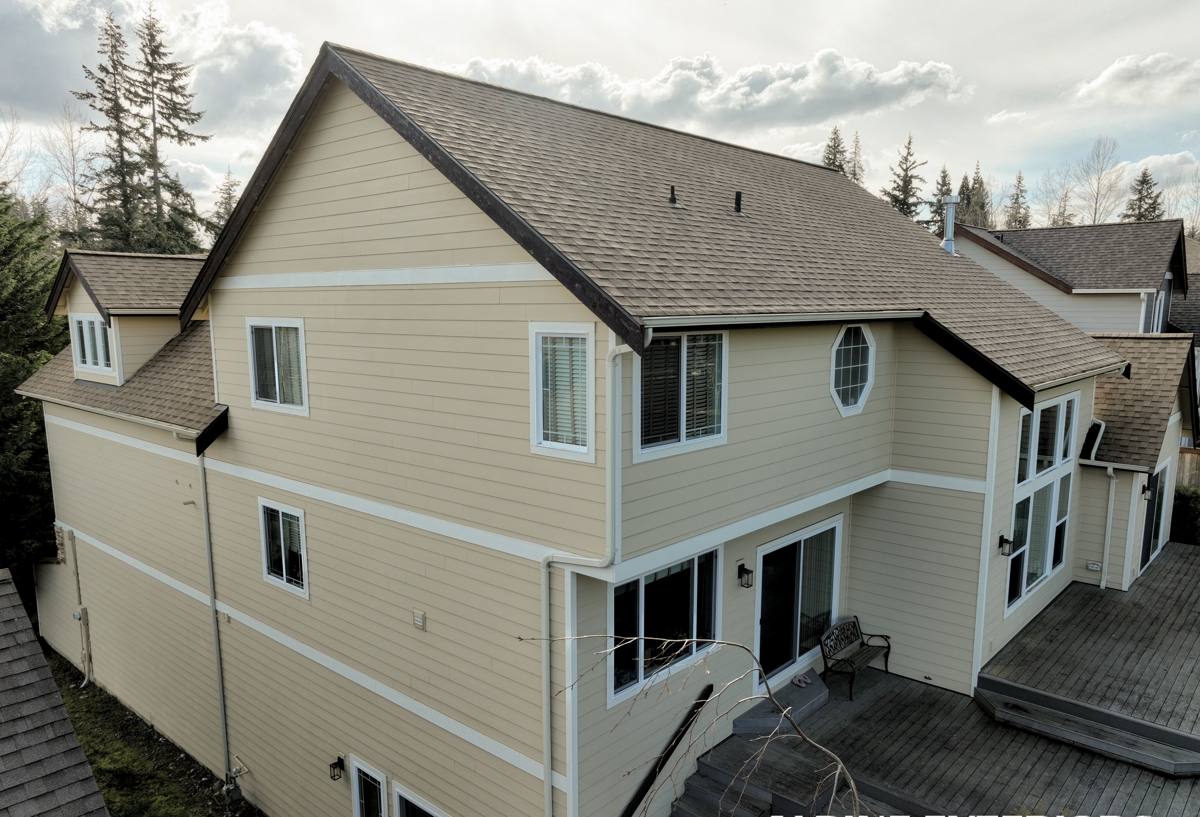
Why Composite Makes Sense for This Neighborhood
We install composite decking on Rosemary District homes because it's built to shrug off the exact conditions that wear out other materials fastest here. Modern capped composite boards have a polymer shell wrapped around a wood-fiber core, which means the surface that takes the UV and moisture abuse isn't bare wood at all.
Composite vs. Wood in This Climate
Pressure-treated wood is cheaper up front, and there's nothing wrong with it as a material — but it demands a maintenance schedule that most homeowners underestimate. In a coastal, high-UV climate like Sarasota's, wood needs re-sealing or staining every one to two years to keep moisture out and prevent graying. Skip a cycle or two and the boards start cupping, splintering, or hosting mold in the shaded, humid spots. Composite doesn't need that sealing cycle at all — the trade-off is a higher material cost and, on some product lines, boards that hold heat underfoot on the hottest days.
Not All Composite Is the Same
We only install fully-capped composite boards (capped on all four sides, not just the top surface) for anything near ground level, low-airflow areas, or spots that stay damp. Cheaper composite from years past — some of it still on the market — is capped on the top only or not at all, and the exposed core can wick moisture at the ends and fasteners. That's a maintenance headache we won't create for a client just to save a little on materials.
What a Correct Installation Actually Involves
The decking boards themselves get most of the attention, but the parts nobody sees are what actually determine whether a deck survives a decade of Gulf Coast weather.
Substructure and Ledger Board
The ledger board — where the deck attaches to the house — is the single most important connection on the whole structure, and it's the one place we won't cut corners. Correct flashing, proper fastener spacing, and a moisture barrier between the ledger and the house framing prevent water intrusion into the home itself, not just deck rot. On homes with older framing, we check the condition of what we're attaching to before assuming it can carry current load requirements.
Fasteners and Hardware
In a salt-air environment, standard galvanized fasteners corrode faster than the deck boards wear out. We use stainless steel or coated fasteners rated for coastal exposure on structural connections, and hidden fastener systems on the decking surface itself, both for a cleaner look and because exposed screw heads are one of the first things to rust and streak a light-colored composite board.
Ventilation and Drainage
Composite boards need airflow underneath just as much as wood does — trapped moisture under a deck with no ventilation leads to a musty, damp crawlspace regardless of what the boards on top are made of. Proper joist spacing, gapping between boards, and grading that moves water away from the house are part of every installation, not an upgrade.
Our Process for Rosemary District Projects
Every deck project follows the same sequence, whether it's a small landing off a back door or a full multi-level outdoor living space:
- On-site assessment — we look at the existing structure (if there is one), the house's attachment points, drainage patterns, and sun/shade exposure specific to the lot.
- Design and material selection — board color, board profile, railing style, and any built-ins are chosen with this climate in mind, not just appearance.
- Permitting — decks are structural work, and Sarasota County and City of Sarasota permitting requirements apply depending on the property's exact location and scope of work. We handle the paperwork.
- Demolition or removal (if replacing an existing deck) — including an honest look at the substructure to see what can be reused safely and what can't.
- Framing and structural work — ledger, joists, footings, and hardware rated for coastal conditions.
- Decking, railing, and trim installation — hidden fasteners, proper board gapping, and finished edges.
- Final walkthrough — we go over care and cleaning with the homeowner before we call the job done.
Comparing Decking Materials for a Rosemary District Deck
| Factor | Pressure-Treated Wood | Capped Composite | PVC/Vinyl Decking |
|---|---|---|---|
| Upfront cost | Lowest | Mid to upper-mid | Highest |
| UV fade resistance | Poor without regular staining | Strong on capped products | Strong |
| Salt air / moisture resistance | Moderate, needs sealing | Good, especially fully-capped boards | Very good |
| Ongoing maintenance | Sealing/staining every 1-2 years | Occasional soap-and-water cleaning | Minimal |
| Feel underfoot in summer heat | Cooler in shade | Can run warm in direct sun, varies by color | Can run warm in direct sun |
| Typical lifespan | 10-15 years with upkeep | 25-30+ years | 25-30+ years |
There's no universally "correct" choice on this table — a shaded lot with a homeowner willing to reseal every year can do fine with wood. But for most Rosemary District properties, where sun exposure is heavy and homeowners want to spend their weekends doing something other than deck maintenance, composite is the material that best matches the climate and the lifestyle.
Permitting and Local Considerations
Deck work in and around Sarasota is permitted, structural work — it's not a weekend project you can skip past code enforcement on. Depending on where a property sits, permitting may run through the City of Sarasota or Sarasota County, and wind-load requirements reflect the region's hurricane exposure. Older homes in established neighborhoods sometimes have framing or setbacks that don't match current code, which can affect what's allowed for a replacement or expansion. We pull the permits, coordinate inspections, and make sure the finished structure meets current wind and load requirements — not just what was acceptable when the original deck went in.
What Ongoing Maintenance Actually Looks Like
One of the real advantages of composite is how little it asks of you afterward, but "low maintenance" isn't "no maintenance." A properly installed composite deck in this climate needs:
- Periodic washing with soap and water (or a composite-safe cleaner) to remove salt residue, pollen, and surface grime
- Prompt removal of leaves or debris that collect between boards or in corners, especially after storms
- An annual check of railing connections and fasteners for looseness
- Keeping furniture feet and grills off bare boards where manufacturers recommend protective pads
- Clearing gutters and downspouts near the deck so runoff doesn't pool against the structure
That's a fraction of the work a wood deck demands, and it's work most homeowners can handle themselves in an afternoon a few times a year.
Why It Matters That We Already Work This Neighborhood
A deck built by a crew unfamiliar with coastal Sarasota conditions can look identical to a properly built one on installation day — the differences show up two or three years later, when fasteners start bleeding rust or boards that weren't gapped correctly start cupping. Working in and around Rosemary District regularly means we already know which details can't be skipped here: the fastener grade, the flashing at the ledger, the drainage slope, the permitting path for this part of the county. That's not a sales pitch, it's just what repeat exposure to this specific climate teaches a crew over time.
Choosing a Deck Contractor: What to Actually Check
- Do they pull permits and schedule inspections, or suggest skipping that step?
- Do they specify fastener and hardware grade in writing, not just board brand?
- Can they explain their ledger board and flashing approach without hand-waving?
- Do they have experience with coastal or hurricane-zone construction specifically, not just decking in general?
- Is the warranty structure — on both materials and labor — spelled out clearly before work starts?
If a contractor can't answer those plainly, that's worth pausing on before signing anything.
If you're considering a new deck or need to replace one that's showing its age, we're happy to take a look and put together a straightforward, no-pressure estimate. Use the form below to get started.