 Sarasota Window
 Rosemary District Siding Has to Work Harder Than Siding Almost Anywhere Else
Rosemary District sits close to downtown Sarasota, a few minutes from the bay, which means every exterior surface on these homes is doing double duty. It's fighting salt-laden air blowing in off the water, absorbing some of the most intense year-round UV exposure in the continental United States, and taking direct wind-driven rain during summer storms and the occasional hurricane threat. Add in the mix of older bungalow-style homes and newer infill construction that defines this neighborhood, and you get a wide range of siding conditions — some original material well past its service life, some newer product that was never rated for this climate to begin with.
Whatever era the home, the siding has one job: keep water out, hold its shape and color in relentless sun, and stay attached to the wall through wind events. Sarasota County's building climate is not forgiving of shortcuts, and it exposes cheap material or poor installation faster than almost anywhere else in Florida.
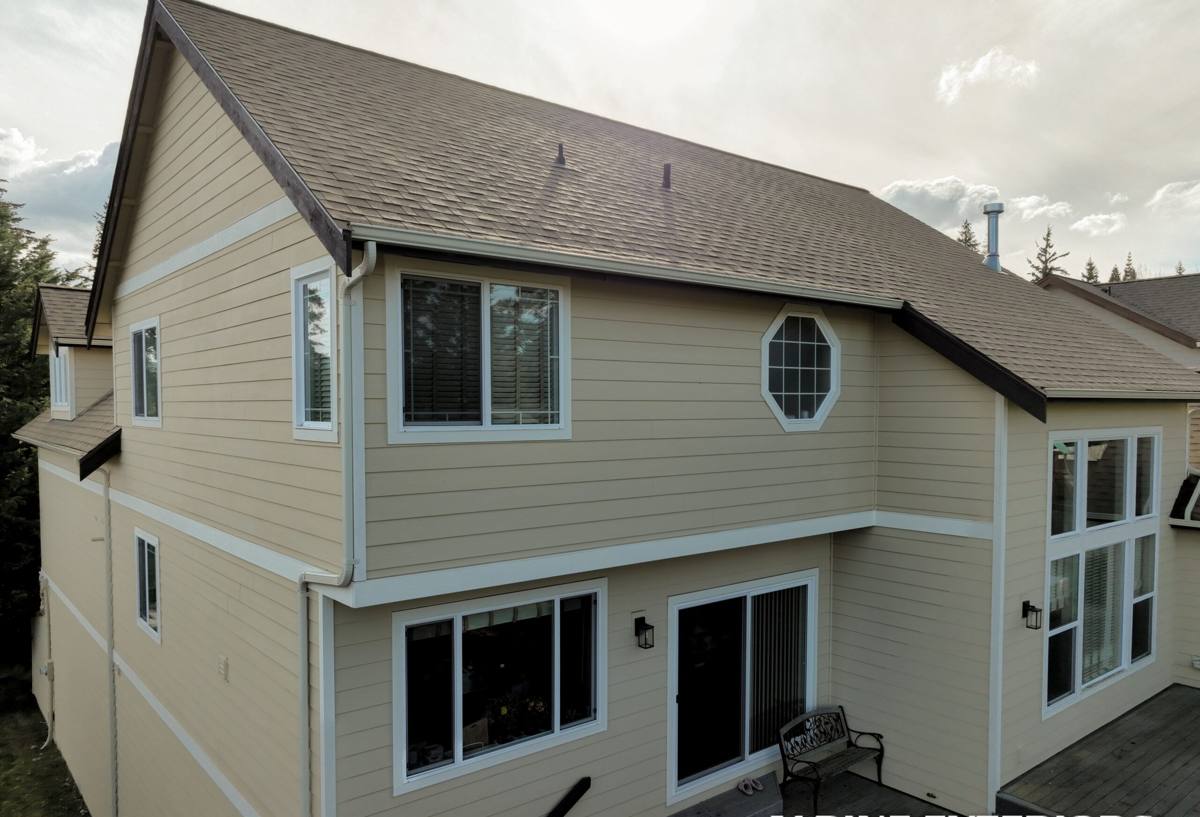
Why We Install Only James Hardie Fiber Cement Siding
We standardized on James Hardie fiber cement siding and don't install vinyl, LP SmartSide, Cemplank, Allura, or wood siding like primed spruce or cedar. That's a deliberate professional decision, not a marketing line. Fiber cement is non-combustible, holds up to sustained humidity without the swelling or rot risk of wood-based products, and doesn't soften, warp, or blow off the wall the way vinyl can in a real coastal wind event. James Hardie backs its products with a factory-applied ColorPlus finish system and engineers specific product lines for high-humidity, high-UV climates like ours.
Other fiber cement and engineered wood products on the market aren't necessarily bad products — some perform reasonably well in milder climates. But we've made the call that for homes exposed to Gulf Coast humidity, salt air, and hurricane-force wind, we only want our name on installations using a system we trust completely, with a warranty structure and manufacturer support behind it that holds up under those conditions.
What "HZ5" Means for a Rosemary District Home
James Hardie engineers its siding in regional formulations called HZ (HardieZone) products, tuned for either moisture-heavy Southern climates or freeze-thaw Northern ones. Sarasota County falls in the HZ5 zone, meaning the siding installed here should be formulated for high humidity, heavy rainfall, and prolonged UV — not a generic version of the product shipped everywhere in the country. When we quote a Rosemary District job, the siding is specified and manufactured for exactly this kind of exposure, not just "fiber cement in general."
What a Correct Installation Actually Involves
Fiber cement is only as good as the installation behind it. Most siding failures we get called out to inspect aren't a problem with the board itself — they're a problem with what's under it or how it was fastened. A correct job on a home in this climate involves several steps that are easy to skip and hard to spot once the siding is up.
Wall Prep and Moisture Barrier
Before any siding goes up, the wall needs a continuous, properly lapped weather-resistive barrier, correctly flashed at every window, door, and penetration. This is the layer that actually keeps wind-driven rain out of the wall cavity — the siding itself is the second line of defense, not the only one. Skipping or rushing this step is the single biggest cause of hidden moisture damage behind siding that looks fine from the street.
Fastening and Clearances
James Hardie specifies fastener type, spacing, and placement, and those specs exist for a reason in a wind-prone area like Sarasota County — under-fastened siding is siding that comes loose in a storm. Correct installation also keeps the siding held up off the ground, roofline, and any hard decking so it isn't sitting in standing water or trapping moisture against untreated framing.
Joints, Caulking, and the ColorPlus Finish
Butt joints need to be treated correctly — caulked and, where called for, flashed — so they don't become a wicking point for water. Where a board is field-cut, the cut edge should be sealed to protect the factory finish from moisture intrusion. The ColorPlus finish itself is baked on at the factory under controlled conditions, which is part of why it holds color and resists fading far better than a field-applied paint job would in this much sun.
Signs a Rosemary District Home's Siding Needs Attention
Because this neighborhood has such a mix of home ages, we see the full range of siding problems here. Some warning signs are easy to catch early if you know what to look for:
- Soft or spongy spots when you press on the siding, especially near the bottom courses or around windows
- Visible warping, buckling, or boards that have pulled away from the wall
- Peeling or chalky paint on wood-based siding that keeps needing repainting every few years
- Dark staining, streaking, or a persistent musty smell near exterior walls, which can point to moisture getting behind the material
- Cracked or crumbling caulk at joints and trim, which lets water in even if the siding itself looks intact
- Visible fastener heads, rust streaks, or siding that flexes or rattles in wind
Any one of these is worth a professional look before it turns into a framing or sheathing repair, which costs considerably more than a siding job on its own.
How Our Process Works
We keep the process straightforward and don't pressure homeowners into a decision on the spot.
1. Free On-Site Assessment
We walk the exterior, check for the moisture and structural issues above, and give you a straight read on what's actually going on — not just a sales pitch for full replacement if a repair would do.
2. Written Scope and Estimate
You get a clear, itemized estimate covering surface prep, the specific Hardie product and profile recommended, trim work, and timeline — no vague allowances.
3. Prep and Installation
Old siding removal, wall inspection and any needed sheathing repair, correct weather barrier installation, and then the Hardie siding itself, fastened and finished to manufacturer spec.
4. Final Walkthrough
We walk the finished job with you before considering it done, so nothing gets signed off that you haven't seen up close.
Fiber Cement vs. Other Siding Options
| Factor | James Hardie Fiber Cement | Vinyl | Wood / Engineered Wood |
|---|---|---|---|
| Coastal wind performance | Rated and installed to withstand high wind zones | Can crack or blow off in sustained high wind | Depends on fastening; prone to warping over time |
| Moisture / humidity resistance | Engineered for high-humidity climates (HZ5) | Doesn't rot, but seams can trap moisture | Vulnerable to swelling, rot without diligent upkeep |
| UV / color retention | Factory ColorPlus finish resists fading | Can fade, especially darker colors | Paint fades and needs regular reapplication |
| Fire resistance | Non-combustible material | Combustible, can melt or warp near heat | Combustible |
| Typical maintenance | Occasional wash, repaint on a long cycle if desired | Low maintenance but limited repair options | Regular painting, sealing, and rot inspection |
What Drives the Cost of a Siding Job Here
| Cost Factor | Why It Matters in Rosemary District |
|---|---|
| Home size and wall complexity | More corners, gables, and trim detail mean more labor and cut waste |
| Condition of existing sheathing | Older homes sometimes need sheathing or framing repair once old siding comes off |
| Siding profile and finish | Lap width, texture, and color selection affect material cost |
| Access and site conditions | Lot size, landscaping, and proximity to neighboring structures affect labor time |
| Trim and accessory work | Fascia, soffit, and window trim replacement alongside siding adds scope |
We don't quote from a distance — every estimate is based on an actual walk of the property, because two homes of the same square footage can have very different scopes of work.
Why Hiring a Crew That Already Works This Neighborhood Matters
Rosemary District's blend of historic bungalows and newer construction means every job is a little different — older homes often need more attention to what's happening behind the existing siding, while newer builds may just need it done right the first time. A crew that regularly works in this part of Sarasota knows what to expect walking up to a home here: the age range of the housing stock, the proximity to the bay and the salt exposure that comes with it, and the wind and rain patterns that hit this part of Sarasota County hardest during storm season.
That familiarity shows up in small but real ways — knowing which older homes are more likely to need sheathing repair before new siding goes on, sizing up drainage and grading around a house before starting, and not being caught off guard by the tight lot lines and mature landscaping common in this neighborhood. It also means faster response if a warranty question or minor issue comes up after the job is finished, because we're not driving in from across the county to take a look.
Caring for Fiber Cement Siding Once It's Installed
One advantage of fiber cement over wood-based siding is how little upkeep it demands, but "low maintenance" doesn't mean "no maintenance." A short annual routine keeps it performing the way it's built to:
- Rinse the siding with a garden hose once or twice a year to clear salt residue and airborne grime
- Inspect caulk lines at joints, windows, and trim yearly, and recaulk any that have cracked or pulled away
- Trim back landscaping so it isn't holding moisture against the siding or scraping the finish
- Check after major storms for any loose boards, damaged trim, or debris impact damage
- Keep sprinklers and irrigation heads angled away from the siding to avoid constant wetting of one area
Staying on top of these small things is what lets a correctly installed Hardie system go the distance in a climate that wears down lesser materials much faster.
Get a Straight Answer on Your Rosemary District Home
If your siding is showing its age, or you're planning ahead for a renovation, we're happy to take a look and give you an honest assessment — no pressure, no obligation. Use the form below to request a free estimate, and we'll walk your property and talk through what your home actually needs.