 Sarasota Window
 Why Venice Siding Has to Work Harder Than Siding Almost Anywhere Else
Venice sits on the Gulf, inside Sarasota County, which means the siding on a Venice home is doing a different job than siding on a house fifty miles inland. It's absorbing salt-laden air off the water, taking direct UV exposure nearly every day of the year, and getting hit periodically by tropical-storm and hurricane-force wind loads along with wind-driven rain that finds every gap in a wall assembly. Any siding product installed here is being tested constantly, not occasionally. That's the lens we use on every Venice job: not "what looks good going up," but "what still looks good and still keeps water out in year twelve."
That's also why we install one siding system, James Hardie fiber cement, and don't offer vinyl, LP SmartSide, Cemplank, Allura, or raw wood siding as alternatives. It isn't a marketing position. It's a decision built around what actually holds up on a Sarasota County exterior wall through repeated humidity cycles, salt exposure, and storm seasons.
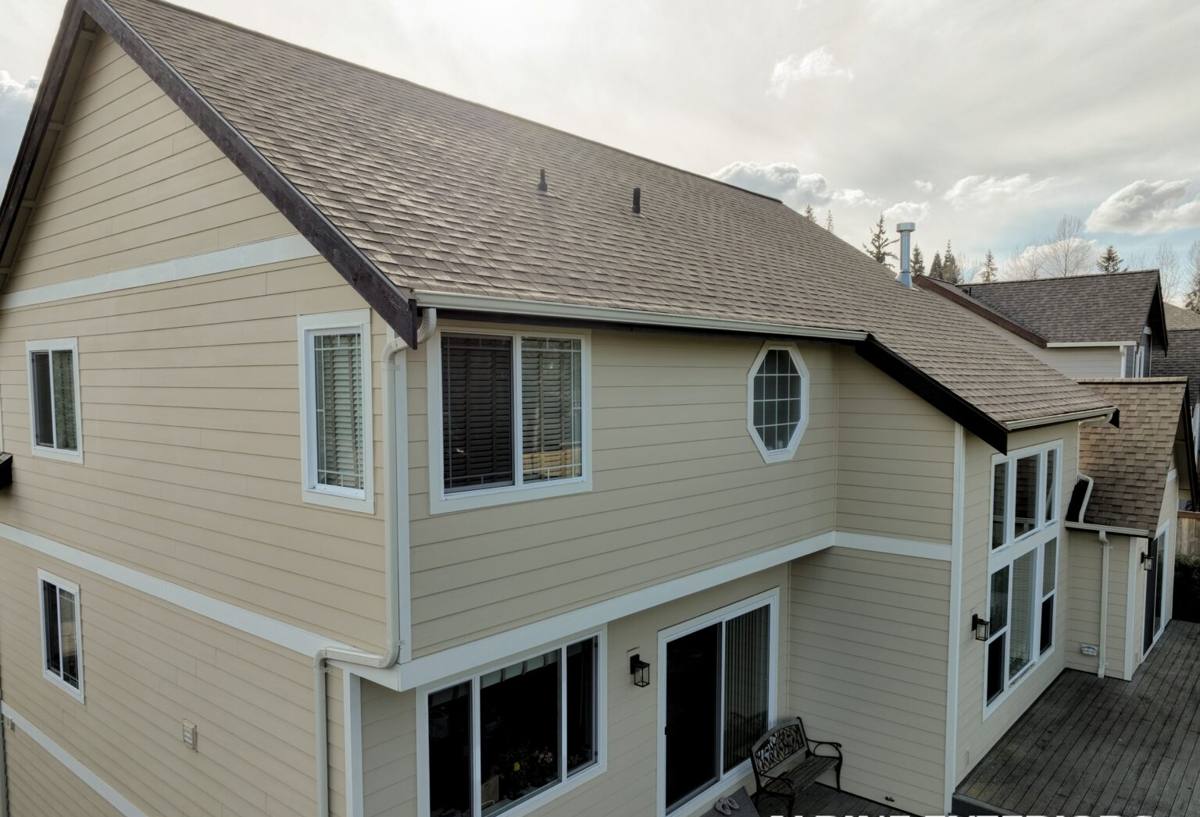
What Fiber Cement Actually Solves for a Venice Home
Fiber cement is a mix of cement, sand, and cellulose fiber, pressed and cured into boards or panels. Unlike vinyl, it doesn't soften, warp, or become brittle from constant UV load. Unlike untreated or primed wood products, it doesn't rely on a factory or field coating alone to keep moisture out of the substrate itself, since the board material is cement-based rather than wood-based. That distinction matters more in Venice than in a drier, cooler climate, because the humidity here rarely lets up long enough for a marginal product to fully dry out between rain events.
Fiber cement also carries real weight and rigidity, which helps it stay flat and true against a wall in high wind rather than flexing, rattling, or working loose at the fasteners over time. When a storm pushes wind-driven rain sideways into a wall, the siding's job is to shed that water before it ever reaches the house wrap and sheathing. A rigid, correctly lapped and flashed fiber cement assembly does that far more consistently than lighter or more moisture-sensitive materials.
Where James Hardie Fits Specifically
James Hardie is the only fiber cement brand we put on a house, and in a coastal, hurricane-prone county like Sarasota, the specific product line matters. Hardie engineers certain products under its HZ5 designation for high-humidity, wind-exposed climates like Florida's Gulf Coast, with formulations and installation specs suited to that exposure. The factory-applied ColorPlus finish is baked on and warranted separately from the substrate, which matters in a place where UV alone will chalk and fade a field-painted finish years before a comparable ColorPlus finish shows the same wear.
What a Correct Job Actually Involves
Fiber cement is only as good as its installation. A huge share of the siding problems we get called out to inspect in this area aren't material failures, they're installation shortcuts. Getting it right on a Venice home involves several things happening in the right order:
- A continuous, correctly lapped water-resistive barrier behind the siding, with no gaps at seams or penetrations
- Properly flashed windows, doors, and any wall penetrations before a single board goes up
- Correct fastener type, spacing, and depth per Hardie's published fastening schedule for the wind exposure at this location
- Minimum clearance maintained between the bottom of the siding and grade, roof lines, decks, and patios
- Butt joints back-flashed or sealed per spec, not just caulked and hoped for
- Correct board overlap at horizontal laps to shed wind-driven rain rather than wick it upward
- Field-cut edges sealed where required, since a raw cut edge is more absorbent than the factory-finished face
Skip any one of these and the wall assembly has a weak point that salt air, UV, and wind-driven rain will eventually find. Fiber cement's durability is a property of the whole assembly, not just the board itself.
Fastening and Wind Exposure
Venice's wind exposure isn't uniform across the city. A home a few blocks off the water and fully exposed to Gulf wind is a different fastening situation than a home tucked behind other structures further inland. We fasten to the specification that matches the actual exposure and wind zone for the property, not a generic default, because under-fastened siding is one of the more common causes of blow-off damage in a strong storm, and over-fastening can crack the board or restrict the expansion and contraction the material needs.
Correct Installation vs. Common Shortcuts
| Step | Done Correctly | Common Shortcut We See |
|---|---|---|
| Water-resistive barrier | Continuous, lapped correctly, sealed at penetrations | Reused old barrier, torn sections left unpatched |
| Flashing | Installed at every window, door, and penetration before siding | Skipped or replaced with caulk alone |
| Fastening | Matched to wind zone and Hardie's fastening schedule | Generic nail pattern regardless of exposure |
| Clearance to grade/roof | Minimum gap maintained per spec | Siding run tight to a patio or roofline, trapping moisture |
| Cut edges | Sealed with a Hardie-approved product | Left raw and exposed to weather |
| Joints | Back-flashed or shiplap-style with proper overlap | Butted tight and caulked only |
How We Approach a Venice Project
Before we quote or schedule anything, we walk the exterior and look at the specifics that actually drive the scope: current wall condition once the old cladding comes off, any water staining or soft sheathing that points to prior moisture intrusion, roofline and deck intersections that need particular flashing attention, and the home's real wind exposure. Sarasota County and local jurisdictions also have permitting and wind-load requirements that apply to exterior work like this, and we handle that process as part of the job rather than leaving it to the homeowner.
Many Venice neighborhoods and communities also have HOA or deed-restriction guidelines around exterior color and siding profile. We factor that in during the color and profile selection stage so there isn't a surprise resubmission later. Once the scope is set, the sequence is consistent: remove old siding, inspect and repair sheathing as needed, install a continuous water-resistive barrier, flash every opening, hang and fasten the Hardie boards or panels to spec, and finish trim and caulking with products rated for coastal, high-UV exposure.
What We Check Before We Ever Touch the Old Siding
- Signs of past water intrusion around windows, doors, and low corners
- Sheathing condition once exposed — soft or delaminated sections get addressed, not covered over
- Existing flashing at rooflines, chimneys, and any wall penetrations
- Actual wind exposure of each elevation, not just the house as a whole
- Any deed restriction or HOA requirement on color and siding profile
Maintenance in a Salt Air, High-UV Climate
One reason fiber cement earns its keep in Venice is how little ongoing maintenance it asks for compared to alternatives. It doesn't need repainting on the schedule that field-finished wood does, and it doesn't chalk, warp, or become brittle the way some lighter-weight sidings do under sustained UV and heat. That said, "low maintenance" isn't "no maintenance." Salt air leaves a residue that benefits from an occasional rinse, and caulking at trim joints and penetrations should get a visual check after major storms, since caulk is a wear item on any exterior regardless of the siding material behind it. Catching a failed caulk joint early is a five-minute fix; catching it two years late can mean opening up a wall.
A Simple Homeowner Maintenance Checklist
- Rinse siding periodically to clear salt residue and airborne debris
- Inspect caulking at trim, windows, and joints after major storms
- Keep irrigation heads from spraying directly on the siding long-term
- Watch for any staining below roof valleys or gutter overflow points
- Keep landscaping and mulch beds from holding moisture against the bottom edge of the siding
What Drives Cost on a Venice Fiber Cement Job
| Factor | Why It Matters Here |
|---|---|
| Sheathing condition | Older homes near the water more often need sheathing repair once old siding is off |
| Wall complexity | Corners, dormers, and roof intersections add flashing and cutting time |
| Siding profile | Lap, shingle, and panel profiles differ in material and labor |
| Trim and finish scope | Full trim replacement adds cost but keeps the finish consistent and correctly flashed |
| Access and site conditions | Tight lots, fencing, or landscaping near the walls affect setup and staging time |
We walk through these factors on-site rather than pricing off a phone call, because two Venice homes of the same square footage can have very different scopes once the old siding comes off.
Why It Matters That We Already Work in Venice
A crew that regularly works Sarasota County knows the permitting process, understands the wind exposure differences between an oceanfront lot and one set back a few blocks, and has already seen how this climate ages an installation that was or wasn't done to spec. That local pattern recognition is part of what keeps a job from becoming a callback. It's also why we standardized on one product system installed one correct way, rather than offering a menu of siding options with varying tolerance for coastal exposure. Consistency in the product and the process is what lets us stand behind the work.
If you're planning a siding project for a home in Venice or elsewhere in Sarasota County, we're glad to walk the property, look at the current condition, and talk through what correct James Hardie installation would involve for your specific home. There's no pressure and no cost to get that assessment — the form below is the easiest way to get started.