 Sarasota Window
 Storm Damage Roof Repair for Ellenton Homes
Ellenton sits in the stretch of the Gulf Coast between Tampa Bay and Sarasota, which means local roofs take a beating from more than just an occasional bad storm. Between tropical systems that push through with sustained wind and driving rain, the intense year-round Florida UV that bakes shingles and flashing, and the salt-laden air rolling in off the coast, a roof here ages faster and fails differently than the same roof would inland or up north. Storm damage repair in this area isn't just about patching what broke in the last storm — it's about understanding how the previous ten years of sun and salt already weakened the roof before that storm ever hit.
We work on homes throughout the Sarasota and greater Gulf Coast area, and Ellenton's mix of older ranch-style homes and newer construction gives us a good cross-section of what actually goes wrong here. This page covers what storm damage repair should look like for an Ellenton home specifically — not a generic checklist, but what we actually check, why, and how we approach the repair so it holds up through the next storm instead of just the next inspection.
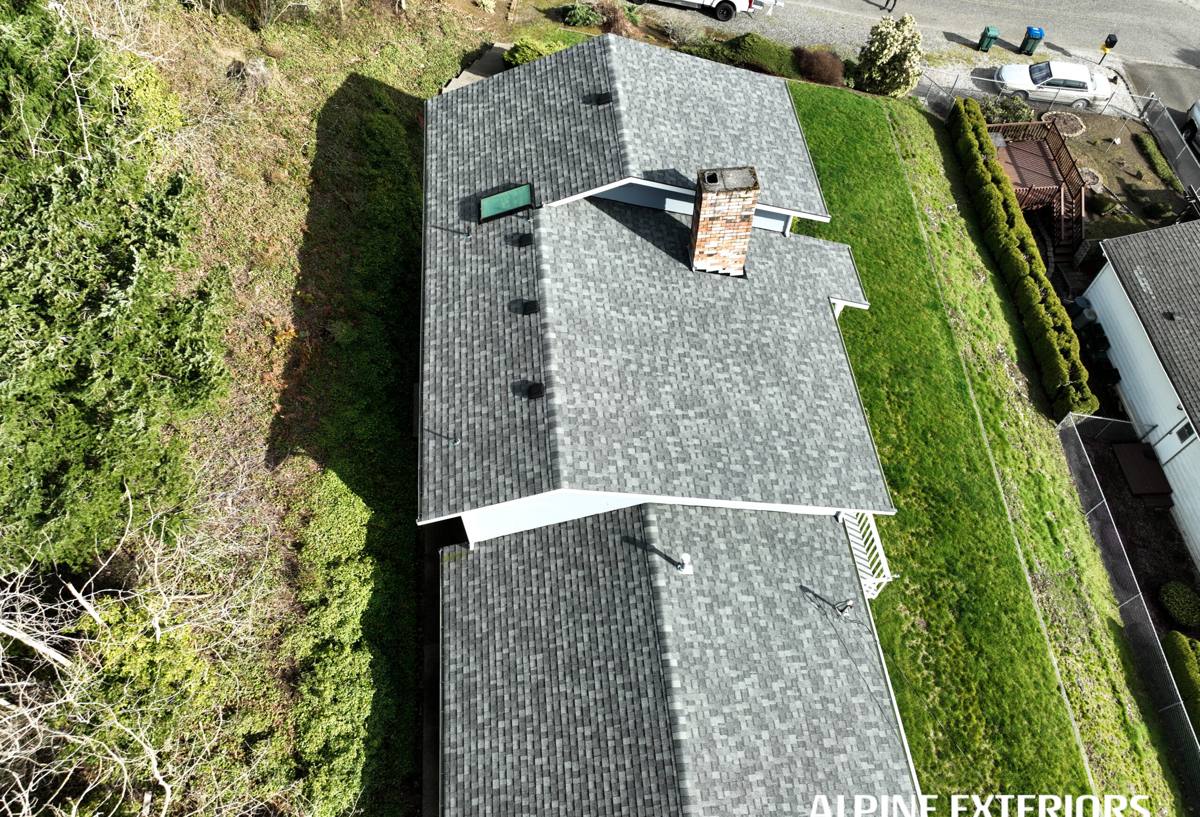
How Hurricane-Force Wind and Wind-Driven Rain Damage a Roof
Most roof damage after a storm isn't the dramatic kind. Homeowners expect missing shingles scattered across the yard, and sometimes that happens, but far more often the damage is subtler and easier to miss:
Wind Damage
Sustained hurricane-force wind gets underneath shingle tabs and works them loose even when nothing visibly blows off. Once the seal is broken, that shingle is no longer doing its job even though it looks fine from the ground. Wind also loosens ridge caps, lifts the edges of flashing around chimneys and vents, and can rack the roof deck itself if gusts are strong enough — which shows up later as soft spots or nail pops, not immediately.
Wind-Driven Rain
Florida storms rarely drop rain straight down. Wind pushes it sideways and even upward under eaves, which means water finds its way into gaps that a normal rainstorm would never reach. This is how a roof that "looks fine" ends up with a stained ceiling three days after the storm passed — water got in through a lifted shingle edge or compromised flashing and took time to travel and show up inside.
Debris Impact
Branches, loose gutters, and airborne debris cause localized punctures or bruised shingles (granule loss that exposes the asphalt mat underneath). These spots don't always leak right away, but they're weak points that will leak eventually if left alone.
The UV and Salt Air Factor: Why Ellenton Roofs Are More Vulnerable
A storm doesn't damage every roof equally, and the difference usually comes down to condition going in. Year-round UV exposure in this part of Florida dries out asphalt shingles and breaks down the oils that keep them flexible, so shingles get brittle over time. A brittle shingle that would have flexed and survived a wind gust ten years ago now cracks or tears instead. Salt air adds a second layer of wear — it accelerates corrosion on exposed metal flashing, roofing nails, and vent caps, so fasteners and flashing seams that should hold tight start failing years before they would inland.
This matters for storm repair because it changes what "damage" actually means on an Ellenton roof. On a newer roof in a drier climate, storm damage is usually isolated and obvious. On a roof here that's already 12-15+ years old, a storm often reveals problems that were forming for years — the storm is what finally pushed a weakened area past the point of holding water out, not necessarily what created the weakness in the first place. A repair that only addresses the visible storm damage without accounting for that underlying wear tends to fail again in the next storm.
What a Correct Storm Damage Repair Actually Involves
A repair done right starts with understanding what's underneath the roof covering, not just what's on top of it. Here's what we look at:
- Roof deck condition — soft, spongy, or delaminated decking under the damaged area needs to be replaced, not just covered back over. Shingles nailed over bad decking won't hold.
- Underlayment integrity — the layer beneath the shingles is the real water barrier. If wind lifted shingles enough to expose or tear underlayment, that has to be repaired, not just the shingles reset on top of it.
- Flashing at penetrations — chimneys, plumbing vents, skylights, and roof-to-wall junctions are where most leaks actually originate, storm or no storm. Flashing needs to be checked and resealed or replaced, not assumed fine because the shingles nearby look okay.
- Matching materials — patched sections need shingles that match in type, weight, and ideally age/color so the repair doesn't create a mismatched patch that ages differently and fails at the seam.
- Fastener pattern — replacement shingles need to be nailed to the same wind-rated pattern as the rest of the roof (or better), not just tacked down.
Our Storm Damage Repair Process
- Inspection and documentation. We walk the roof (and check the attic from inside, when accessible) to find both the obvious damage and the less obvious lifted seals, granule loss, and flashing issues. We document everything with photos, which matters for the next step.
- Honest scope assessment. We tell you plainly whether this is a repair, a partial re-roof of the affected slope, or whether the storm damage plus existing wear means a full replacement makes more sense. We don't pad a repair into a replacement, and we don't patch something that needs more than a patch.
- Written estimate. Scope, materials, and cost laid out before any work starts — no surprises mid-job.
- Temporary protection if needed. If there's active leaking or exposed decking, we can get a tarp or temporary seal in place quickly to stop further water intrusion while the full repair is scheduled.
- The repair itself. Deck repair where needed, underlayment repair, matched shingle replacement, and flashing work, done to the same standard as new construction — not a quick patch meant to just get through the next inspection.
- Final walkthrough. We show you what was done and why, and flag anything else on the roof worth keeping an eye on going forward.
Repair vs. Replace: What Actually Drives the Decision
This is the question that matters most after a storm, and the honest answer depends on more than just the size of the damaged area. Here's how we think through it:
| Factor | Leans Toward Repair | Leans Toward Replacement |
|---|---|---|
| Roof age | Under ~10 years, shingles still flexible | 15+ years, especially with visible granule loss or curling elsewhere on the roof |
| Damage extent | Isolated to one slope or area | Spread across multiple slopes or widespread seal failure |
| Deck condition | Solid, dry decking under damaged shingles | Soft or delaminated decking found in multiple spots |
| Shingle match | Original shingles still available or close match exists | Discontinued style/color, patch would be visibly mismatched |
| Storm history | First significant damage the roof has taken | Repeated storm damage or repairs over recent years |
| Insurance scope | Adjuster scopes it as a repairable claim | Adjuster or engineer determines full slope/roof replacement is warranted |
None of these factors alone makes the call — it's the combination. A 6-year-old roof with isolated wind damage and a sound deck is almost always a straightforward repair. A 17-year-old roof with storm damage on top of pre-existing wear is usually money better spent on replacement, because a repair on a roof that close to the end of its service life often just delays the inevitable while you keep paying for patches.
Working With Your Insurance Claim
Storm damage claims move faster and more smoothly when the damage is documented clearly and matched to what actually happened in the storm. We provide photo documentation and a written scope of damage that you can hand directly to your insurance adjuster or claims department. We're glad to meet an adjuster on-site if that's useful, and we'll point out damage that's easy to miss from a ground-level inspection, like lifted seals or flashing wear that doesn't show up in a drive-by look at the roof. What we won't do is inflate a scope to chase a bigger payout — an honest scope tied to real, documented damage is what holds up if a claim gets questioned later.
Materials and Workmanship Standards
For repair work in this climate, we use shingles and flashing materials rated for high-wind regions, and we install to the fastener patterns and flashing details that hold up to sustained coastal wind — not just the manufacturer's minimum. On flashing specifically, we favor corrosion-resistant materials and proper sealant details over relying on caulk alone, since salt air is hard on anything that depends on a bead of sealant staying intact for years. Where a full slope or larger repair is warranted, we'll walk you through underlayment and shingle options and the real trade-offs between them — cost, expected service life, and maintenance — rather than pushing one product as a one-size-fits-all answer.
Why a Local Crew That Already Works Ellenton Matters
Roofing crews that work this specific stretch of the Gulf Coast regularly know what to expect from a roof here before they even climb the ladder — how UV and salt exposure tend to age materials in this area, which flashing details fail first, and what the local building department expects for permitted repair and replacement work. That familiarity shows up in faster, more accurate assessments and repairs that account for conditions specific to this region rather than a generic approach borrowed from a different climate. It also matters after the storm passes: a crew based in the area isn't juggling a multi-state disaster response route and can get back out to a job site for a follow-up check without it being a special trip.
After a Storm: What to Check and Do
- Check ceilings and attic spaces for new stains, damp spots, or drips — even small ones — in the days after a storm, not just immediately after.
- Look at the roof from the ground for missing or visibly lifted shingles, but don't assume a clean look from the ground means no damage.
- Check gutters and downspouts for granules (a sign of shingle wear or impact damage) and make sure they're not clogged with storm debris.
- Photograph any visible damage before cleanup, for your own records and for insurance.
- Avoid climbing onto the roof yourself, especially with standing water or wind still present — leave the inspection to someone trained to do it safely.
- Get a professional inspection promptly, even if nothing looks obviously wrong — the damage that leaks is often the damage you can't see from the ground.
If you're dealing with storm damage on an Ellenton roof, or you just want a straight answer on whether what you're seeing needs attention now or can wait, we're happy to take a look. Request a free, no-pressure estimate using the form below and we'll give you an honest read on what your roof actually needs.